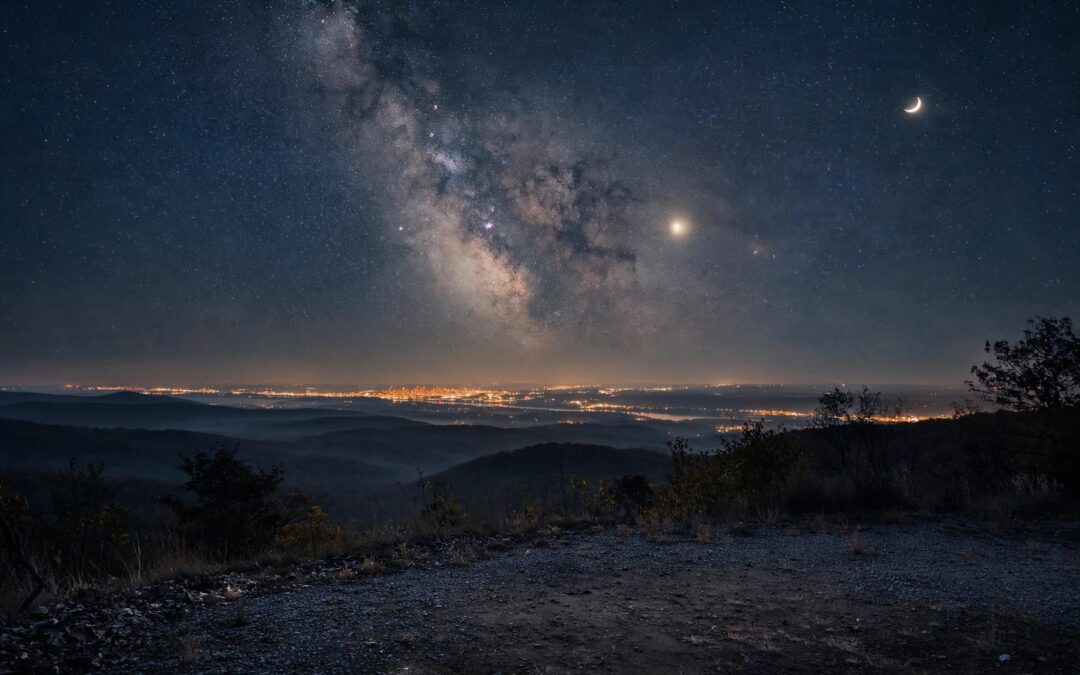
A clear Kentucky night can make you stop talking. One bright planet hangs over the hills, the moon lifts above the trees, and the ordinary rush of the day loses its grip for a while.
Northern Kentucky stargazing is worth planning, but we need to tell the truth about it. Our river cities and suburbs throw plenty of light into the sky, and many beautiful public parks close at dark. The best outing begins when you choose a legal location, respect the closing time, and know what the sky can reasonably give you.
The stars are still there. You simply need the right night, the right place, and a little patience.
Start With the Access Rule
Public land is not an all-night invitation. That truth saves a family from a wasted drive, a locked gate, or the awkward moment when a good evening turns into a rule-breaking evening.
Northern Kentucky has wonderful overlooks, open fields, wooded trails, and historic parks. Yet most of them are built for daylight recreation. We should enjoy them before dark, then move to an approved astronomy program, campground, or private lodging if we plan to stay out late.
Devou Park Is a Sunset Stop, Not a Midnight Field
Devou Park gives you one of the strongest hilltop views in Northern Kentucky. The overlook above Covington is the right place to watch the sky change colors, spot the first stars, and show children the moon or Venus before night takes hold.
The City of Covington states that Devou Park and its overlook are open from dawn until dark. Evening access is for guests attending events at Drees Pavilion or the Behringer-Crawford Museum. Don't mistake the open view for permission to remain after closing.
Devou is beautiful at blue hour. It is not a dark-sky destination.
A Pretty Field Does Not Mean After-Hours Access
This rule applies across the region. A picnic shelter, lake edge, trailhead, or broad lawn may look perfect for a telescope, but a park can still close at dusk.
Call ahead before you load chairs, snacks, binoculars, and excited children into the car. Read the park rules. If an event page does not clearly say nighttime observing is allowed, plan to leave before closing. Kentucky hospitality includes respecting the place that welcomed us in.
Best Northern Kentucky Stargazing Stops Before Dark
The strongest local spots are honest sunset and twilight choices. They are places where you can settle down, look up, and let the first lights of the night appear without pushing past posted hours.
Devou Park Overlook for Moonrise and City Views
Devou is our first pick when you want a short, low-stress evening near Covington. Drive up, park, take in the Cincinnati skyline, and stay focused on the bright objects above it. The moon, a bright planet, and the first stars can still cut through city glow.
Bring binoculars instead of a large telescope. You will spend less time setting up and more time watching. The skyline is part of the evening here. Don't expect the Milky Way over the Ohio River valley.
Boone County Arboretum for an Easy Early Evening
The Boone County Arboretum in Union is open daily from 7:30 a.m. until dusk, with free admission and parking. That makes it a sensible place for an after-dinner walk that ends with a look at the early sky.
Its wide paths and well-kept grounds work especially well for children and grandparents who do not need a long hike. Arrive early, walk while there is light, then find an open view as dusk settles. When the light fades, it is time to pack up.
Big Bone Lick for a Longer Nature Afternoon
Big Bone Lick State Historic Site gives you a full Kentucky outing before the stars begin. There are bison, trails, fossils, and enough room for a family to slow down. It is the kind of place that makes children ask better questions.
The site is for daylight use, so treat sunset as the closing chapter, not the start of an all-night watch. Check Kentucky State Parks trip details before you go, because hours and programs can change with the season.
The best local skywatching plan is not the one that keeps you out latest. It is the one that gets you home with good memories and no trouble.
Northern Kentucky Stargazing Needs a Real Night Option
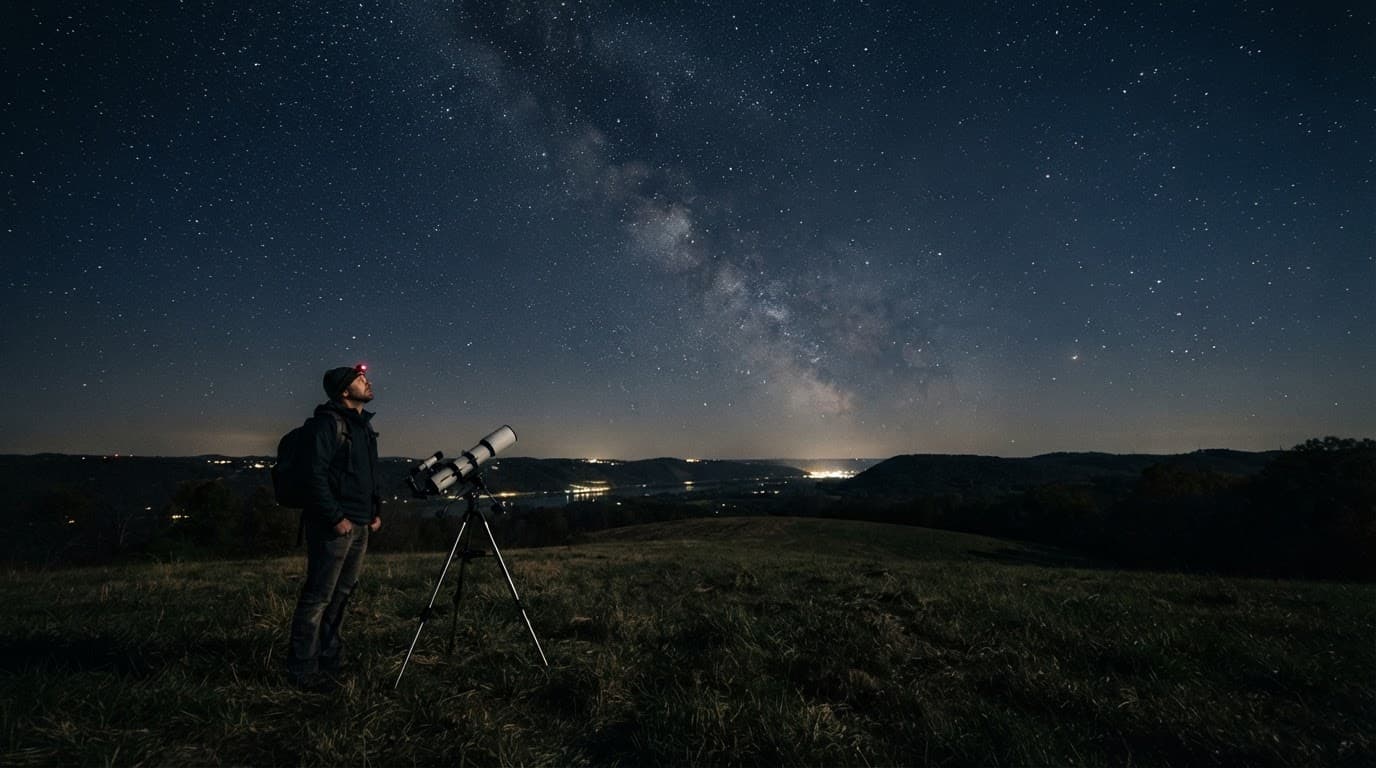
When you want more than a moonrise, a legal nighttime setting matters. A true astronomy outing gives you enough darkness and enough time for your eyes to adjust.
We do not have an officially designated dark-sky park in Northern Kentucky. That is not a reason to give up. It is a reason to choose the right kind of experience.
Haile Planetarium Brings the Sky Indoors
Northern Kentucky University's Haile Planetarium in Highland Heights is the clearest local astronomy option when weather, light pollution, or family logistics get in the way. Public Friday night shows are free, though registration is required and seating is first-come, first-served.
A planetarium cannot replace standing under a clear summer sky. It can teach you what you are seeing before you go outside. Children who know how to find the Big Dipper, identify Saturn, or understand moon phases often stay interested longer.
Check the current schedule before leaving home. Public programming changes, and parking rules can apply.
Raven Run Offers the Strongest Public Observing Trip
Raven Run Nature Sanctuary near Lexington is outside Northern Kentucky, but it is one of the most practical public observing options for serious local skywatchers. The Bluegrass Amateur Astronomy Club usually holds public sessions one Saturday evening each month from March through October, often near the new moon.
The sessions begin around sunset and usually last two to three hours. The club uses a rural observing field, and visitors can look through member telescopes without owning one themselves.
Clouds cancel these events, with no make-up night. On uncertain evenings, call the park around 6:30 p.m. before you make the drive. That one phone call can save you a long ride under a solid blanket of clouds.
Make Mammoth Cave the Dark-Sky Weekend
Mammoth Cave National Park is not a quick Northern Kentucky stop. It is a Kentucky trip worth making when you want to see what a protected night sky can reveal.
The park is Kentucky's recognized International Dark Sky Park. The DarkSky directory of protected night-sky places explains why these locations matter. Less artificial light means more visible stars, richer constellations, and a greater chance of seeing the Milky Way on the right night.
Treat Darkness With Respect
A dark-sky trip is not about wandering into an isolated field. It is about going where you have lawful access, good information, safe footing, and a plan for getting back.
The National Park Service offers practical guidance for exploring night skies in parks, including astronomy programs and night appreciation events. Check current Mammoth Cave activities before building a weekend around a single clear forecast.
Kentucky gives us caves below ground, rolling land above ground, and a sky that becomes larger when we get away from city lights. That is a vacation worth taking slowly.
Read the Night Before Leaving Home
Clear skies are not enough. A bright full moon can wash out faint stars, while a moonless night can reveal far more even near modest light pollution.
Follow the Moon Before Following the Forecast
For deeper Northern Kentucky stargazing, plan around the new moon when possible. The Saturday nearest the new moon is also why Raven Run's public observing nights are timed as they are.
Check cloud cover on the afternoon of your outing, then check again after sunset. High thin clouds can ruin star contrast even when a forecast says "partly cloudy." Humid summer air can also make the sky look hazy and soft.
Cold winter nights often give sharper views. Summer gives warmer evenings and more comfortable family time. Neither season is perfect. A clear night wins.
Bring Less Gear Than You Think
A phone flashlight can ruin everyone's night vision. Use red light if possible, and keep it pointed down. Let your eyes adjust for at least 20 minutes before deciding the sky is disappointing.
Take these basics:
- A blanket or camp chairs keep the evening comfortable without turning setup into work.
- Binoculars reveal more than most people expect, especially on the moon, the Pleiades, and brighter star fields.
- A light jacket, water, and bug spray matter more than extra gadgets on most Kentucky nights.
- Download a sky map before you leave, then dim the screen as far as it will go.
Keep a Family Stargazing Night Simple
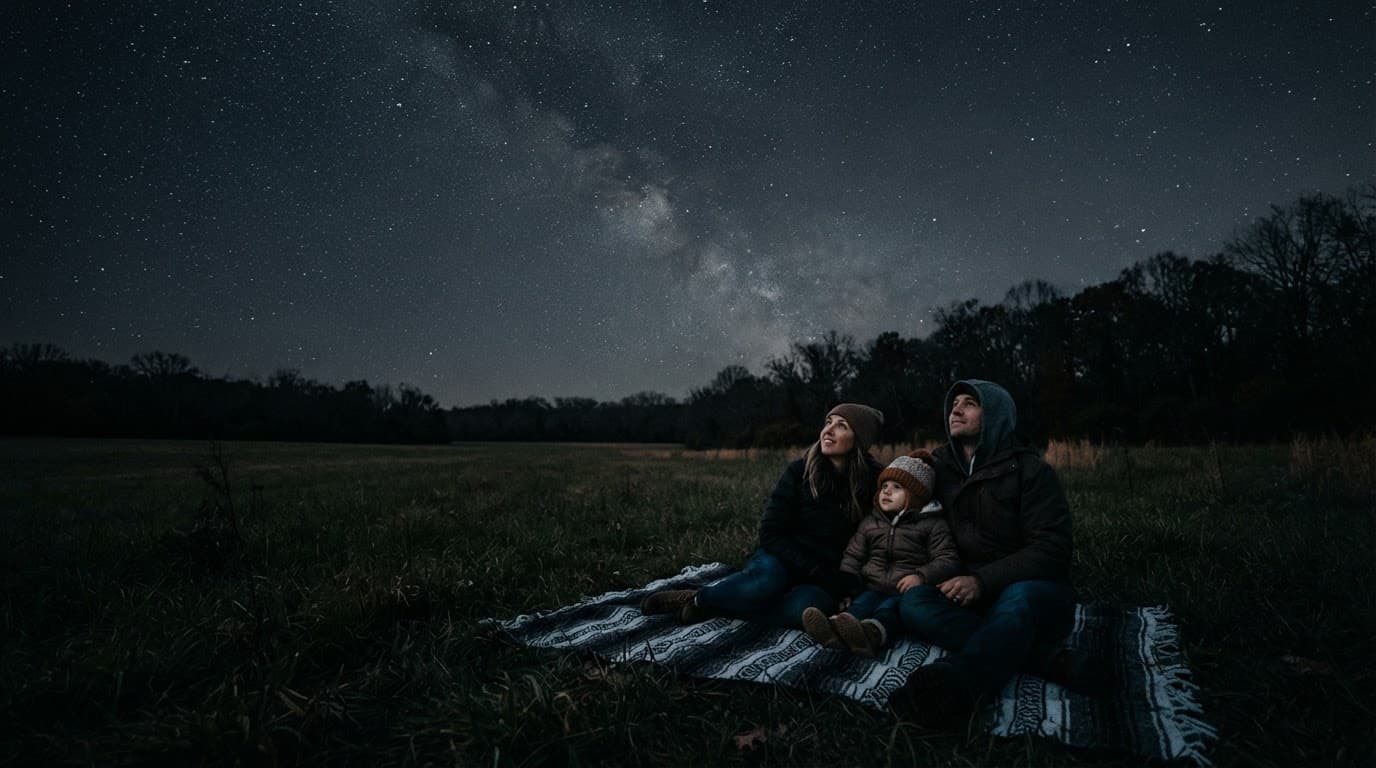
Children do not need a lecture on galaxies to enjoy the sky. Give them one thing to find. The moon. The Big Dipper. A bright planet. That is enough for a first outing.
Start with dinner, a short park walk, and twilight at a lawful location such as Devou or Boone County Arboretum. If children still have energy, head home and look for the same object from the driveway. The sky does not require a complicated schedule.
Build the Evening Around the Family, Not the Telescope
A heavy telescope can turn a simple plan into a burden. We prefer binoculars, a printed constellation chart, and a few snacks for young children. Nobody needs to become an astronomer in one evening.
For more ideas that work when daylight is fading, our guide to Northern Kentucky kids activities after 5 PM can help you build a fuller evening without rushing.
If you want an overnight outdoors trip, use a legal campground and confirm its quiet hours, lighting, and visitor rules first. A campsite gives you a better foundation for a late skywatch than a public park that closes at dusk.
Choose the Right Sky for the Night
Not every outing needs a black sky. Sometimes you want the city spread below you and a bright moon above it. Devou gives you that.
Sometimes you want a nature afternoon that finishes at sunset. Big Bone Lick fits that purpose. On another weekend, you may want a real astronomy program with telescopes and a darker field. Raven Run is worth the extra drive.
Northern Kentucky stargazing becomes better when we stop chasing one perfect place. Choose the experience you want, honor the rules of the place, and let the Kentucky night give you what it can.
A Kentucky Night Worth Looking Up For
The clearest lesson is simple: a good stargazing trip begins with good access. Devou, Boone County Arboretum, and Big Bone Lick are excellent for dusk, moonrise, and early stars, but they are not places to remain after closing.
For a true night under the stars, choose a scheduled observing event, a lawful overnight stay, or a Kentucky dark-sky weekend at Mammoth Cave. The sky has been above us all along. We only need to meet it with patience and respect.