A local chess club can give children a place to practice, but families need to distinguish casual games, organized lessons, and rated competition. We recommend beginning with the child's readiness, because knowing how the pieces move doesn't mean a child is prepared for an all-day tournament.
Here at home, a chess outing can give your family an indoor activity with purpose and a manageable pace. The right starting point gives your child room to learn without making every mistake feel like a public examination.
Begin with the kind of chess your child is ready to enjoy.
Key Takeaways
- Boone County Public Library has offered K–12 chess programming, although its dated event listings shouldn't be treated as a standing weekly schedule.
- Kentucky Chess Association provides student and parent resources, including an official ChessKid club and regular online tournaments.
- The May 2, 2026, NKY Rated Beginners Open has passed; its published format shows the commitment involved in beginner-rated competition.
- Cincinnati Chess Club offers another regional option, but its location is in Ohio.
Choosing Northern Kentucky Chess Clubs for Kids
A local chess club can give families a way to learn whether chess holds a child's attention beyond a few games at home. Casual play helps families see if the game holds their child's interest.
Library Chess Gives Beginners a Familiar Setting
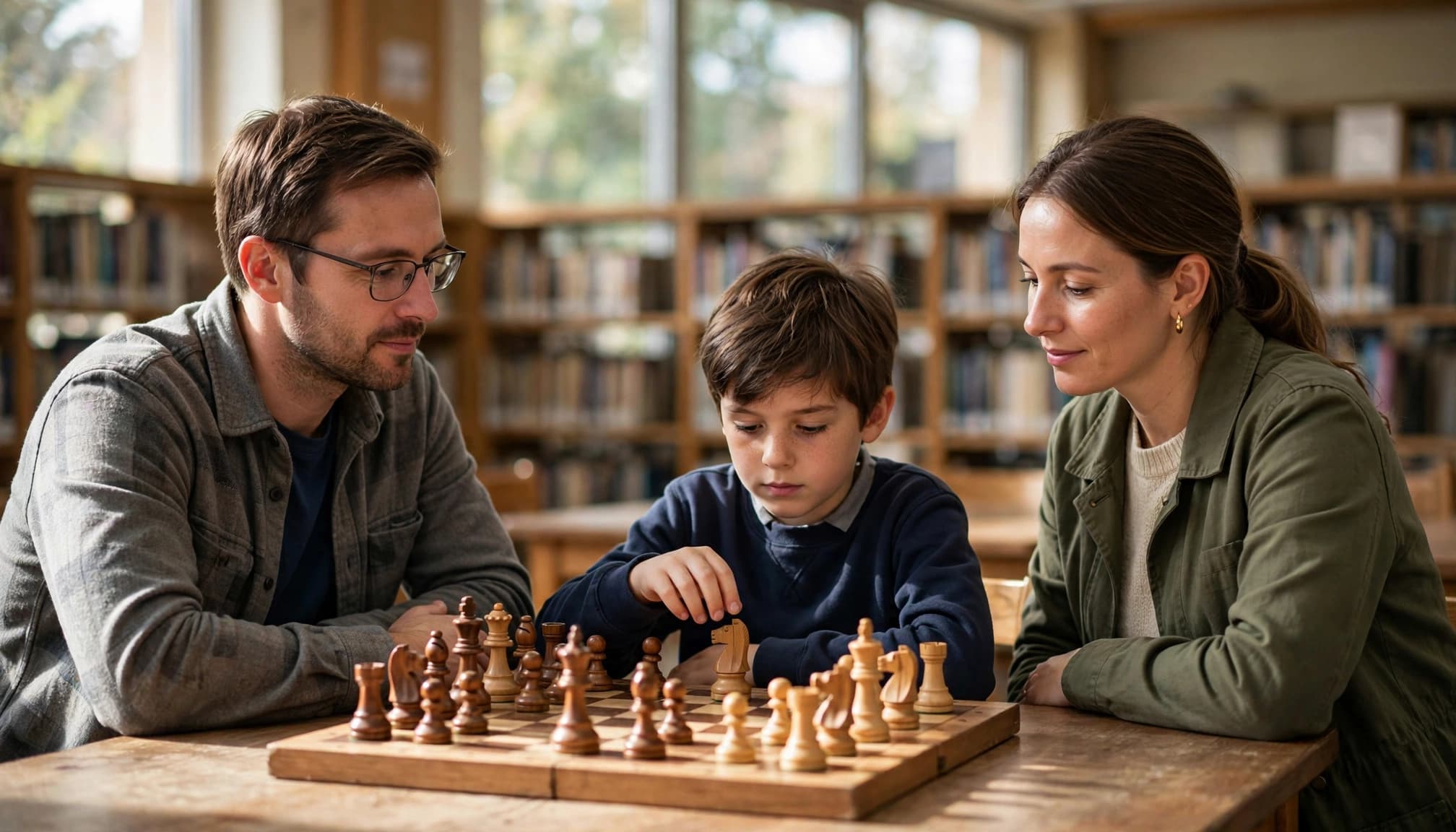
Boone County Public Library published a K-12 Chess Club event at its Main Library for July 8, 2025. That dated listing establishes a children's program, but not an ongoing meeting time.
The Main Library is at 1786 Burlington Pike in Burlington. The library's official website provides its locations and program information.
For families visiting our area, libraries can anchor a quieter part of the day. Our guide to nearby libraries with family programs gives you broader options when siblings need something different.
Casual Play Reveals Readiness
We recommend watching how your child responds to the game itself. Can your child take turns, stay with a position, and finish a game after losing a piece?
Those habits matter. A child who enjoys playing but struggles with a clock can continue learning through untimed games. A child who wants explanations after every move needs instruction alongside practice.
Choose the setting that supports the next skill your child needs.
Chess Lessons Should Teach More Than Piece Movement
A lesson should leave your child understanding something that can be used in the next game. Learning the names of openings means little when a child still overlooks an undefended queen.
Begin With Repeatable Skills
We favor instruction that teaches legal moves, check, checkmate, castling, and the habit of looking for threats before moving. The teacher should explain a mistake in words the child understands.
Group instruction gives children shared practice and different opponents. Individual instruction gives a teacher more time to address one child's recurring mistakes. Neither format excuses teaching that moves faster than the child can follow.
For younger beginners, a shorter period of attentive learning is better than a longer session spent resisting the chair.
Add Practice Between Lessons
The Kentucky Chess Association's student resources include its official ChessKid club, where it runs regular online tournaments. This is a statewide practice resource rather than a Northern Kentucky classroom program.
Use practice to reinforce instruction. Let your child finish a game, identify one turning point, and explain what could change next time.
We also recommend learning basic scoresheet notation before entering events that use it. US Chess explains the usual move-then-record procedure. Recording moves preserves the game for later review, when a teacher can explain what happened.
The NKY Rated Beginners Open: Eligibility and Cost
The NKY Rated Beginners Open was scheduled for May 2, 2026, at Open Door Community Church, 3534 Turkeyfoot Road, Erlanger, KY 41018. That date has already passed.
Its published arrangements show what families faced when choosing a local beginner-rated event.
New Players Were Eligible
The event admitted players rated under 1201 USCF, including new and unrated players. It welcomed all ages and limited the field to 35 players.
Under 1201 means a rating of 1200 or below. Unrated means the player hasn't yet established a rating in the relevant system; it doesn't mean the player is barred from competing.
Families should also understand the meaning of all ages. A beginner event can include children and adults, so your child's opponent isn't necessarily another child.
Membership and Entry Were Separate
Active USCF membership was required before registration. The listing directed players needing to join or renew to Tournament Director Tim Sawyer first.
The US Chess Federation administers that membership. Tournament entry and federation membership are separate requirements.
The published entry fee was $30 through May 1 and $35 at the door. At-door check-in ran from 8:30 to 9:15 a.m.
For a family, the entry fee was only part of the commitment. Families traveling to Open Door Community Church in Erlanger also had to plan for an early arrival and four rounds.
Understanding Rounds, Clocks, and Byes
A chess tournament schedule deserves the same attention as its price. A child may enjoy one serious game and still find four rounds tiring.
G/45 d5 Defines the Playing Time
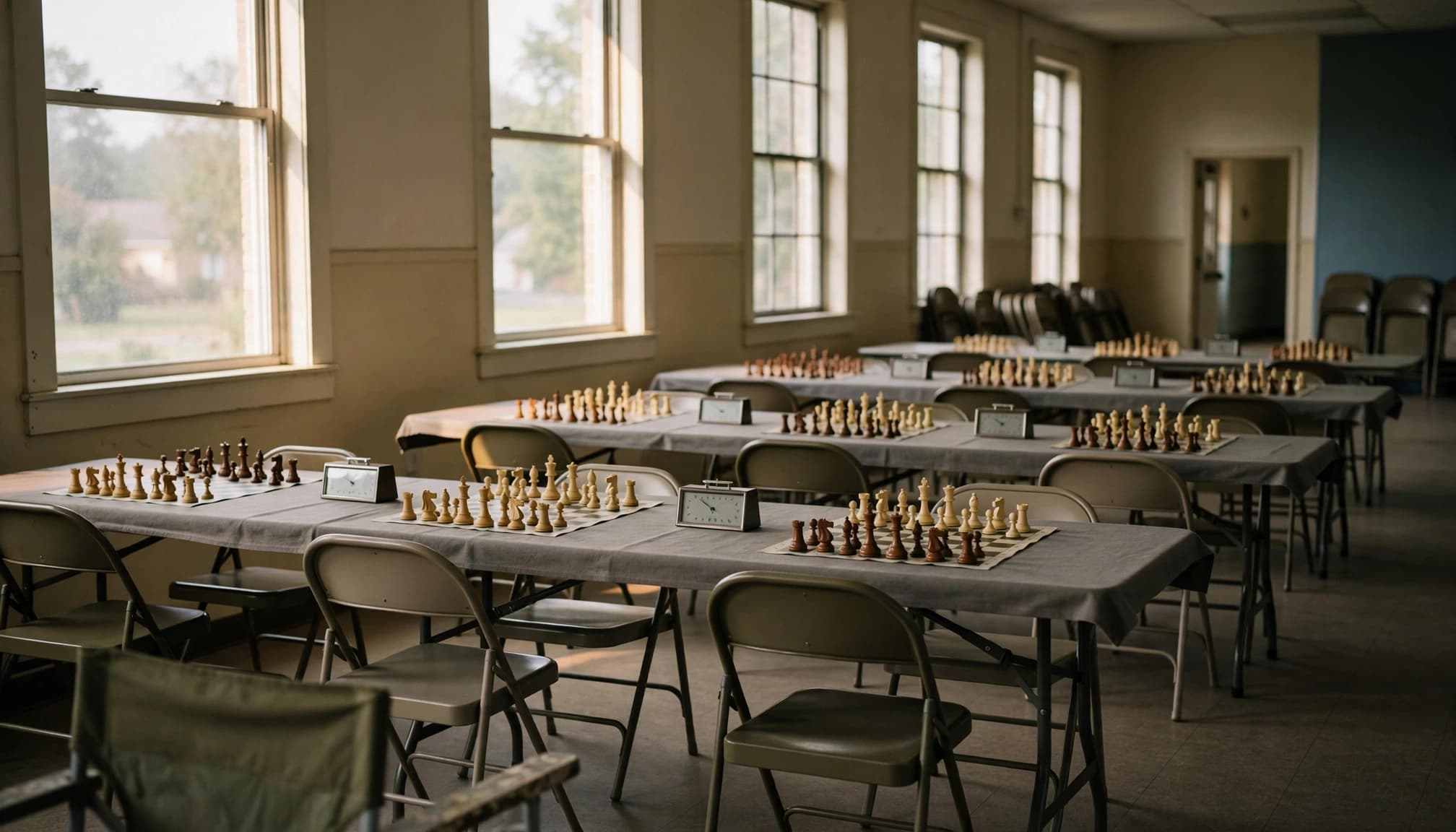
The Beginners Open used four rounds at G/45 d5. Each player received 45 minutes for the game, with a five-second delay before their clock began counting down on each turn.
The published round schedule was:
| Round | Scheduled Start |
|---|---|
| 1 | 10 a.m. |
| 2 | 12:30 p.m. |
| 3 | 2:30 p.m. |
| 4 | 4:30 p.m. |
The final round began at 4:30 p.m.; that wasn't the tournament's finishing time. Families needed room in the evening for the last game to finish.
How Byes Affect Participation and Scoring
A bye means sitting out a round under the event's rules. The Beginners Open allowed one half-point bye in rounds one through three, with none in round four. Additional byes scored zero.
That half-point counted toward the player's tournament score without a played game.
Byes change scoring, but a half-point bye still replaces one round. It doesn't turn a four-round tournament into a drop-in activity.
We recommend practicing with a clock before choosing this format. Children should understand what the clock does before they must manage it during competition.
Cincinnati Chess Club Is an Ohio Comparison
Families near the Ohio state line can consider nearby chess options, but the location belongs in the plan. Cincinnati Chess Club is at 7640 Plainfield Road in Deer Park, Ohio.
The club advertises weekly casual chess starting at 6:15 p.m. and a Monthly Quick Chess leaderboard. An evening start may suit some families better than an all-day event, but the drive and bedtime still matter.
The published Kings Island Open Quads offer listed a $35 entry. Each quad winner received an entry to the Kings Island Open, valued at $140.
A quad is a four-player group in which each player faces the other three. This quad format grouped players by USCF Quick rating and used G/24 with a five-second delay. Families should check whether a quad's grouping and pace suit a beginner.
The club page has inconsistent event dates, so they don't establish a dependable upcoming appointment.
Plan the First Visit Around the Child
We want families to enjoy Northern Kentucky without turning every outing into a packed itinerary. Chess asks children to sit, think, wait, and recover after mistakes. Leave room for that effort.
For a first club visit or a first tournament, we recommend a simple preparation sequence:
- Explain the format before leaving home. Your child should know whether the visit involves casual games, instruction, or scheduled competition.
- Practice finishing a game without help. During a tournament game, parents shouldn't supply moves or advice.
- Pack water, food for permitted break areas, and a quiet activity for waiting between rounds.
- Keep the rest of the day light. A child who has concentrated for hours may need movement and rest more than another organized activity.
Families with children of different ages should also account for the waiting time. A younger sibling needs something reasonable to do while an older child plays.
Our guide to family activities in Northern Kentucky can help you choose a separate outing for another day. A tournament day already has its main activity.
Give the First Chess Experience Room to Work
The right beginning matches the child to the format. Casual play, focused instruction, and rated competition ask different things of a young player.
We recommend building steady habits before adding longer games and stricter schedules. Your child should understand what the day requires and have enough room to enjoy learning.
A manageable first experience gives chess a better chance of becoming something your child willingly returns to.
Frequently Asked Questions
Does a Child Need USCF Membership for Every Chess Activity?
The May 2026 NKY Rated Beginners Open required active USCF membership before registration. That requirement doesn't establish a membership rule for every lesson, library program, or casual game. Membership rules belong to the particular activity.
Can an Unrated Child Enter a Rated Tournament?
Yes, when the event admits unrated players. The Beginners Open expressly welcomed new and unrated players, alongside players rated under 1201. It also admitted all ages, so eligibility didn't guarantee an opponent of the same age.
Where Are Kentucky Tournament Opportunities Listed?
The Kentucky Chess Association's open tournament calendar lists competitions open to adults and scholastic players, including USCF rated tournaments. Its open category includes mixed-age events. Check each linked event's details for its current format and requirements. The May 2, 2026, Beginners Open described above is a past event, not a future registration date.