
Discover the Best of Northern Kentucky
Unveiling Hidden Gems and Must-See Attractions
Explore the vibrant culture, exciting events, and scenic beauty that Northern Kentucky has to offer. Dive into our guide to uncover the latest happenings and timeless attractions.
Top Attractions in Northern Kentucky
From historic landmarks to modern entertainment, Northern Kentucky is brimming with experiences waiting to be discovered. Whether you’re a history buff, a nature lover, or a foodie, there’s something here for everyone.
Historic Sites and Museums
Outdoor Adventures & Parks
Local Dining and Nightlife
What’s New
 Teen Babysitting Classes in Northern KentuckyTeen babysitting classes teach child care, safety, emergency response, and the judgment required when another family places a child in your care. In Northern Kentucky, St. Elizabeth Healthcare lists a $20 Safe Sitter class for ages 11 and older, while American Red Cross courses offer additional in-person and online paths.
We recommend beginning with the responsibility your teen is preparing to carry, because caring for an infant requires different preparation than supervising a school-age child. Here in Kentucky, a worthwhile class can fit alongside family time, but the instruction deserves your teen’s full attention.
Key Takeaways
St. Elizabeth’s Safe Sitter class costs $20, serves ages 11 and older, and doesn’t include CPR.
Babysitting courses cover everyday care, behavior, safety, communication, and emergency decisions.
CPR instruction and babysitting education prepare teens for related but different responsibilities.
Age eligibility opens the classroom door; readiness determines which babysitting jobs a teen should accept.
Northern Kentucky Babysitting Course Options
Begin with the course’s purpose. A local classroom, a self-paced introduction, and a longer caregiving course ask different things of your teen.
St. Elizabeth’s Local Safe Sitter Class
St. Elizabeth’s Safe Sitter program provides in-person instruction for girls and boys ages 11 and older at $20 per participant. It serves residents of Northern Kentucky, Greater Cincinnati, and southeastern Indiana.
Lessons address safety, child development, activities, behavior, first aid, choking, emergencies, and babysitting as a business. Students receive a manual and certificate. Enrollment requires online registration, required forms, and prepayment. CPR isn’t provided in this class, so families should treat that preparation separately.
Red Cross In-Person Training
American Red Cross babysitting classes prepare ages 11 through 16 to care for infants and children. The approximately five-hour Babysitter’s Training course combines hands-on activities, videos, and discussion.
Instruction includes feeding, diapering, holding children, safety, and emergency response. The version with Pediatric First Aid/CPR/AED takes just over seven hours. We recommend the hands-on format when your teen needs instruction, correction, and another opportunity to practice a physical skill.
Online Courses Serve Different Ages
The Red Cross child care training options include Babysitting Basics, a self-paced course for ages 11 and older that takes approximately four hours.
Advanced Child Care Training serves ages 16 and older and takes approximately four and a half hours. Both provide completion certificates after a passed final exam. Online instruction offers flexibility, but families shouldn’t confuse completing online lessons with practicing emergency skills under an instructor’s supervision.
What Teen Babysitting Classes Teach
Babysitting means accepting responsibility for a child’s immediate care while the parent is away. That responsibility includes ordinary moments, repeated instructions, and decisions that must be made before a problem becomes an emergency.
Infant Care and Everyday Needs
Basic care includes feeding, diapering, holding, and understanding that children need different help at different stages. A teen needs to understand those differences before agreeing to care for a younger child.
Parents’ instructions belong at the center of the job. Feeding routines, allergies, bedtime expectations, comfort items, and restrictions must be understood rather than guessed.
We recommend treating infant care as its own responsibility. Enjoying babies doesn’t establish readiness to care for one alone. Instruction gives a teen a foundation; supervised practice gives the teen an opportunity to apply it while an adult remains responsible.
Activities and Behavior Management
Age-appropriate activities are activities a child can safely understand and participate in. A toddler and an older child don’t need the same toys, the same explanations, or the same level of help.
Courses also address behavior management. That means giving clear directions, redirecting attention, and responding without anger when a child resists a routine.
The Safe Sitter curriculum connects child care with safety, first aid, choking rescue, and business skills. We favor that broader preparation because a sitter must keep a child occupied while remaining attentive to the child’s needs.
Emergency Preparation Requires Practice
Emergency preparation begins before anything goes wrong. Teens need to recognize danger, understand when adult help is necessary, and communicate clearly when immediate assistance is needed.
Safety and First Aid
Safety instruction teaches teens to notice unsafe situations rather than depend on a quick reaction afterward. Household hazards, access to emergency contacts, and knowing the home’s address all belong in that preparation.
First aid addresses immediate care for injury or illness. Choking response addresses another urgent situation. A course may teach these subjects without providing a separate CPR certification.
We recommend giving emergency communication the same attention as the physical skills. A sitter must be able to explain where help is needed, what happened, and who is affected.
CPR and Course Credentials
CPR means cardiopulmonary resuscitation. An AED is an automated external defibrillator, a device that analyzes heart rhythm and provides a shock when indicated.
For babysitters, instruction involving infants and children matters. Our guide to Northern Kentucky CPR classes explains local family instruction and first aid, CPR, and AED certification options.
A babysitting certificate doesn’t establish that a teen has earned a separate pediatric CPR credential.
Hands-on instruction gives a learner time to perform a skill, receive correction, and practice again. We recommend pairing caregiving education with emergency training appropriate to the children your teen expects to supervise.
Communication Is Part of the Job
A babysitter must listen carefully before the parent leaves and speak honestly when something exceeds the sitter’s ability. Responsibility includes knowing when to seek help, not merely being willing to stay with a child.
The business side of babysitting gives that responsibility a practical form. Safe Sitter instruction includes evaluating jobs, discussing wages, and communicating with the adults hiring the sitter.
Before accepting work, a teen needs a clear understanding of the children’s ages, the number of children, the expected hours, and the duties involved. Transportation home and an available adult contact belong in that agreement.
We recommend having these conversations with a parent or guardian before the first job. A teen shouldn’t feel pressured to accept unfamiliar responsibilities because a family needs help.
Clear limits protect both families. A sitter who can explain what they are prepared to do gives parents useful information. A sitter who conceals uncertainty leaves an important part of the arrangement unsettled.
Course instruction should help teens speak respectfully, arrive prepared, and communicate concerns without delay.
Readiness Continues After Class
Completing a course is a beginning. Readiness means being able to follow instructions, remain attentive, and respond appropriately when a child needs help.
We recommend supervised caregiving after class, particularly when a teen has little experience with the age group involved. Helping with meals, activities, and routines while an adult remains present gives those lessons a practical setting.
Attention matters throughout the job. A child still requires supervision when the evening becomes familiar, when a phone receives a message, or when the child seems content.
The first independent assignment should fit the teen’s preparation. The number of children, their ages, the length of the job, and any additional needs all affect the responsibility.
Parents and teens should discuss these limits together. A course’s minimum age tells you who may enroll; it doesn’t tell you that every eligible student is ready for every household. We favor steady preparation over rushing toward the first paid job.
Leave Room for a Northern Kentucky Family Outing
A class can be one worthwhile part of a Northern Kentucky visit without occupying the whole trip. We recommend keeping the rest of the day manageable, especially after several hours of instruction.
In Covington, Behringer-Crawford Museum at 1600 Montague Road offers regional history, artifacts, and model train displays. It gives families a Kentucky-focused stop where younger children and teens can find different things to notice.
For outdoor time, Goebel Park at 501 Philadelphia Street has a playground and a distinctive clock tower. A simple park visit leaves room to move without adding another demanding appointment.
Keep the outing separate from caregiving practice. Your teen can enjoy being part of the family rather than being expected to supervise younger children immediately after training.
Frequently Asked Questions
What Age Can a Teen Start Babysitting Classes?
St. Elizabeth’s Safe Sitter class begins at age 11. Red Cross Babysitter’s Training serves ages 11 through 16. National Safe Sitter guidance for parents places its babysitting programs in grades six through eight. These are course eligibility ranges, not a judgment about an individual teen’s readiness for independent work.
How Much Is the Local Safe Sitter Class?
St. Elizabeth lists its class at $20 per participant, with a manual and certificate included. Required forms and prepayment are part of registration. We recommend considering the instruction alongside the price, because everyday care, emergency decisions, and communication all belong in a sitter’s preparation.
Can an Online Course Replace Hands-On Practice?
Online courses can teach caregiving concepts, safety decisions, and professional expectations. Physical skills require practice. We recommend treating self-paced instruction as part of preparation rather than assuming a passed exam demonstrates every skill a teen may need while caring for a child.
Choose Preparation That Matches the Responsibility
The strongest reason to take teen babysitting classes is the responsibility a young caregiver is preparing to accept. Sound judgment, attentive care, and practiced emergency skills each have a place in that preparation.
Here in Northern Kentucky, we recommend beginning with instruction suited to your teen’s age, then building experience at a sensible pace. A certificate records completed learning; the child’s care requires that learning to be understood and applied. […]
 Northern Kentucky CPR Classes for Parents and TeensFor parents and teens, Northern Kentucky CPR classes should match the people you care for and the credential you need. St. Elizabeth Healthcare offers two Erlanger classes on December 5, 2026: family CPR instruction and a separate first aid, CPR, and AED certification course.
Here in Kentucky, we recommend choosing practical preparation, whether your teen babysits, your family enjoys swimming, or you’re preparing to care for a new baby. You need instruction that explains the response and gives you time to practice the response.
Begin with the difference between learning a skill and earning a certification.
Key Takeaways
St. Elizabeth’s December 5 classes cost $50 per participant for Friends & Family instruction or $75 for First Aid, CPR AED certification.
The family class provides a participation certificate; the certification course provides an eCard valid for two years.
Teens need instruction suited to their readiness, and babysitting education shouldn’t be treated as automatic CPR certification.
Hands-on practice matters, especially when you’re learning to respond to an emergency involving a child or infant.
Northern Kentucky CPR Classes in Erlanger
The St. Elizabeth December 5 classes take place at the St. Elizabeth Training & Education Center, 3861 Olympic Blvd., Erlanger, KY 41018. Both include a student workbook, but their credentials differ.
Friends & Family Instruction
HeartSaver Friends & Family CPR, AED costs $50 per participant. It covers one-rescuer adult, child, and infant CPR, AED use, choking, drug overdose, and drowning.
This class gives families a defined place to begin. Parents, grandparents, and other caregivers need to understand that an infant’s emergency requires age-appropriate instruction, just as an adult’s emergency requires an appropriate response.
The course includes a certificate of participation. It isn’t a certification class. We recommend it for family learning when a workplace, school, or other organization doesn’t require a certification card.
First Aid With CPR Certification
HeartSaver First Aid, CPR AED costs $75 per participant. It includes adult, child, and infant CPR and AED instruction, choking, drug overdose, drowning, and basic first aid.
Successful completion provides a certification eCard valid for two years. Two participants would pay $150 in course fees.
We favor this broader option when you need both emergency-response instruction and a certification credential. The added first aid instruction matters because a caregiver may face an injury or sudden illness that doesn’t require CPR.
Choose according to the responsibility you’re preparing to carry, rather than the lower price alone.
Choose Training That Covers Your Family
A course title tells you where to begin. Its content tells you whether the instruction fits your household.
Adult, Child, and Infant Skills
CPR means cardiopulmonary resuscitation. An AED is an automated external defibrillator, a device that analyzes heart rhythm and provides a shock when indicated.
Parents need to understand these terms, but understanding the terms is only the beginning. Instruction must also give you practice with the equipment and the age groups you’re preparing to help.
The American Heart Association’s pediatric first aid course options address illnesses and injuries involving infants and children until professional help arrives. We recommend pediatric coverage for anyone regularly responsible for younger children.
First Aid Beyond CPR
First aid means the immediate care given for an injury or illness before further medical care is available. A first aid course broadens preparation beyond cardiac arrest.
The Erlanger certification class includes basic first aid alongside CPR and AED instruction. That distinction deserves attention when you’re comparing Northern Kentucky CPR classes for a household with children.
Read the course as a whole. CPR, choking response, and first aid are related responsibilities, but one course title doesn’t automatically promise every subject.
Teens Need Readiness and Clear Responsibilities
A teenager can learn meaningful emergency-response skills. That learning deserves serious instruction, patient practice, and responsibilities the teen can understand.
We recommend presenting the course as preparation to help, without promising that a certificate removes fear or guarantees a particular outcome.
Age Alone Doesn’t Measure Ability
The American Heart Association’s training frequently asked questions state that it doesn’t mandate a minimum age for learning CPR. Physical ability depends more on strength than age alone.
This guidance concerns learning CPR. It doesn’t establish admission rules for every local class.
A teen’s readiness also includes listening, following directions, and accepting correction during practice. A student who understands the sequence still needs to demonstrate the physical skills. Give that distinction its proper place, without turning strength or speed into a competition between students.
Babysitting Requires Broader Preparation
The American Red Cross offers in-person babysitting classes designed for ages 11 through 16, with hands-on activities and instruction about caring for children and infants.
Babysitting education and CPR certification serve different purposes. A teen needs everyday caregiving judgment as well as preparation for an emergency.
We recommend treating those subjects as complementary. A babysitter must follow household instructions, understand when adult help is needed, and know how to communicate an emergency. CPR instruction adds an emergency-response skill; it doesn’t replace the rest of that responsibility.
Understand Course Formats and Credentials
Hands-on training gives you an opportunity to perform the skill, receive correction, and practice again. That matters when the lesson involves body position, equipment, and a sequence you may need under pressure.
In-person classes place instruction and practice together. Blended courses combine online learning with an in-person skills session. The online portion is one part of that course, rather than a substitute for the required skills work.
The Red Cross distinguishes these formats from online-only learning. Its in-person and blended First Aid/CPR/AED courses include hands-on skills and two-year certification. Online-only learning has no skills verification and may not satisfy workplace requirements.
A participation certificate records participation. A certification card records completion of the requirements for that credential. We keep that distinction clear because families deserve to know what their course provides.
A certificate of participation shouldn’t be presented as a CPR certification card, even when both courses teach useful family skills.
For an employment or school requirement, the required credential belongs at the beginning of your decision. General family preparation gives you more freedom to choose an introductory course.
Put First Aid and Prevention Together
Emergency preparation belongs beside everyday prevention. Families need both, particularly when a Kentucky visit includes a hotel pool, outdoor play, or time near water.
Swimming lessons teach water skills. CPR teaches an emergency response. Neither removes the need for close, attentive supervision around water.
We recommend giving supervision a clear owner. An adult who is responsible for watching children needs to understand that responsibility, rather than assume someone else is watching. A teen’s new training shouldn’t become a reason to hand over more responsibility than the teen can manage.
At home or in your lodging, make the emergency plan understandable. Your teen should know the address, how to call 911, and how to reach a responsible adult.
Keep first aid supplies accessible to the people expected to use them. Practice CPR on training manikins, not on family members. Good habits should support the instruction long after the classroom session ends.
Leave Room for a Kentucky Family Outing
A training day can still leave room to enjoy our corner of Kentucky. We recommend one flexible activity afterward, rather than a full afternoon of reservations.
For a Covington stop, the Behringer-Crawford Museum at 1600 Montague Road offers regional history exhibits and a model train display. It gives families something to explore together without adding another class to the day.
For an outdoor choice, the scenic overlook at Devou Park offers a place to pause and enjoy the view. Let your family’s energy determine whether the outing stays short.
Our guide to Northern Kentucky family activities offers more choices for relatives who aren’t attending training or for another day of your visit.
A local family needs a manageable Saturday. A visiting family needs a plan that fits its stay. Give the course enough room in either schedule.
Frequently Asked Questions
Are CPR Classes Only for Healthcare Workers?
The American Heart Association’s Heartsaver courses are designed for people with little or no medical training. Parents, caregivers, and other community members can learn these skills without beginning with a healthcare background.
How Long Does the Erlanger Certification Last?
St. Elizabeth’s December 5 First Aid, CPR AED course provides a certification eCard valid for two years. Its Friends & Family course provides a participation certificate instead. The two-year certification applies to the certification course, not to the family participation certificate.
Can CPR Training Replace Swimming Lessons?
CPR training prepares you to respond to an emergency. Swimming instruction develops water skills, while supervision addresses the child’s immediate safety around water. We recommend keeping all three in their proper place. A child who swims confidently still needs appropriate supervision, and a trained caregiver still needs to prevent avoidable risks.
Choose Preparation That Fits the Responsibility
The right Northern Kentucky CPR classes provide instruction for the people you may need to help, with a credential that matches your purpose. For families considering the December 5 Erlanger options, the central choice is participation instruction or first aid and CPR certification.
We recommend choosing that purpose first, then giving the practice your full attention. A useful family skill deserves more than a place on the calendar; it deserves patient learning and clear responsibility. […]
 Northern Kentucky Pottery Painting for Family OutingsNorthern Kentucky pottery painting gives families a hands-on indoor outing, with paint-your-own options in Crestview Hills and Alexandria. We recommend choosing the studio by the kind of visit you want, then choosing a project your child can finish without being hurried.
The painting deserves time, because children need room to choose, begin, and complete something that belongs to them. Here in Northern Kentucky, we welcome visitors to make that slower afternoon part of the vacation, beginning with these two studios.
Key Takeaways for a Family Painting Day
Color Me Mine in Crestview Hills offers paint-your-own ceramics, walk-in painting, workshops, and parties.
Morning Star Pottery in Alexandria is family-owned and offers studio painting, pottery-to-go, and party-room use.
Painting an existing ceramic piece is different from forming clay or learning to use a pottery wheel.
Kiln-finished pottery needs work after the painting session, so the finished piece isn’t an immediate take-home purchase.
We favor a manageable project and an unhurried visit. A child who completes one piece has had a full art experience, even when the design is simple.
Northern Kentucky Pottery Painting Studios to Know
These two studios offer the activity families usually mean when they ask about pottery painting: choosing an existing piece and decorating it themselves. That distinction matters when you promise children an afternoon with paint.
Color Me Mine in Crestview Hills
Color Me Mine Crestview Hills is at 2874 Town Center Boulevard, Crestview Hills, KY 41017. The studio offers paint-your-own ceramics, with walk-in painting, workshops, and parties among its activities.
We recommend it as a straightforward starting point for families who want an indoor art outing without signing up for an ongoing course. You begin with a ceramic object rather than a lump of clay, which gives children something recognizable to work on immediately.
That clear beginning is useful. A child can understand the task, make color choices, and see progress without first learning how to build the object.
Morning Star Pottery in Alexandria
Morning Star Pottery is a family-owned and operated painting studio at 8131 Alexandria Pike, Alexandria, KY 41001. Its selection includes housewares and figurines, with hundreds of pieces available for walk-in painting.
Morning Star also offers pottery-to-go and party-room use. Those are different ways to organize the same creative activity, whether your family wants a studio afternoon, a project at home, or a celebration.
We favor this range of choices because families don’t all need the same arrangement. Some children want to sit down and begin. Others work better when the painting can happen in familiar surroundings.
Understand What Pottery Painting Includes
Pottery painting has a clear sequence: choose the object, decorate the object, and allow the finishing process to follow. Understanding that sequence prevents the most common misunderstanding about the outing.
Begin With an Existing Ceramic Shape
In paint-your-own pottery, the shape is already made. You aren’t responsible for forming the handle, building the walls, or keeping a bowl centered on a wheel.
You may hear the word bisque. Bisque is clay that has already been fired once, so it holds its shape before decoration. The work at the painting table is about color, pattern, and personal choices.
A pottery class can involve different skills and instruction. We keep those activities separate when recommending family outings, because painting a figurine and forming a vessel require different kinds of attention.
Allow Time for the Finished Piece
For kiln-finished work, the painting session is only part of the process. Glazing and firing follow before the pottery reaches its finished condition.
Painting time and finishing time are separate. That matters for visitors whose Kentucky stay is short, because a painted piece shouldn’t be treated as something ready for the suitcase when the brushes are put away.
We recommend giving the activity a place early in your visit rather than treating it as a last-minute souvenir stop.
Match the Painting Project to the Child
A successful project fits the child who is doing it. The most elaborate piece on the shelf doesn’t automatically provide the most satisfying afternoon.
Give Younger Children a Manageable Beginning
We recommend a shape with accessible surfaces and a design that doesn’t depend on tiny details. Broad areas of color give younger painters something they can complete without an adult taking over.
Explain the task in plain steps, then let the child make decisions within those steps. Choosing two or three colors can be enough. Covering every surface with a complicated pattern doesn’t need to become the goal.
Let the child’s work remain the child’s work. Help with instructions and practical needs, but leave room for the uneven lines and unexpected colors that show who painted it.
Let Older Children Make Deliberate Choices
Older children may want a coordinated pattern, a more detailed design, or an object they expect to use. Give them time to think before the painting begins.
We recommend deciding on the main colors and the broad design first. A clear beginning reduces the temptation to keep adding details until the project becomes more work than enjoyment.
Adults can take part without turning the table into a comparison. Different ages will produce different results, and that is a sound reason to give each painter ownership of a separate piece.
Use Morning Star’s Take-Home and Party Options
Morning Star’s additional arrangements give families more than one way to paint. The important distinction is where the painting happens and how the rest of the gathering is organized.
Paint at Home With Five Colors
Morning Star’s pottery-to-go option includes a choice of five colors. You paint the selected pottery at home and return it to the studio for firing.
The studio states that there is no extra charge for taking pottery home to paint. That refers to the take-home arrangement; the pottery itself remains a purchase.
We recommend this option for local families who prefer to spread the activity across their own time. It also allows a child to work away from a shared studio setting without removing the firing stage from the process.
Give a Celebration Its Own Space
Morning Star describes party-room use and allows guests to bring food, gifts, and decorations. That gives the gathering a place for both painting and the ordinary parts of a family celebration.
Keep the art project manageable even when the occasion is important. A birthday doesn’t require every guest to attempt the largest or most detailed piece.
We recommend keeping food and gift time distinct from painting time. Children can give the project their attention, then turn to the celebration without trying to do everything at once.
Build the Rest of the Day Around the Painting
Northern Kentucky pottery painting works well as one substantial activity in a family day. Give it that place rather than squeezing it between several appointments.
Children need time to look at the pieces before choosing one. They also need time to paint without hearing that the family has to leave for another attraction. We recommend leaving the next stop flexible, especially when several ages are painting together.
For families based near Florence, our Florence activities for kids guide helps organize the rest of the visit without building a route across the whole region. Our broader Northern Kentucky family activities guide offers choices for another day when you want a different pace.
A meal afterward can be enough. You don’t need to add another admission ticket to make the afternoon worthwhile.
Pottery painting also deserves a place in a rainy-day plan. It gives children a defined task while keeping the family indoors, and everyone can participate at the same table. Our Northern Kentucky indoor activities guide offers other kinds of outings when your family needs movement or a change of setting.
We favor choosing according to the children in front of you. A seated art activity and an active play session answer different needs.
Frequently Asked Questions
Can Children Be Left at the Studio?
Color Me Mine Crestview Hills states that children under 13 may not be left unattended. For those children, plan the visit as an accompanied family activity.
We recommend using that time to participate or remain available rather than expecting the studio to function as drop-off care. A walk-in painting session and a supervised children’s program are different arrangements, even when both happen in an art studio.
Adults also help keep the outing manageable by supporting decisions without making every decision for the child.
What Should Children Wear for Pottery Painting?
We recommend comfortable clothing that can tolerate an accidental spot of paint. Choose sleeves that stay clear of the work and leave special-occasion outfits for another part of the day.
The purpose is to remove a distraction. A child who is worried about every mark on a shirt has another task competing with the painting.
Keep the space around the piece simple, too. Give coats, bags, and other belongings their own place so the painter has room to work without protecting everything at once.
Give the Family Time to Finish
Color Me Mine and Morning Star give families clear starting points for a Northern Kentucky painting outing. We recommend choosing the arrangement that fits your family, then allowing enough time for one manageable project.
A finished piece deserves an unhurried beginning. Give children ownership of their choices, respect the firing process, and let the painting be a full part of your Kentucky visit. […]
 Northern Kentucky Nature Programs for Kids and FamiliesNorthern Kentucky nature programs give children several ways to learn outdoors: guided group tours, sensory play, environmental lessons, and family trail time. The right choice begins with the kind of participation your child can manage, because a preschool outing and a school-group field trip ask different things of a family.
Here in our part of Kentucky, you can make outdoor learning part of a vacation without giving the whole day to one attraction. We recommend beginning with the program format, then choosing the setting that gives your child something worth noticing.
Key Takeaways
Public trail hours, scheduled activities, and group bookings are different arrangements.
Preschoolers have an age-focused option, while school groups can pursue guided tree tours and environmental lessons.
A free, 60-minute arboretum group tour offers a defined educational outing.
For a family vacation, one outdoor activity with room for rest is a sound plan.
Northern Kentucky Nature Programs Begin With the Right Format
A nature program means more than being outdoors. It gives children a subject to observe, an activity to follow, or an educator who helps them understand what they see. The format determines how your family participates.
Public Access Gives Families Flexibility
Public trail access allows you to walk together and follow your child’s attention. You remain responsible for supervision, pace, and the decision to turn back.
That freedom matters with younger children. A short walk can hold their attention when they have time to examine leaves, listen for birds, and pause without delaying a group. Our guide to family hiking trails in Northern Kentucky offers additional options for a self-directed outing.
Group Programs Give Learning a Structure
A group program has a different purpose. An educator selects the subject and directs the activity, whether children are identifying trees or learning about aquatic habitats.
Some offerings are designed for schools, homeschool groups, or other organized groups. They belong in a group itinerary rather than being treated as drop-in entertainment for an individual family.
Boone County Nature Center Opens the Trail
The Boone County Extension Environmental & Nature Center is at 9101 Camp Ernst Road. It gives families a Kentucky-side setting for outdoor exploration, with public trail access and an early-childhood program among its offerings.
Wednesday Trail Hours Have Clear Rules
The center’s 2026 Hike the Trails listing provides access on Wednesdays, 10 a.m. to 2 p.m., May through October, including October 28.
Registration isn’t required. Visitors sign in and out at the shelter house, pets aren’t allowed, and the gates close at 2 p.m. These are the boundaries of the outing, and they should shape your arrival and walking time.
We recommend leaving enough time to return without hurrying children through the final part of the walk. An opening window gives you access; it doesn’t mean every family needs to spend four hours on the trails.
Little Explorers Begins With the Young Child
Little Explorers is designed for ages 2 through 5, with sensory-rich outdoor exploration and play.
Sensory learning means children use their senses to investigate their surroundings. Texture, sound, movement, and close observation give a young child something concrete to understand.
For this age, we favor participation over distance. A child who stops to study a leaf is already doing the work of discovery.
Boone County Arboretum Makes Trees the Lesson
The Boone County Arboretum is a 121-acre botanical garden at 9190 Camp Ernst Road. Its grounds include trails and a children’s area, which give families several reasons to spend time outdoors.
Family Walks Build Careful Observation
An arboretum is a collection of trees and other woody plants grown for study and enjoyment. This means the trees themselves are the subject.
Children can compare bark, leaf shapes, branching patterns, and the shade beneath different trees. We recommend choosing one feature and following it through the walk, rather than asking younger children to remember every plant name.
A clear question gives attention a direction. Looking for different leaf shapes gives a child a task they can understand and complete.
Free Group Tours Give the Visit Direction
The arboretum offers a free, docent-led educational tour lasting 60 minutes for groups. Grades 1 through 3 are typical participants, and other grade levels and homeschool co-ops are welcome.
This is a group booking option, not a scheduled public family event. It fits a class or co-op that wants a defined lesson within an outdoor visit.
The hour-long format also gives organizers a clear instructional block around which to arrange transportation, food, and the rest of their day.
Campbell County Connects Water, Woods, and Wildlife
The Campbell County Environmental Education Center, at 1261 Race Track Road, offers group activities that connect children with the natural world.
Its program menu includes wildlife, aquatic ecology, bird identification, hikes, nature crafts, scavenger hunts, and tree identification. These are group-program offerings rather than a dated public event schedule.
Choose a Subject Children Can Follow
Aquatic ecology is the study of living things and their relationships in water. Bird identification asks children to observe differences in appearance, movement, and sound. Tree identification directs that same attention toward plants.
Each subject gives a group something definite to pursue. We recommend choosing according to children’s interests and the purpose of the visit.
A group studying habitats needs time to connect animals with food, water, and shelter. A group learning observation skills may benefit from a narrower identification activity.
Creek Learning Requires Restraint
Water gives children much to observe, but adults must keep the activity within safe boundaries. Stay out of high or fast-moving water, and follow the educator’s directions about handling organisms or moving stones.
Observation comes before collection. Children can learn by watching movement, comparing water and bank habitats, and describing what they see. You don’t need to remove something to learn about it.
Field Trips Need a Clear Purpose
The Boone County Conservation District’s field-trip opportunities connect outdoor learning with the county’s parks, forests, fields, and streams. This is another route for organized student groups seeking experiential learning.
Experiential learning means learning through direct activity. Children observe a place, take part in a task, and connect what happened with the subject being taught.
We recommend setting one learning goal before arranging a group visit. Identifying several trees or describing a stream habitat gives the outing direction. A long list of unrelated objectives can leave children moving between activities without understanding the connection.
Keep camps separate in your planning. A camp asks for a different commitment than a field trip, with supervision, meals, transportation, and time away from caregivers becoming part of the decision.
Our guide to Northern Kentucky summer camps for kids covers that broader choice. A visiting family may need one guided activity; a local family may want a recurring summer experience.
Choose an Outing Your Family Can Sustain
The learning matters, but the whole outing must work. Walking distance, weather, food, and rest affect whether children can give the activity their attention.
Match Participation to Readiness
Age is one measure of readiness. Attention, comfort with unfamiliar adults, and willingness to follow instructions matter too.
A child who enjoys outdoor play may still struggle with a long group lesson. Another child may welcome an educator’s structure but need help with uneven ground or noise.
For families who need a gentler pace, our sensory-friendly activities in Northern Kentucky guide offers broader planning ideas. Familiar items and room for breaks can belong in the plan without making the outing complicated.
Give the Rest of the Day Room
Bring drinking water, suitable shoes, weather-appropriate layers, and sun protection. For muddy settings, spare clothing can make the return trip more comfortable.
We recommend one main outdoor activity, followed by food and rest. Children need time to finish an observation without another reservation pressing them forward.
For additional county-park context, Kenton County Parks & Recreation manages seven designated park areas totaling nearly 725 acres. Park space can support an independent outing, but access alone doesn’t include a guided lesson.
A family vacation needs that distinction. Choose instruction when you want instruction, and leave open space in the schedule when your children need freedom to move.
Frequently Asked Questions
Are Any Guided Nature Programs Free?
The arboretum’s docent-led group tour is free and lasts 60 minutes. It is intended for organized groups, with grades 1 through 3 typical and other grades and homeschool co-ops welcome.
That free group offering shouldn’t be confused with a public drop-in tour.
Is There an Option for Preschoolers?
Little Explorers is designed for children ages 2 through 5 and emphasizes sensory-rich outdoor exploration and play.
For independent family time, the nature center’s listed Wednesday trail hours provide a separate option. On a family walk, you control the pace and remain responsible for supervision.
Can a Vacationing Family Use Group Programs?
Group offerings fit an organized party with a shared learning purpose. An individual household will usually find public trail access more flexible.
For a mixed-age vacation, we recommend starting with the format everyone can participate in, rather than choosing the longest activity available. The same educational subject can be approached at different depths.
Give a Kentucky Nature Day Room to Work
Northern Kentucky nature programs give families clear choices when public access, guided learning, and group bookings are kept separate. Choose the arrangement that fits your children, then give them time to participate.
We want your Kentucky visit to include room for careful attention. One tree studied, one habitat understood, and one question pursued can give an outdoor day a purpose your children remember. […]
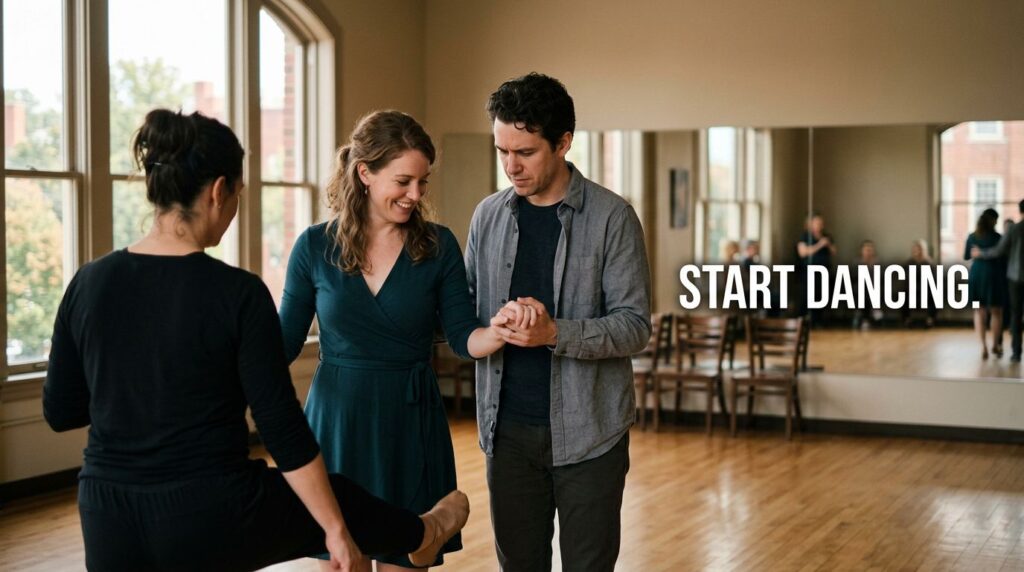 Adult Dance Classes in Northern Kentucky for BeginnersBeginners can take adult dance classes in Northern Kentucky with published options for ballroom, line dancing, and West Coast Swing. Florence and Newport offer clear starting points, including single-class admission that doesn’t require a season-long commitment.
Here in Kentucky, we recommend putting patient instruction and proper placement ahead of impressive routines or promises of quick progress. Whether you live nearby or are visiting for a few days, begin with the class that teaches what you need at a pace you can follow.
Key Takeaways
The Ritz Ballroom Dance Studio in Florence lists beginner-friendly group classes at $10 per person, with no advance sign-up required for drop-ins.
Swing N’ Cincy in Newport publishes Tuesday newcomer and novice West Coast Swing instruction at $15 per person.
A beginner class, a practice session, and a social dance have different purposes. Choose instruction when you need someone to teach the foundations.
Visitors benefit from single-class options, while local dancers should consider the weekly commitment before purchasing a membership.
Adult Dance Classes in Florence and Newport
These two Kentucky-side options give you concrete differences to compare: dance styles, beginner placement, location, and class format.
The Ritz Ballroom Dance Studio in Florence
The Ritz Ballroom Dance Studio offers ballroom, wedding dance, country, swing, salsa, and line dancing. Its address is 8150 Mall Road, Florence, KY 41042.
Most group classes are beginner-friendly unless they’re marked intermediate or advanced. The studio recommends at least one private lesson before your first group class. That recommendation gives a new dancer a separate opportunity to work on foundations before following group instruction.
Drop-in group classes don’t require advance sign-up. For a Saturday option, the studio lists beginner line dancing at 3 p.m., followed by intermediate and advanced instruction at 4 p.m. The level matters, even when both sessions teach the same general style.
Swing N’ Cincy in Newport
Swing N’ Cincy offers a focused starting point for West Coast Swing. Its Tuesday classes take place on the second floor at 629 York Street, Newport, KY 41071.
The published newcomer and novice lesson runs from 7:15 to 8 p.m. Social dancing and practice follow from 8 to 9:30 p.m. An earlier intermediate class begins at 6:30 p.m., so beginners have a distinct place in the evening’s schedule.
No prior experience or partner is required. For a visiting adult who wants a lesson followed by time around other dancers, that sequence provides a useful structure.
Choose a Beginner-Friendly Dance Style
A dance style describes what you’ll learn. A beginner designation describes where instruction begins. Both belong in your decision.
Ballroom and Swing Teach Partner Skills
Partner dancing asks you to understand your own movement while responding to another person. Timing, weight changes, direction, and communication all become part of the lesson.
Ballroom instruction suits adults interested in social occasions or learning a particular partner dance. West Coast Swing gives you a more focused choice when that music and movement appeal to you.
We recommend choosing the style you willingly want to practice. Interest won’t remove the work, but it gives the work a purpose. You don’t need to enjoy every dance style to benefit from learning one well.
Line Dancing Gives You a Shared Sequence
Line dancing teaches a repeated sequence that participants perform individually within a group. You don’t need to coordinate your movements with a partner, although you still need to follow rhythm and remember the order.
That makes it a useful choice for adults who prefer learning alongside others without a partner connection.
The Florence beginner session provides a defined starting level. Stay with that level while the basic patterns become familiar. Taking a later, harder session isn’t a requirement for making worthwhile progress.
Understand the Price and the Commitment
The billing unit matters. A single lesson, social admission, and a membership purchase different things, even when they belong to the same dance program.
These published prices give you a practical comparison.
OptionPublished PriceWhat It CoversRitz group-class drop-in$10 per personOne group classRitz beginner line dancing$10 per personOne line-dancing classSwing N’ Cincy lesson$15 per personNewcomer, novice, or intermediate lessonSwing N’ Cincy social admission$10 per personSocial dancing onlySwing N’ Cincy monthly membership$50Four Tuesday classes within five weeks
For a first visit, the single-class price is the clearest starting point. Social-only admission doesn’t provide the same purchase as a lesson.
Swing N’ Cincy’s $50 membership averages $12.50 per class when all four classes are used. Its membership information states that memberships auto-renew monthly and may be canceled at any time.
That lower per-class figure helps only when attendance fits your life. We recommend choosing the commitment you can use, rather than buying a package because its arithmetic looks better.
For two adults, a $10-per-person group class totals $20. Keep the number of participants in the budget, especially when dance is one part of a longer Kentucky visit.
Prepare for the First Lesson
Preparation should help you move and pay attention. It shouldn’t become another reason to postpone beginning.
Wear Clothing That Allows Movement
We recommend comfortable clothing that lets you step, bend, and turn without adjustment. A fitted waistband, manageable layers, and shoes that stay securely on your feet are practical choices.
Swing N’ Cincy states that special shoes aren’t required. You therefore don’t need to purchase dance shoes before trying that newcomer class.
Bring water and leave yourself enough arrival time to settle in. At the Newport location, include the second-floor setting in your arrival plan. Beginning the lesson rushed makes it harder to listen to instructions that are already unfamiliar.
Expect Repetition Before Fluency
A first lesson introduces movement that your body hasn’t yet learned to repeat. You may understand a step when it’s explained and lose it when the music begins. That is a normal part of learning a physical skill.
We recommend concentrating on the basic rhythm and weight changes before adding larger movements or extra turns.
Patient instruction still asks you to work. A suitable class gives you clear demonstrations, time to repeat, and corrections you can understand. Difficulty alone doesn’t mean you chose the wrong activity; instruction should help you understand what to practice next.
Fit a Class Into a Kentucky Visit
A dance lesson can give a Northern Kentucky trip something different: participation, instruction, and time spent learning rather than watching. Keep that experience manageable.
For a Florence outing, the Saturday beginner line-dancing listing provides an afternoon option. Newport’s Tuesday newcomer lesson offers an evening structure, with practice afterward for dancers who want more time on the floor.
We recommend leaving breathing room around either choice. A full sightseeing day followed by hurried travel and a new physical activity asks more of you than a relaxed afternoon does.
Our Northern Kentucky day-trip itinerary offers a starting point for arranging other stops without packing every hour. Keep the lesson as one planned activity rather than another obligation squeezed between reservations.
Families traveling together should also separate an adult class from the children’s outing. Our family activities in Northern Kentucky can help shape the rest of the visit. An adult beginner lesson doesn’t automatically provide children’s instruction, supervision, or an activity for everyone in the party.
Frequently Asked Questions
Do You Need a Partner to Begin?
Both Ritz and Swing N’ Cincy welcome singles and couples, and their published information says a partner isn’t required. You can therefore begin without persuading someone else to enroll.
If you’re attending as a couple, we recommend treating the lesson as shared learning. Each person needs time to understand the steps, and neither person needs to become the other’s instructor.
Is a Social Dance the Same as a Lesson?
A lesson provides instruction. A social dance provides time to dance, practice, and participate with others.
Swing N’ Cincy publishes separate lesson and social-only prices, so that distinction affects what you buy. If you need someone to explain the basic steps, choose the instructional session. Social admission alone shouldn’t be treated as a replacement for beginner teaching.
How Many Lessons Does a Beginner Need?
There isn’t one number that makes every adult comfortable. Previous movement experience, practice, attendance, and the dance itself all affect progress.
We recommend judging your beginning by concrete gains: recognizing the rhythm, repeating a basic pattern, and recovering when you lose your place. A first class can introduce those skills. Consistent practice gives you more opportunity to retain them.
Choose a Beginning You Can Continue
Adult dance classes work best when the level, instruction, and commitment fit the person attending. In Florence and Newport, beginners have published options with clear entry prices and distinct learning formats.
We recommend beginning with one suitable class, allowing yourself to learn, and choosing further instruction according to what that first lesson reveals. A worthwhile Kentucky outing can begin with a few unfamiliar steps and enough patience to practice them. […]
 Northern Kentucky Fencing Classes for BeginnersFor beginner fencing classes near Northern Kentucky, Cincinnati Fencing Club’s introductory course offers seven sessions of foil instruction for ages 10 and older. The classes take place across the river in Cincinnati, so the Ohio address belongs in your travel plans.
We recommend beginning with supervised instruction and provided equipment, because learning the rules should come before buying a weapon. Whether you live here or you’re spending an extended vacation in our part of Kentucky, give the lesson enough time to be worthwhile.
Key Takeaways
Cincinnati Fencing Club teaches beginner foil at Clifton Community Center, 320 McAlpin Avenue, Cincinnati.
The course includes seven classes, with separate charges of $50 for instruction and $20 for equipment rental.
A Cincinnati Recreation Commission membership is required, with an additional annual fee based on age.
Monday instruction begins at 7 p.m. and usually finishes around 8:45 p.m.; first-class arrival is earlier for paperwork.
A beginner course requires attention and repeat attendance. Build your plans around that commitment before adding it to a Kentucky visit.
Beginner Fencing Classes Near Northern Kentucky
Cincinnati Fencing Club in Clifton
Cincinnati Fencing Club offers a defined starting point: beginner foil instruction, a seven-class course, and equipment available for classroom use. That gives a new student a foundation without requiring a personal equipment purchase before the first lesson.
The location is Clifton Community Center, 320 McAlpin Avenue, Cincinnati, Ohio 45220. Keep that distinction clear. This is a regional option for Northern Kentucky families, rather than a Kentucky-side fencing school.
The beginner class accepts participants ages 10 and older, and the club doesn’t divide that course by age or gender. Adults and children therefore enter through the same introductory program, rather than separate advertised beginner tracks.
Monday Evening Class Times
Instruction begins at 7 p.m. on Mondays, with classes typically ending around 8:45 p.m. The club directs first-time participants to arrive around 6:15 p.m. for paperwork. For later classes, the listed arrival time is around 6:45 p.m.
The course consists of seven classes, which aren’t necessarily seven consecutive weeks. Its attendance structure allows missed classes to be made up.
The club’s beginner instructions allow registration and recreation membership purchase on the first night. We recommend treating that earlier arrival as part of the lesson itself. Paperwork, finding the room, and getting equipment all belong in the evening’s schedule.
Understand the Full Beginner Course Cost
The instructional charge is $50 for seven sessions, paid to Clifton Community Center. Equipment rental is another $20 per participant for the course, paid to Cincinnati Fencing Club.
The rental includes a mask, jacket, glove, and foil for class use. Those items remain with the program; you don’t take them home between lessons.
A required Cincinnati Recreation Commission membership adds an annual charge. The beginner information lists these age-based fees:
Participant AgeAnnual Recreation Membership17 and Under$218 Through 24$1025 Through 49$2550 and Older$10
The important distinction is between the course charges and the recreation membership. They cover different things, and the membership belongs in your budget alongside instruction and rental.
We recommend using the loaner equipment while you learn. A beginner needs time to understand the sport before choosing personal gear, and a family needs time to decide whether regular attendance fits ordinary life.
Keep travel in the budget, too. For a Northern Kentucky household, repeated trips across the river are part of the commitment. A reasonable class fee doesn’t remove the time required to attend.
What Beginner Fencing Instruction Should Teach
Footwork Comes Before Speed
Fencing begins with controlled movement. You learn how to stand, how to advance, how to retreat, and how to judge the space between yourself and another fencer.
Distance means the space that determines whether an attack can reach. Timing means choosing when to act within that distance. These ideas give purpose to the movement; without them, a beginner can move quickly while accomplishing very little.
We recommend valuing clear instruction over the appearance of excitement. Repeating a movement slowly gives the instructor something to correct. That correction matters more than rushing into a bout before you understand what your feet and weapon should do.
A successful first lesson gives you something you can explain and repeat. Winning isn’t the measure of whether you learned.
Learn the Weapon and the Scoring
Cincinnati Fencing Club’s beginner course teaches foil, one of fencing’s three weapons. Foil, epee, and saber have different target areas and scoring rules, so the weapon matters when you compare programs.
In foil, touches are made with the tip, and the valid target is the torso. Foil also uses right-of-way rules, which determine priority when both fencers register a touch.
This means beginners must learn more than how to reach an opponent. They must understand the sequence of an attack, a defense, and a response. We recommend staying with the instructor’s explanation until those distinctions become clear. Speed has value only when the action follows the rules.
Prepare for the Lesson With Care
Dress for Movement
We recommend comfortable athletic clothing that allows you to bend your knees and move without restriction. Supportive athletic shoes are a sensible starting point. Leave sandals and clothing that catches underfoot out of the lesson.
Bring water, and arrive with enough time to settle before instruction begins. A child who enters tired, hungry, or hurried has another difficulty to overcome before learning starts.
The club supplies its listed rental equipment, so beginners don’t need to arrive carrying a purchased foil or mask. Let the instructor direct equipment fitting and explain how the class uses it.
Attention Matters as Much as Age
Cincinnati Magazine’s introduction to the club also identifies 10 as its starting age. Age, however, doesn’t tell the whole story of a child’s readiness.
A beginner must listen when an instructor stops an activity, respect another student’s space, and accept correction without turning practice into a contest.
We recommend describing those expectations before the lesson. Tell your child that learning includes waiting, repeating, and being corrected. Those are ordinary parts of instruction.
If a younger child needs a different activity, our guide to kids’ martial arts schools offers another direction for comparing age-appropriate lessons.
Fit Fencing Into a Northern Kentucky Visit
Give the Lesson Enough Room
Here in Northern Kentucky, we recommend building the day around one main activity. A fencing lesson deserves attention, and children deserve time to recover their energy afterward.
For this Monday evening course, a substantial attraction visit belongs earlier in the day or on another day. After an 8:45 p.m. finish, returning to your lodging is a sound plan.
If you’re staying in Covington, Newport, or farther south, allow room for the river crossing, parking, and finding the classroom. The first-night arrival instruction is 6:15 p.m., not the 7 p.m. teaching time.
Also consider relatives who aren’t fencing. A family plan should include them without requiring everyone to share the same activity.
Choose One Kentucky-Side Stop
For a separate daytime outing, Goebel Park in Covington has a playground and its distinctive clock tower. It’s a manageable choice when children need outdoor movement rather than another structured lesson.
Newport on the Levee offers a different setting, with dining, shops, and riverfront surroundings. We recommend leaving that visit flexible instead of attaching another demanding appointment to it.
Our guide to Northern Kentucky family activities can help you shape the rest of a longer stay. When weather limits outdoor plans, our Northern Kentucky indoor activities guide provides other options.
The purpose of an outing is time together. Additional stops should support that purpose, rather than leave the family exhausted before class begins.
Frequently Asked Questions
Can Adults Begin Without Any Fencing Experience?
Yes. Cincinnati Fencing Club’s introductory course accepts participants ages 10 and older, including adults, and it teaches beginner foil.
We recommend entering as a learner without measuring yourself against experienced fencers. Adults need the same foundation children need: controlled movement, attention to instruction, and an understanding of the rules. Previous experience isn’t a requirement for beginning.
Can a Parent and Child Take the Same Beginner Course?
The beginner program doesn’t separate participants by age or gender, and children must meet the minimum age of 10.
That makes the course a practical option for a parent and an eligible child who both want to learn. Each participant has their own instructional, rental, and applicable recreation membership charges. Budget for the people participating, rather than treating the lesson as one family admission.
Does This Course Fit a Short Vacation?
The seven-session format is better suited to local families or an extended stay than a brief weekend visit. Its Monday evening schedule also matters when choosing travel dates.
The published course structure doesn’t establish a one-day visitor package. We wouldn’t present it as a drop-in attraction. For a short Kentucky vacation, choose activities whose format matches the time you have.
Begin With Instruction the Family Can Sustain
Beginner fencing near Northern Kentucky offers families a chance to learn a demanding sport through patient, supervised practice. Cincinnati Fencing Club provides a defined course, loaner equipment, and published charges across the river.
We recommend choosing it for the instruction and the commitment it requires. Give the lesson its place, keep the rest of your Kentucky visit manageable, and leave enough room for your family to enjoy both. […]
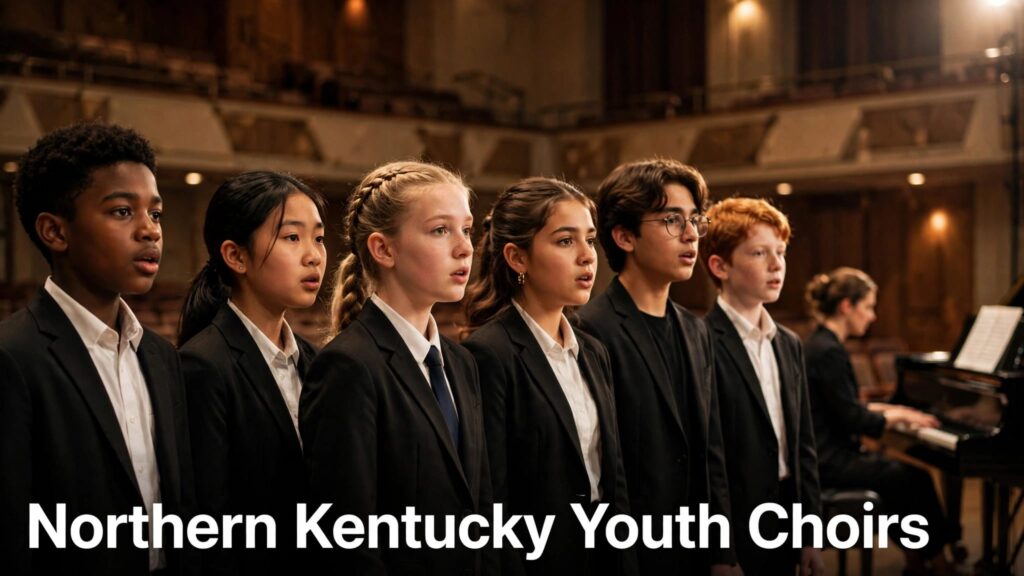 Northern Kentucky Youth Choirs: A Family GuideNorthern Kentucky has two similarly named groups: the NKU Youth Choir and the Northern Kentucky Youth Choir (NKYYC). Their schedules and musical purposes differ, so knowing the difference matters.
For Kentucky families, the choice is between enrolling for a season of music and attending a performance during a family outing.
Key Takeaways
NKU’s youth choir welcomes students in grades 5 through 12, ages 10 to 17. Holly Bowen is the collaborative pianist; annual tuition is $250.
NKYYC lists reading children ages 5 through 17 and Roman Catholic worship, secular, and ecumenical repertoire.
Families visiting can choose a public concert without taking on a weekly commitment.
Compare Northern Kentucky Youth Choirs
These are separate programs. The NKU program is part of NKU’s music preparatory programming and is directed by Holly Bowen. The Northern Kentucky Youth Choir (NKYYC) is a regional community arts organization with a stated interest in supporting school and church choir programs.
Published details give families different starting points.
ProgramPublished RangeRehearsal LocationAnnual TuitionNKU programGrades 5 through 12, approximately 10 through 17NKU, room FA 378, Highland Heights$250, payable in two paymentsNorthern Kentucky Youth Choir, NKYYCReading students ages 5 through 17, according to its 2024 enrollment announcementBehringer-Crawford Museum Education Center, CovingtonCurrent fee not published in the available program information
NKU provides a dated 2026-27 schedule and price. NKYYC’s earlier enrollment announcement establishes its broader age range, but its current public information doesn’t provide the same complete tuition and enrollment schedule.
We recommend Northern Kentucky families begin with their student’s age, then consider the music and weekly commitment.
NKU Youth Choir Has a Defined Weekly Schedule
Illustrative youth choir rehearsal, not a photograph of either program.
Rehearsal Schedule and Cost
The NKU Youth Choir program welcomes students throughout greater Cincinnati and Northern Kentucky. Eligibility covers grades 5 through 12, roughly 10 to 17 years old.
The choir meets Tuesdays, 4:30 to 6 p.m., in room FA 378. The listed fall semester began Tuesday, September 15, 2026.
Tuition is $250 for the academic year, with payment available in two installments. That’s an annual program fee, not a semester charge or private voice-lesson package. Confirm the current schedule and cost with NKU before registration. Families comparing music programs should keep these distinctions clear.
Holly Bowen Leads the Choir
She is the collaborative pianist for the NKU School of the Arts choral department. She holds a master’s degree in choral conducting from the University of Kentucky and received the KMEA District 6 Middle School Teacher of the Year award in 2023.
Her conducting and music-teaching background is relevant for young singers learning to follow a conductor and work as an ensemble.
The program page provides the registration route. For director questions, contact Holly Bowen at bowenh4@nku.edu; NKU also lists 859-572-7737 as a contact number.
NKYYC Connects Singing With Worship and Community
Illustrative setting, not a photograph of NKYYC.
Younger Singers Have a Published Starting Point
A past 2024 registration announcement described a regional youth choir for ages 5 through 17, with reading expected of its youngest children. Families should confirm current age requirements, schedule, and fees with the program contact.
The program meets weekly at the Behringer-Crawford Museum Education Center. Event listings include Tuesday meetings, but they don’t confirm a full 2026-27 schedule.
Rebecca Wells handles enrollment at 859-240-3738 or nkyYouthChoir@gmail.com. These are NKYYC’s contact details, separate from NKU’s.
Liturgical Music Has a Defined Purpose
NKYYC teaches the structure of Roman Catholic Liturgies, including Mass, Vespers, and Benediction. Liturgical music connects the words of a service with its structure and purpose.
The repertoire also includes secular and ecumenical pieces, chant, Gospel, Jewish traditions, classical composers, other languages, and STEM subjects. Families should consider this breadth alongside the Catholic liturgical emphasis.
The choir’s organizational description identifies the Notre Dame Children’s Choir model and its support for school and church programs. Families considering NKYYC are choosing musical instruction with a stated connection to worship and community work.
Public Performances Give Families a Clear Destination
Public concerts are a practical choice when your family wants to hear young singers during a visit to the area.
NKU’s Winter and Spring Concerts
NKU’s Music Prep calendar lists the NKU Youth Choir and NKU Youth Symphony Orchestra Combined Winter Concert for Saturday, December 12, 2026, at 3 p.m. in Greaves Concert Hall.
NKU’s spring concert is scheduled for Saturday, April 24, 2027, also at 3 p.m. in Greaves Concert Hall.
These performances are upcoming as of October 2026. A concert is a good first introduction for students interested in singing but not ready to take on a full choir season.
The Composer Competition Leads to a Premiere
NKU’s composer competition connects students with new choral writing. The 2026-27 composer competition criteria list an October 13 open rehearsal, which has passed, and a submission deadline of November 20, 2026.
The composer competition’s winning composition will receive its world premiere from the choir. The document lists November 30, 2026, as the date for the winner announcement.
The composer competition gives students a chance to perform a new work the public hasn’t heard before.
NKYYC’s Museum Concert Is a Past Event
NKYYC’s official museum concert listing records a performance with the Cincinnati Recorder Consort on Saturday, November 15, 2025, at 11 a.m., in the Behringer-Crawford Museum’s Rivers Gallery. The ensemble’s recorder players performed on recorder instruments.
That date is historical, not an upcoming November 2026 concert. The announcement listed museum admission of $9 for adults, $8 for seniors 60+, and $5 for visitors 3 through 17, with members and visitors under 3 admitted free.
Those were the published museum admission charges for that event.
Choose the Singing Format Your Child Can Sustain
A young singer’s interest in singing deserves instruction that fits. Choose a participation format before focusing on the most appealing performance.
Choir and Private Lessons Ask Different Things
An ensemble teaches young singers to listen as a group, follow shared direction, and prepare music together. Private instruction gives teachers more time to address students’ voices and questions.
Neither format should be chosen just because another young singer enjoys it. A child may enjoy singing with a group but feel uncomfortable alone, while another may prefer individual attention before joining a youth choir.
Our guide to Northern Kentucky music lessons explains the broader lesson options. Use that distinction to decide whether your child wants group membership, individual singing instruction, or both.
Musical Theater Requires a Different Commitment
Children drawn to characters, movement, and spoken scenes may prefer musical theater to a choir alone. Singing remains part of the work, while acting and movement add instruction and rehearsal responsibilities.
Our guide to children’s musical-theater training separates class-based learning from longer performance commitments. A weekly lesson, a seasonal camp, and a production each ask different things of a family.
Choose according to the work your child wants to do. The desire to perform is a beginning; the willingness to rehearse gives that desire somewhere to go.
Make Music Part of a Kentucky Family Visit
A visitor’s calendar and a resident family’s calendar have different limits. A resident may build Tuesday afternoons around rehearsal. A visiting family needs an experience that fits the days they’re here.
We recommend giving a concert a defined place in your trip rather than treating it as another stop between attractions. Children need time to arrive, settle, and listen without being hurried toward the next activity.
For an outing near the Behringer-Crawford Museum, our guide to family activities in Covington offers nearby planning ideas. Keep the day manageable. A performance and one additional family activity can give your family more room to enjoy Kentucky.
Attendance and enrollment are different commitments. Hearing a choir can be a complete family experience and a chance to share music with the community, even when joining one isn’t part of your plans.
Frequently Asked Questions
Can a Five-Year-Old Join the NKU Youth Choir?
The NKU Youth Choir’s published eligibility starts at about age 10, or grade 5. The program is for singers through grade 12, usually about age 17.
A separate program, NKYYC, said children as young as 5 could read music in its 2024 enrollment announcement. We keep the requirements separate because similar names can lead families to the wrong program.
Can a Visiting Family Participate for One Afternoon?
Published program details describe regular commitments, not drop-in activities for vacationing families.
For a short visit, we recommend attending a public event. NKU has dated concerts on December 12, 2026, and April 24, 2027, for families who want to hear the group without committing to a season.
Is the November Museum Performance Coming Up Again?
The documented NKYYC event took place on November 15, 2025. It shouldn’t be treated as a recurring annual booking.
There isn’t a confirmed upcoming NKYYC public event date in current listings. NKU’s published dates are the clearest upcoming options for families planning around a public event.
Choose the Right Commitment
Each choir has its own age range, musical purpose, and weekly responsibilities. Choose a choir whose stated work fits your child, rather than treating similar names as interchangeable; Holly Bowen’s NKU ensemble is one option.
For visiting families, a public concert is a worthy destination in its own right. Give everyone time to listen, and let Kentucky’s young singers enjoy singing and music. […]
 Northern Kentucky Makerspaces for Kids and TeensNorthern Kentucky makerspaces give children room to create, test, and learn through hands-on learning. Access comes first, because eligibility varies by program.
Here in Kentucky, choose a program before comparing equipment. For visitors, a public reservation may be more useful than tools reserved for enrolled students. Check who can enter a makerspace, then consider what your child wants to make.
Key Takeaways
NKY’s makerspace centers on scheduled K-12 learning for students, including field trips, workshops, and camps.
NKU’s Stego Studio is for its university community, not the general public.
Cincinnati’s Downtown Main Library welcomes public visits, with free equipment use and charges for some materials.
A child’s readiness, the reservation length, and the project’s requirements should guide the outing.
Choosing Northern Kentucky Makerspaces by Access
A makerspace is a shared place where people use equipment, materials, and instruction to make things. The term covers several kinds of spaces, but it doesn’t establish public admission.
These three makerspaces have different access models. Having tools on site doesn’t establish public admission.
SpaceLocationFamily Access and CostNKY MakerspaceIgnite Institute, ErlangerScheduled K-12 programs, field trips, workshops, and eventsStego StudioNKU, Highland HeightsFor NKU students, faculty, and staffDowntown Main Library MakerSpace800 Vine Street, CincinnatiPublic reservations; no charge for use, with some materials fees
Choose the access model before the machine. For a visiting family without university connections, the Downtown library offers the clearest public reservation route, with no membership required.
The terminology deserves the same care. A hackerspace generally emphasizes computers and electronics. A Fab Lab follows the Fab Foundation model. TechShop helped popularize full-scale workshops before announcing bankruptcy in 2017.
Those names describe approaches to making. They don’t establish children’s admission, supervision, or permission to operate machines.
NKY Makerspace Began With Students
The NKY Makerspace program is based at the Ignite Institute in Erlanger and centers on K-12 learning. Its program description lists field trips, workshops, internships, after-school events, Super Saturdays, and summer camps.
Students Asked for a Place to Build
The Northern Kentucky Makerspace opened in 2015 after sixth-, seventh-, and ninth-grade robotics students approached the Boone County Board of Education about creating a dedicated space.
KET reported that more than 8,000 students had participated and that the building could accommodate about 120 at once. Those figures describe the program’s history, not current attendance or capacity.
The origin matters because students asked for a place to do the work. They wanted room to build, test, and learn through their own decisions.
Six Labs Supported Different Interests
KET described six labs: a woodshop, an audio lab, a video lab with a green screen, a design room with seven 3D printers, a robotics lab, and a Toyota-sponsored engineering room.
That historical arrangement shows the program’s breadth. Making includes sound, video, construction, and engineering, each requiring its own kind of attention.
For families visiting our area, this is a scheduled educational opportunity where children can create, not a walk-in attraction with daily admission.
NKU Stego Studio Has Clear Boundaries
NKU’s Stego Studio is free for university students, faculty, and staff. Users must complete an access-and-usage agreement and may need to show an NKU All Card.
For fall 2026, makerspace hours are Monday, Wednesday, and Friday, 10 a.m. to 4 p.m., and Tuesday and Thursday, 1 to 4 p.m. The studio is in LA 524 in Landrum Academic Building during Steely Library’s temporary relocation. Check the linked NKU page for current hours, access requirements, and registration rules.
3D Printing Requires the Right File and Purpose
The studio accepts STL or OBJ files. Prints exceeding 12 hours need approval from a Makerspace Supervisor, and large, multi-part projects are limited to one build plate at a time.
Steely Library supplies filament and consumables. Research and instruction projects receive priority, and commercial purposes aren’t permitted.
Eligible users can use the studio for learning, but can’t treat its materials and machines as a production service for merchandise.
Scanning Requires a Suitable Object
The studio’s equipment includes three 3D scanners. For 3D scanning, objects can’t be black, white, high-gloss, mirror-like, or have holes.
Staff help users choose and operate a scanner. Objects must meet the studio’s requirements to produce a useful digital model.
University access remains the deciding condition. The studio fits this guide for eligible older users, but its equipment listing doesn’t give visiting children general public access.
Cincinnati’s Library Offers Public Reservations
Across the river, the Cincinnati & Hamilton County Public Library MakerSpace offers public access to a library makerspace. Anyone can make a reservation, and equipment use is free. Some machines require materials available for a small additional charge.
The Downtown Main Library is at 800 Vine Street, Cincinnati. Its hours are Monday through Wednesday, 10 a.m. to 8 p.m.; Thursday through Saturday, 10 a.m. to 6 p.m.; and Sunday, 1 to 5 p.m.
The service includes 3D printers, Adobe software, and other creative tools. Families book online, so they can plan the activity as part of the day.
Before visiting, check the official booking information for current hours, availability, age or supervision rules, and materials charges.
This public-access option suits visitors who want a making activity without purchasing a workshop membership. The lack of a machine-use fee keeps starting costs modest, though materials remain part of the budget.
Keep the geography clear. This stop is in Ohio, even when it’s part of a Northern Kentucky vacation. Our guide to Northern Kentucky family activities offers Kentucky-side outings to build around the same trip.
Membership Workshops Require a Different Commitment
Paid workshops belong in the regional picture, but they differ from school programs and public library reservations. Ongoing access follows the workshop’s rules.
The Manufactory Is a Large Cincinnati Workshop
The Manufactory describes itself as a 17,000-square-foot membership workshop in northern Cincinnati and calls itself the city’s only fully equipped makerspace.
Its listed users include makers, artisans, engineers, inventors, prototype builders, crafters, stage and prop builders, restorers, entrepreneurs, and repair technicians.
That range explains the workshop model. People bring continuing projects that require equipment, workspace, and repeated visits. A family looking for one afternoon should distinguish that commitment from a single introductory activity.
An equipment list alone doesn’t confirm youth access or permission to use every machine.
Kre8now Illustrates the Class-Based Route
In its feature on Kentucky makerspaces, KET described Lexington’s Kre8now offering formal classes without requiring ongoing access. Subjects included CNC machines, 3D printing, sewing, coding, and woodworking.
Its executive director emphasized access to a collection of tools rather than ownership of one table saw. A partner compared participation to exercising the mind and creative abilities through a gym-style arrangement.
KET’s account documents past offerings, not an October 2026 class calendar. Lexington is also a separate Kentucky trip, not a nearby Northern Kentucky stop.
A First Visit Should Have One Clear Purpose
We recommend beginning with one skill and one manageable project. A child can learn more from a modest task completed with attention than from an ambitious plan that exceeds the session.
Match the Work to the Child
Readiness includes listening, waiting, following instructions, and accepting that a machine has limits. A child’s interest matters, but it doesn’t replace training.
Safety instruction may cover approved materials, woodworking tools, protective equipment, emergency stops, hot surfaces, moving parts, and when staff assistance is required. Students and parents should follow the same boundaries they expect children to respect.
For a first outing, choose an activity that leaves time for explanation and cleanup. The finished object is only part of the learning.
Begin With a Model That Fits
Thingiverse and Printables offer downloadable models, while TinkerCAD provides a starting point to create your own design. University 3D modeling resources offer another way to understand files and design choices.
A downloadable file still needs review for size, print time, materials, and permissions. Downloading something doesn’t mean a particular machine can produce it during your reservation.
Our Northern Kentucky craft stores guide supports simpler projects your family can continue away from specialized equipment.
Frequently Asked Questions
What Is a Makerspace in a Library?
A library makerspace is a shared area where patrons can use creative tools and technology. Depending on the location, it may include design software, sewing equipment, or other tools.
At Cincinnati’s library, schools, companies, and clubs can arrange tours or group visits through MakerSpace staff.
Can a Library 3D Print Continue After Closing?
At the Downtown Main Library MakerSpace, 3D printing stops when a session expires or the library closes. Your project must fit within the reservation’s limits.
NKU’s 12-hour printing threshold isn’t a library-wide rule. Downtown Main printing is bounded by the reserved session and closing time.
This distinction matters when choosing a file. A model that takes several hours requires a different plan than a short introductory print.
Give the Project Room to Succeed
Northern Kentucky makerspaces can offer a worthwhile experience when the child and project are a good fit. Choose a manageable first experience that leaves enough time to complete a project responsibly.
For a Kentucky family outing, one purposeful session can be enough. Children can make something, learn from the result, and carry that understanding home. […]
 Northern Kentucky Debate Clubs: A Teen’s Starting GuideSchool teams and independent clubs are the two practical routes for teens seeking Northern Kentucky speech & debate clubs. Start with your child’s school, then use national resources such as NCFCA to find independent or online opportunities.
Here in Kentucky, we believe learning to speak deserves the same care as learning to listen. Choose instruction your teen can sustain, with regular practice and responsibilities that fit the family calendar.
Begin with the program, because a tournament listing alone doesn’t establish a club your child can join.
Key Takeaways
The NSDA school map lists schools with current or recent speech and debate teams.
NCFCA supports independent clubs, which set their own goals and operations.
Fort Mitchell’s Beechwood Tiger Tournament appears on the state competition calendar, alongside statewide and online events.
A continuing team commitment fits a resident family’s plans; a short visit requires a different arrangement.
Finding Northern Kentucky Debate Clubs
A school team is the first route we recommend for an enrolled student. Start near the place where your teen already learns, then widen the search if that route doesn’t offer a program.
Use the NSDA School Map
The National Speech & Debate Association’s Find a Program resources include a school map. Use the NSDA school map to find schools that have or recently had a speech and debate team.
A listing shows a school’s connection to speech and debate, but doesn’t mean every nearby student can enroll.
For families in Florence, Covington, Newport, or Fort Thomas, use the map to find school contacts, not as a directory of drop-in activities.
Request the Right School Contact
The NSDA contact form asks for a school name and state when requesting contact information for key school officials. Enter the school and state to direct your request.
Families without a particular school in mind can leave the school field blank and describe their situation. Include the student’s grade, location, and interest in school-based or independent participation.
A useful introduction gives the organizer something to act on. Explain whether your teen wants to learn formal debate, prepare individual speeches, or explore both before choosing an event.
Independent Clubs Give Families Another Route
Independent speech and debate clubs offer another option when a school team doesn’t fit. Locally operated independent clubs have a practical distinction: the organization that supports a club and the people who run it have different responsibilities.
Understand NCFCA Club Independence
NCFCA provides networking and resources, while local leaders set each club’s goals and operations. NCFCA is responsible for support, not local decisions.
NCFCA’s new-club guidance allows weekly, biweekly, monthly, and other meeting schedules. It also describes audiences that include teen competitors, younger students, and families with younger children.
Local leaders decide how their club uses NCFCA resources. That flexibility gives families several possible arrangements, but it doesn’t make every club the same.
For families organizing broader enrichment, our guide to Northern Kentucky homeschool co-ops helps distinguish continuing group learning from occasional educational outings.
Find Local or Online Connections
NCFCA’s club connection guidance directs families to support when they need help finding a connection.
When no nearby club appears, the NCFCA Club Support Manager can help families learn about clubs starting in the region. NCFCA also shares online opportunities. Clubs may meet in person, online, or through a combination of both.
We recommend stating the need plainly: a teen in the region, the student’s age, and whether regular travel is possible. A clear request gives support staff a better basis for connecting your family.
Joining Requires a Sustainable Commitment
Debate means presenting a position, supporting it, and responding to another person’s reasoning. Students need to prepare between meetings as well as participate during them.
We favor a manageable commitment that families can maintain. A full calendar doesn’t prove that a child is learning.
Use a clear sequence when approaching a team:
Identify the student by grade and school, and explain whether they’re new to speech and debate.
Request beginner placement or an introductory conversation with the person responsible for instruction.
Describe the attendance your family can sustain, including transportation and existing school obligations.
Choose an event and tournament plan with the coach once the student understands the preparation involved.
Practice deserves a place on the calendar. Research, drafting, speaking aloud, and responding to feedback all take time.
For local families, the place where a team practices may differ from where it competes. Plan for those trips separately. A convenient meeting location doesn’t make every competition a short drive, and an online event still requires protected time.
Event Dates for 2026 and 2027
The Tabroom Kentucky tournament listings provide event dates, locations, registration deadlines, and judging information. The 2026-2027 listings include these competitions.
TournamentLocationEvent DateRegistration DeadlineWyatt OctoberLouisvilleOctober 24, 2026October 19, 6:00 p.m. EDTBeechwood Tiger TournamentFort MitchellNovember 7, 2026November 3, 2026Racer ClassicMurrayNovember 14, 2026November 11, 2026PLD Raise Every Voice Fall InvitationalLexingtonNovember 21, 2026November 17, 2026TOC Digital Speech and Debate Series 1NSDA Campus, onlineDecember 4-6, 2026November 30, 2026Kentucky Keynote Speech InvitationalOnlineJanuary 8-11, 2027January 7, 2027
For families seeking competition close to home, the Fort Mitchell listing gives the Beechwood event local relevance. Families should compare drives to Louisville, Lexington, and Murray. Murray may be more practical for western Kentucky families, while northern families should check the longer route to Murray and whether an overnight stay is needed.
Compare the listed invitationals by format, location, and travel needs. These invitationals may suit families looking for events that fit their schedules.
The registration deadline comes before tournament day. Give the coach time to organize entries and judging responsibilities before that deadline arrives.
The tournament calendar lists each event’s date and registration process. It doesn’t establish weekly instruction, outside-student membership, or spectator admission. Keep those distinctions clear when deciding whether an event belongs in your family’s plans.
Online Competition Still Requires Preparation
An online tournament can reduce travel, but Digital Speech and Debate still requires preparation, an appropriate event, and protected time for rounds.
The University of Kentucky’s TOC bid tournament information includes the Digital Speech and Debate Series, which uses NSDA Campus for online competition.
Events include Policy, often listed as CX; Public Forum, or PF; Lincoln-Douglas, or LD; Congressional Debate, or CD; speech events; and World Schools Debate.
Series 2 is scheduled for February 19-21, 2027, with registration due February 15. Series 3 follows March 5-7, 2027, with registration due March 1.
Choose an event through instruction rather than because its abbreviation looks familiar. A prepared speech, a policy round, and congressional debate require different skills.
Online participation removes the drive, but students still need a working connection, a suitable room, and a household schedule that protects speaking time.
Starting a Team Requires Adult Responsibility
When a school has no team, contact the school directly about starting one. NSDA provides tools for pitching a program, and administrative support matters for both classes and after-school activities.
A useful proposal names the adult who will teach, where students will meet, and how the program will begin. Start modestly, with clear responsibility and adult leadership.
Give Coaches a Defined Role
NSDA member coaches receive coaching tools and support. The organization also offers an Intro to Coaching Course for adults starting this work.
NSDA’s jobs board lists coaching positions, including virtual, remote, full-time, and part-time roles. Schools need different kinds of support.
For an independent group, NCFCA’s new-club planning guide covers meeting schedules and the students a club intends to serve. It also outlines how NCFCA supports new clubs as they plan.
Judges and Judging Have a Separate Responsibility
Adults can also contribute through judging. NSDA’s judge board lists remote and in-person opportunities, and its free judge training materials offer an entry point.
Previous coaching experience isn’t the only route into this work. Training and each event’s judge requirements determine the appropriate assignment.
We believe judging requires careful preparation. Students put time into their arguments and speeches, so adults should give each evaluation the same attention.
Frequently Asked Questions
Can Beginners Learn Speech and Debate?
Beginners need instruction before facing demanding competitive expectations. We recommend programs that give students practice, explain event rules, and offer feedback they can use in the next round.
A teenager who speaks readily still needs to learn evidence and listening. A quieter teenager deserves time to prepare and speak without being treated as though confidence must come first.
Can Debate Fit a Northern Kentucky Vacation?
A continuing team usually needs more time than a short visit allows. An event shouldn’t be treated as an open attraction just because its date appears online.
For visiting families, arrange participation through an established program rather than building a day around an assumed drop-in opportunity. Our family activities in Northern Kentucky offer broader outing ideas when siblings need a different pace.
Kentucky deserves time to be enjoyed, and a worthwhile educational experience deserves enough room in the day to hold your child’s attention.
Give the Right Program Time to Work
Local debate clubs are most useful when instruction, attendance, and family responsibilities agree. Begin with a school connection or an independent-club route such as NCFCA, then let preparation guide the tournament plan.
We recommend steady participation over a crowded schedule. Give your teen room to study a position, listen carefully, and speak with reasons they can explain.
The right beginning gives that work time to become a skill. […]
 Northern Kentucky Language Classes for Kids and TeensLocal small-group programs, private instruction, and online options serve different purposes and require different commitments. We recommend starting with your child’s learning goal, since speaking with relatives, strengthening schoolwork, and exploring another culture call for different instruction.
Here in Kentucky, we want families to find worthwhile learning without crowding every afternoon. Local families need a sustainable routine, while visiting families need a commitment that fits their stay. Start with that distinction, then consider the programs below.
Key Takeaways
PolyFluent describes small-group foreign language instruction for young children, with students grouped by age and knowledge.
International Language Plus offers in-person, virtual, and one-on-one instruction, with customized plans and no contracts or minimum commitments.
Kentucky Adult Education services include English learning, GED preparation, and College Prep Online.
A program’s purpose matters as much as its name. An adult services listing, a university course, and a children’s class shouldn’t be treated as interchangeable.
Compare Northern Kentucky Programs by Purpose
We begin with what each program teaches and how that instruction is organized.
ProgramMain PurposeFormat or Defining FeaturePolyFluentForeign language learning for young childrenSmall groups matched by age and knowledgeInternational Language PlusCustomized language learningIn-person, virtual, and one-on-one sessionsNKU ed2goNon-credit language studyOnline courses with completion certificatesKentucky Adult EducationAdult English and educational supportFree services through local centers
The distinction is practical. Children who need repeated speaking turns require a different setting than adults preparing for citizenship.
Families comparing programs should check whether a teen’s course is for personal enrichment or meets school requirements. A useful course can support learning without providing high school credit. The course title alone doesn’t establish what a school will accept.
Children’s Classes Begin With the Right Group
PolyFluent Groups Children by Age and Knowledge
PolyFluent’s children’s language program comes from a local nonprofit that offers foreign language classes in small groups. Its approach places children alongside others with similar ages and existing knowledge.
That grouping deserves attention. A beginning learner needs room to hear, repeat, misunderstand, and try again without competing with children who already know the material. We recommend choosing instruction that gives your child a real part in the lesson, rather than a seat in a group moving beyond their understanding.
Participation Matters More Than Promises
PolyFluent cites research reporting increased brain activity and stronger problem-solving and critical-thinking skills among bilingual and multilingual children compared with monolingual peers. Those are the organization’s stated reasons for encouraging early language learning.
For the family decision, we place greater weight on the work your child will willingly do. A useful beginning includes listening, responding, and returning to familiar words until those words carry meaning.
Homeschool families can consider language study alongside other subjects through our guide to Northern Kentucky homeschool enrichment. Give the subject a defined place in the week, with time to practice between lessons.
Private Instruction Provides a Different Kind of Flexibility
International Language Plus Offers Several Formats
International Language Plus language courses include in-person and virtual classes, one-on-one sessions, and customized learning plans. The Cincinnati school has served Southwestern Ohio and families across the river since 1986.
It teaches complete beginners through advanced speakers and requires no contracts or minimum commitments. That removes a long-term enrollment obligation, though regular practice still requires commitment from the learner.
We recommend matching the format to the difficulty your child is facing. Individual instruction gives focused attention to pronunciation, understanding, or a specific learning goal. Virtual sessions also remove the drive across the river.
Language Choice Should Have a Clear Purpose
The school’s foreign language offerings include Spanish, French, German, Mandarin Chinese, Portuguese, Italian, Japanese, and Korean. It also offers TOEIC and TOEFL preparation.
A teen studying for an English proficiency exam has a different purpose than a child beginning French for personal interest. Keep that purpose clear when comparing instruction.
International Language Plus lists 513-402-0184 as its contact number. Its Cincinnati location matters for Kentucky-side families weighing travel. Serving families across the river doesn’t make every classroom a Kentucky-side stop.
Online Language Courses Need a Clear Purpose
NKU ed2go Provides Non-Credit Speed Spanish Study
NKU’s ed2go Speed Spanish course provides 24 hours of online instruction through non-credit online courses. Students receive a certificate of completion.
Non-credit means the course doesn’t award university academic credit. A completion certificate records course completion; it isn’t a university degree or an automatic substitute for a school language requirement.
That distinction helps families compare language instruction options. We recommend treating Speed Spanish as enrichment rather than assuming a university name makes it a children’s program. The structure and purpose matter more than the institution’s name.
Asynchronous Learning Separates Practice From Meeting Time
A University of Kentucky account of online language teaching describes a summer when elementary Spanish 101, 102, and 201 moved online for the first time. Instruction used Canvas, Zoom meetings and office hours, and recorded speaking activities. Canvas hosted course materials.
Students could complete asynchronous assignments by recording two-minute videos and responding to classmates. These recorded activities offered a speaking option alongside Zoom meetings. Asynchronous means participants complete activities at different times instead of joining a Zoom meeting together.
That format can suit a hesitant speaker who benefits from preparation before recording. It still requires spoken work and attention to classmates. This historical example explains a teaching method, rather than offering a current Northern Kentucky youth enrollment option.
Free English Classes Belong to Adult Education
Adult English Services Are Separate From Children’s Classes
The state offers free English language classes through its English as a Second Language (ESL) program, with a local center in every county. These services help adults improve fluency, prepare for U.S. citizenship tests, and develop job-seeking skills.
The Kentucky Adult Education center directory identifies local services. These programs help adults who need English for everyday communication, employment, or further education.
Adult English services and children’s foreign language instruction have different purposes. Free adult English services aren’t free Spanish or French classes for school-age children.
Adult Program and GED Support
Northern Kentucky Adult Education states that Adult Basic Education services are free for people who live or work in Kentucky and are at least 18 years old. That makes the age rule relevant to older teens entering adulthood.
GED preparation includes enrollment, evaluation, resources, instruction, and tutoring at no cost. GED testing is also included at no cost.
The program lists 859-443-9762 for English Language (ESL) services and 859-442-1186 for GED and general information. Its College Prep Online work covers general college preparation, academic English, college math, and college composition.
We include these services because a family search often brings adult and children’s listings together. The eligibility and learning purpose must remain clear.
Make Language Learning Fit a Local Stay
Language learning asks for attention before it asks for another appointment afterward. We recommend giving that work enough room in the day, whether your family lives here or is staying for an extended visit.
For a family based in Covington, Newport, Florence, or Erlanger, travel belongs in the decision. A Cincinnati lesson includes a river crossing and the rest of the route. An online lesson removes that drive, but still needs a quiet place and an uninterrupted stretch of time.
Visitors should distinguish ongoing instruction from an occasional outing. A recurring class depends on attendance across several dates; a vacation activity must fit the days you’re here. Flexible private instruction and continuing group enrollment carry different obligations.
Afterward, leave room for something less demanding. Our guide to family activities nearby offers ways to enjoy the area without adding another formal lesson.
A relaxed afternoon can include recalling a few familiar words. It doesn’t need to become another test. Children deserve time to enjoy Kentucky, notice their surroundings, and talk about what interested them.
Frequently Asked Questions
Are Children’s Language Programs Free?
The services identified here are Kentucky Adult Education’s adult English as a Second Language and educational programs. Its English language classes are for adults, so they don’t establish a children’s foreign language option. PolyFluent’s non-profit status alone doesn’t mean its instruction has no cost.
Does International Language Plus Teach In Person and Online?
Yes. It offers in-person and virtual instruction, including one-on-one sessions and customized learning plans. There are no contracts or minimum commitments, and instruction covers beginner through advanced skill levels.
Does NKU Speed Spanish Provide College Credit?
No. NKU ed2go’s Speed Spanish course is non-credit continuing education. The course lists 24 course hours and provides a completion certificate, rather than academic credit toward a university degree.
How Soon Should a Child Become Fluent?
These program details don’t establish a guaranteed fluency timeline. We recommend looking for understandable progress first: recognizing familiar speech, answering without a prompt, and using learned words beyond the lesson. Progress should be visible without promising a finish date.
Choose Instruction Your Child Can Sustain
The best fit gives your child suitable instruction and asks for a commitment your family can sustain. We recommend separating children’s groups, private instruction, online enrichment, and adult education before choosing among them.
Steady participation matters. Choose a clear learning purpose, protect time for practice, and leave enough room in the week for family life. A worthwhile class should fit the way your child learns and the time your family can give. […]
Popular – Northern Kentucky Tourism
Popular
 Best Waterfalls Near Northern Kentucky for Easy Day TripsWe do not have to drive across half the state to find water, stone, and a little peace. The best waterfalls near Northern Kentucky are the ones that give us a clear view, a manageable walk, and a day that still leaves room for lunch, family, or one more stop on the way home.
When we choose well, the waterfall does not wear us out. It resets us. That is the standard we should keep.
What Makes an Easy Waterfall Day Trip Worth Taking
Easy does not mean dull. It means the road is reasonable, the trail is short enough to keep our legs honest, and the view arrives before the day starts to feel like labor.
A waterfall trip is only easy when the road, the trail, and the return all stay simple.
That is the test we should use. If the drive is long, the trail is steep, and the parking is uncertain, the outing stops being a calm day trip and turns into a project. We do not need projects when we are looking for clean air and moving water. We need something clear, direct, and worth the fuel.
This is why waterfalls near Northern Kentucky matter so much for local travelers. We are close to river country, close to state parks, and close to several places where a waterfall does not demand a full expedition. The right trip feels like a gift because it still leaves us time for the rest of the day.
The Closest Falls Right Here in Northern Kentucky
If we want the simplest possible waterfall outing, we start close to home. Moser Branch Double Falls, also called Mammoth Cave Double Falls, sits in the Fort Wright Nature Center. That alone changes the tone of the trip. We are not planning a mountain climb. We are taking a short walk to something beautiful.
The park is only 16 acres, and the trail is short. Wildflowers line the path at the right time of year, which gives the stop a quiet, local charm. This is the kind of place we recommend when we want a waterfall without turning the day into a long road story.
If we want to keep the outing low-cost, our free parks and nature spots in Northern Kentucky list pairs well with this stop. That matters because easy travel is not only about walking less. It is also about spending less, worrying less, and keeping the day open.
Moser Branch is not the biggest waterfall on this list, and it does not need to be. It gives us a nearby place where water and rock do their work without much help from us. Sometimes that is exactly what we need.
The Short-Drive Waterfalls That Still Feel Easy
Once we move beyond the border counties, the list gets stronger and the drive gets longer, but the walking can still stay friendly. That is the real wisdom here. We are not choosing the hardest waterfall we can survive. We are choosing the one that matches the kind of day we want.
The quick comparison below keeps the options plain.
WaterfallWhy we choose itAccessBest fitMoser Branch Double FallsRight here in Fort Wright, short trail, local feelVery short walkA quick reset close to homeCreation FallsAbout 1.5 hours away, scenic Red River Gorge settingEasy hike on a well-known trailA strong day trip without overdoing itCumberland FallsAbout 2.5 hours south, four developed viewing platformsVery easy viewingThe classic waterfall driveYahoo FallsShort, paved trail and simple accessLow-effort walkTravelers who want easy footing
The pattern is plain. We can go farther when the trail stays kind. We can go closer when time is tight. Either way, the right waterfall keeps the day from becoming a test.
Cumberland Falls
Cumberland Falls is the name people know, and for good reason. It is about a 2.5-hour drive from Northern Kentucky, which still keeps it in day-trip territory, and it has four developed viewing platforms. That matters. We do not need a hard hike to get a strong view.
This is the waterfall we choose when we want the classic Kentucky answer. The water is broad, the gorge is serious, and the whole place has weight. For a bigger sweep of falls across the state, the Kentucky Wildlands Waterfall Trail gives us a wider map to follow later. Cumberland is the one that reminds us why Kentucky keeps drawing people back to the outdoors.
Yahoo Falls
Yahoo Falls belongs on this list because it does not make a simple day trip harder than it needs to be. The trail is short and paved, which is exactly the kind of detail people notice after a long week. A lot of travel plans fall apart because the return walk is too much. Yahoo Falls does not ask for that kind of payment.
It is a good choice when we want a straightforward outing and a path that stays manageable. If we want to keep collecting waterfall ideas for future weekends, the Kentucky Hiker waterfall guide is a practical place to keep going. Yahoo Falls gives us the easy walk first, which is the part many travelers care about most.
Creation Falls
Creation Falls gives us a different sort of easy. It is about 1.5 hours away in Red River Gorge, and the Rock Bridge Trail makes the trip feel earned without becoming punishing. The setting is one of Kentucky’s best-known outdoor corridors, and the waterfall fits it well.
This is the kind of stop we send people to when they want a scenic drive, a clear trail, and a payoff that feels larger than the effort. The walk is friendly enough for most casual day-trippers, and the gorge gives us enough stone and forest to make the day feel full. Creation Falls is proof that easy can still be beautiful.
How We Keep the Day Simple
The best waterfall day trips fail when we try to stack too much into them. We do not need three stops, a complicated lunch, and a schedule that leaves no room for weather, parking, or rest. We need enough structure to move with purpose and enough slack to enjoy the view.
A few habits keep the day honest:
Start early so the trail and parking stay calm.
Wear shoes that can handle wet ground and a little mud.
Bring water, even for short walks, because Kentucky heat does not care about our enthusiasm.
Leave one meal flexible, so the day does not feel rushed by the clock.
If we want to turn a waterfall outing into a fuller water day, the best places for kayak rentals in Northern Kentucky can help us keep the theme going without making the plan complicated. That is the right kind of extension. It adds water, not stress.
The truth is simple. A good trip has room in it. It leaves us time to look, time to breathe, and time to drive home without feeling wrung out.
Conclusion
Northern Kentucky sits close enough to several waterfalls that we do not need to treat them like rare prizes. We can reach them, enjoy them, and return home with the day still intact.
The strongest choice depends on what we want most. Moser Branch Double Falls gives us the closest local outing. Cumberland Falls gives us the big classic view. Yahoo Falls and Creation Falls give us easy walks with real scenery. If we keep easy access at the center, the whole trip stays clear.
That is the real measure of a good waterfall day trip. It should refresh us, not exhaust us. […]
 Northern Kentucky Festivals Families Should Plan Around in 2026We do not need a dozen weak weekend ideas. We need the right dates, the right places, and the kind of gatherings that give children room to move and parents room to breathe. Northern Kentucky festivals do that well in 2026, and if we plan early, we get more than an outing, we get a season.
As of May, the calendar is already taking shape, with farm nights, church funfests, and community celebrations on the books. For a wider regional view, we can keep Visit Cincy’s festival calendar nearby, but the strongest family options are right here in Northern Kentucky.
Spring festivals that set the pace
Here is the short list we would mark first:
Festival2026 timingWhy families should careFriday Nights at the FarmStarts April 17, weekly FridaysLive music, food, family activities, and open fields in WaltonNorthern Kentucky Pride FestivalJune 7, CovingtonCommunity energy, music, and a welcoming day outMary, Queen of Heaven FunFestJune 24 to 26, ErlangerRides, games, KiddyLand, food, raffles, and live entertainmentSummer Fest by 7 Hills ChurchSummer 2026, Florence, Dry Ridge, Highland HeightsDrop-off fun with meals, a shirt, and planned activities
The best family festival days are chosen before the month gets crowded.
Friday Nights at the Farm begins April 17 at Sugar Ridge Family Farm in Walton, and that weekly rhythm matters. A farm night gives children open space, music, food, and the easy kind of freedom that a packed city block cannot provide. By June, the pace picks up. The Northern Kentucky Pride Festival in Covington brings community life into the center of the season, and Mary, Queen of Heaven FunFest in Erlanger, set for June 24 to 26, gives families the old church-festival pattern done right, with rides, games, KiddyLand, food, raffles, and live entertainment.
This is where wise planning helps. When weather turns stubborn or a child needs a calmer day, our Northern Kentucky indoor activities for rainy days guide keeps the weekend from falling apart. That is not a small thing. It is the difference between a plan that bends and a plan that breaks.
Summer events that keep kids moving
Summer is where families either drift or decide. We should decide. Summer Fest by 7 Hills Church is built for children, with breakfast, lunch, snacks, a shirt, and scheduled activities, and the drop-off options in Florence, Dry Ridge, and Highland Heights make it practical for families with more than one moving part.
If we want to stretch the day into a bigger outing, our amusement parks in Northern Kentucky guide gives us another layer of family fun. A festival does not have to be the only stop. It can be the center of the day, the way a strong porch light draws people home.
Church festivals still know how to do summer right. St. Pius X Summer Festival in Edgewood runs July 14 to 16 with rides, games, refreshments, a grand raffle, a silent auction, and live music every night. Then Balloons & Tunes KY brings hot air balloons to Falmouth on July 25, and children 5 and under are free. That is the kind of summer event that gives families a reason to look up, stand still, and watch something beautiful rise.
These are not random dates. They are summer anchors. They give us a reason to keep weekends open instead of letting them disappear into errands and screen time.
Fall festivals worth holding open
By fall, we want one event that feels like hometown and harvest at once. Merchants & Music Festival in Fort Thomas on September 19, 2026, gives us exactly that, with live music, food trucks, West Sixth Beer for adults, and a kids’ area that keeps younger children busy while the evening unfolds. That is a real family festival, the kind we can plan around without apology.
If we want a softer kind of night, A Lantern Festival in Northern Kentucky is another 2026 event to watch. Lanterns change the mood of a night fast. They slow people down. They make even restless children pause and look.
Fall matters because it closes the year with intention. We should not treat September like a leftover month. We should treat it like one more gift, one more open door, one more chance to gather before the season turns.
A Calendar Worth Keeping
The best Northern Kentucky festivals in 2026 are not only entertaining. They are usable. They give families structure, joy, and a reason to keep showing up for one another.
We do not need every event on the list. We need the right ones, the ones that fit the season and leave room for memory. When we choose wisely, the calendar gets shape, the children get room, and the trip feels like more than passing time. […]
 Best Northern Kentucky Halloween Events for KidsOctober in Northern Kentucky does not need confusion. It needs a plan, and that plan should keep children smiling, parents calm, and fear in its proper place.
The best Northern Kentucky Halloween events for families are the ones that give us candy, movement, and a little wonder without pushing little ones past their limit. If we want a safe bet, we look for festivals, trunk-or-treat nights, and farm days that feel warm before they feel spooky. We also keep a close eye on the Kentucky 2026 Halloween events calendar, because dates can shift as fall gets closer.
The kid-friendly shortlist we keep circling back to
We do not need a dozen choices. We need the right ones, the places where children can enjoy October without dread.
EventWhereWhy kids like it2026 noteBig Bone Lick Halloween CarnivalUnion, KYGlow-in-the-dark mini golf, pumpkin carving, carnival gamesOct. 26, all dayNeltner’s Farm Fall FestivalCamp Springs, KYCorn maze, petting zoo, barrel train, wagon ridesWeekends through late OctoberSugar Ridge Farm Fall FestWalton, KYPumpkin patch, hayrides, playgrounds, bounce houseWeekends from late Sept. through Oct.Kids Halloween FestivalFlorence, KYGames, activities, easy family outingWatch for the 2026 listingGreat Pumpkin FestMason, OH, just over the lineGentle rides, characters, family showsFridays and Saturdays through Oct. 26
That list matters because it gives us three different kinds of October fun, city events, farm days, and one border option for families who want more action without falling into haunted-house territory. For a broader look at the season, kid-friendly Halloween events in Kentucky is worth a look when we want to compare options.
Neighborhood trick-or-treating still has its place
There is still power in a simple neighborhood walk. A porch light, a candy bucket, a good costume, and a few kind homes can do more for a child than a loud, crowded attraction ever will.
A child does not need a haunted maze to love October. A porch light, a candy bucket, and a good costume will do the work.
This kind of outing works because it is human-sized. Children can see the houses, hear the laughter, and finish the route without wearing themselves out. That matters. Not every child wants spectacle. Some children want rhythm, repetition, and the joy of filling a bag one house at a time.
If we want the night to stay gentle, we should keep the route short, the timing early, and the expectations plain. That is not less Halloween. That is good Halloween.
Trunk or treat keeps the night simple
Trunk or treat events are one of the best answers for families with younger children. The cars are parked close together, the candy is easy to reach, and the whole thing stays orderly without losing the fun.
This is why churches, schools, and neighborhood groups keep offering them. The child does not have to walk far. The parent does not have to worry about traffic as much. The candy is still there, the costumes still matter, and the night feels like a celebration instead of a strain.
For families who want a community event without the noise of a big festival, trunk or treat is the middle ground. It gives us one lap, one bucket, and one happy ride home. That is enough. Sometimes that is exactly enough.
Farm festivals give us the full Kentucky October
This is where Kentucky shows its best work. The farms around Northern Kentucky know how to hold a family for a whole afternoon, and they do it without pretending to be something they are not.
Neltner’s Farm Fall Festival in Camp Springs is one of the strongest choices. It has the kind of steady, old-fashioned fun that children remember, corn maze, petting zoo, barrel train, pony rides, wagon rides, and plenty of food. It is a full day without feeling forced.
Sugar Ridge Farm Fall Fest in Walton is another strong hold. The pumpkin patch, hayrides, playgrounds, and bounce house give kids room to move, and that movement matters. Children need space to be children. A good fall festival understands that.
Big Bone Lick Halloween Carnival in Union brings a different kind of family outing. Glow-in-the-dark mini golf, pumpkin carving, and carnival games give the day a playful edge, and the bison herd plus museum stop make the trip feel even fuller. We get fun, but we also get a place.
For a broader look at what is happening across the region, LinkNKY’s fall festivals, farms and frights roundup is a useful companion as October gets closer.
The best Halloween outing for children is not the scariest one. It is the one they can enjoy without fear and still talk about the next day.
When weather changes, keep a backup plan ready
October in Kentucky likes to change its mind. One day feels crisp and bright, and the next day brings rain, mud, and a sky that will not cooperate. We should not let weather cancel the whole season.
If the rain wins, our Northern Kentucky indoor activities for kids guide keeps the evening from going to waste. For families with older children who still need motion, our amusement parks in Northern Kentucky roundup gives us another clean backup when the plan shifts.
The point is simple. We do not need perfect weather to make a good memory. We only need a wise backup and a willing spirit.
Conclusion
The best Halloween events for kids in Northern Kentucky are the ones that hold the line between fun and fear. That is the truth we should keep close.
A porch walk, a trunk or treat, a farm day, or a simple carnival, each one can serve a child well when it is chosen with care. We do not need bigger and scarier to make October matter.
When we choose wisely, Northern Kentucky Halloween events become more than a seasonal outing. They become part of the memory our children carry home. […]
 Best Family-Friendly Restaurants in Northern Kentucky With Outdoor SeatingA family meal can bless a trip or break it. When kids are tired, the weather is good, and nobody wants another drive-thru bag, outdoor dining starts to matter in a big way.
Here in our corner of Kentucky, we don’t settle for patios that only look nice in photos. We want space, easy food, friendly service, and a setting that lets parents breathe. As of April 2026, these are the places we trust when visitors ask for the best family-friendly restaurants in Northern Kentucky with outdoor seating.
A good patio must serve the whole family
We need to say this plain: a family patio is not truly family-friendly because it has a few metal tables outside. It becomes family-friendly when the whole evening works. Parents need room for strollers and bags. Kids need food they’ll eat without a battle. Everyone needs a setting that feels relaxed, not tense.
That is why the best spots in Northern Kentucky tend to share the same traits. They have broad menus. They move at a steady pace. They don’t punish families for showing up with real-life noise and real-life needs. Even meetNKY’s outdoor dining roundup keeps circling back to the same patio favorites for a reason.
If the patio makes parents manage stress instead of enjoy dinner, it isn’t the right patio.
Photo by RDNE Stock project
This quick guide helps frame the field:
RestaurantBest forWhy the patio worksGreyhound TavernClassic family dinnersBig comfort-food menu, roomy outdoor seatingBarleycorn’sCasual nights with kidsCovered patios, TVs, easy crowd-pleasersCovington YardLoose, playful outingsOpen space, yard games, food trucksBuckhead Mountain GrillScenic dinnersRiver views, hearty meals, relaxed feelThe PostLaid-back local eveningsKid-friendly vibe, simple menu, community feel
The pattern is clear. The best family patios are the ones that lower friction. They don’t make dinner feel like work.
These restaurants get it right
When people ask us about family-friendly restaurants in Northern Kentucky, we don’t start with the fanciest place. We start with the place that will still feel good after a long day.
Greyhound Tavern in Fort Mitchell belongs near the top of that list. It’s old-school in the best way. Families go there because the menu understands Kentucky appetites, fried chicken, Hot Browns, onion rings, and simple plates that satisfy both grandparents and kids. The patio gives families breathing room, and that matters more than trendiness ever will.
Barleycorn’s is another sure bet, especially when part of the group wants burgers, another wants wings, and the children need a no-drama meal. Its award-winning patio setup gives families covered seating and a relaxed pace, which helps on warm afternoons and game-day evenings alike. If you’re staying near Florence, Cold Spring, or Lakeside Park, Barleycorn’s is often the easy answer because it meets families where they are.
Then there is Covington Yard, which feels less like a formal restaurant and more like a backyard that grew up and got smarter. That is its strength. Families can spread out. Kids can move. Adults can breathe. With food trucks, drinks, and frequent casual events, it works well when the family wants dinner without the weight of a sit-down production.
For a meal with a view, Buckhead Mountain Grill in Bellevue stands tall. The Bellevue riverfront location looks across the Ohio River toward the skyline, and that setting gives the meal something extra. Still, the food stays grounded, burgers, steaks, sandwiches, and comfort fare that doesn’t confuse anybody. A good family restaurant should not make a child feel out of place, and Buckhead doesn’t.
Finally, The Post in Fort Thomas deserves more praise than visitors often give it. The family-friendly taphouse in Fort Thomas keeps the mood loose and local. Parents can enjoy the setting, while kids still have food they know. That balance is harder to find than people admit.
Match the patio to the day, and the day goes better
A wise vacation meal fits the day around it. If you’ve spent hours walking Covington, go casual and open at Covington Yard. If you’ve been sightseeing along the river, Buckhead turns that view into part of dinner. If you’re traveling with younger kids and want predictability, Greyhound Tavern and Barleycorn’s usually make the evening simpler.
Weather matters, too, especially in spring. A covered patio can save the plan when the sky looks uncertain. So Barleycorn’s often wins points there. Meanwhile, a larger open area can help restless kids burn off energy before the food arrives, which is why Covington Yard keeps earning family praise.
We also tell visitors not to chase perfection. Chase fit. A river view, a fried chicken plate, a patio with room to breathe, these things may sound small, yet they shape the memory of the trip. Northern Kentucky does this well because our dining scene still understands hospitality. It still knows that families are not a burden. Families are the point.
Northern Kentucky rewards the traveler who slows down long enough to eat outside. That is not a minor pleasure. It is part of the place.
The strongest takeaway is simple: the best family patio is the one that gives everyone ease. In our part of Kentucky, the restaurants above do exactly that, and they give visitors one more reason to stay awhile. […]




Discover Northern Kentucky
Stay updated on the latest events and attractions in Northern Kentucky. Subscribe to NKY Guide and never miss out on the fun!