
A child who wants to understand how a machine works deserves a chance to build one. Northern Kentucky robotics programs give kids and teens that chance, but you need to distinguish a seasonal team from a workshop before making family plans.
Here in Kentucky, we recommend choosing the right commitment before choosing the most impressive robot. Residents can pursue ongoing teams, while visitors should look for confirmed camps, introductory sessions, or events that welcome spectators.
Begin with the program's expectations, because age, readiness, and your family's schedule must agree.
Key Takeaways
- NKU's Center for Integrative Natural Science and Mathematics is Kentucky's FIRST LEGO League program partner.
- Kentucky FIRST identifies pathways for elementary, middle, and high school students, but current eligibility rules still need checking.
- Competition teams require continuing participation. For a short visit, confirm a workshop, camp, or spectator opportunity before arranging your day around it.
Choose Northern Kentucky Robotics Programs by Commitment
Robotics means building and programming a machine to carry out a task. Children work with movement, instructions, and repeated testing, and they learn that a machine's behavior must be understood before it can be corrected.
We recommend starting with Kentucky FIRST's program categories, then asking what participation means for your child.
The Kentucky FIRST program overview identifies these school-age pathways.
| Program | Kentucky Overview | What Families Should Expect |
|---|---|---|
| FIRST LEGO League | Grades 2-8 | LEGO-based building, teamwork, and themed challenges |
| FIRST Tech Challenge | Grades 7-12 | Robot design, programming, and team competition |
| FIRST Robotics Competition | Grades 9-12 | Larger team projects and substantial seasonal work |
These categories are a starting point, not proof that a nearby team has an opening. FIRST LEGO League also has different divisions, and season-specific rules can affect eligibility.
A program name doesn't settle the practical questions. You still need the meeting address, enrollment requirements, schedule, and total family cost.
FIRST LEGO League Begins With Hands-On Work
For younger children, we recommend looking first at FIRST LEGO League. Its structure gives families a clear introduction to building, explaining ideas, and working toward a shared goal.
Explore Fits Younger Learners
NKU describes FIRST LEGO League Explore as a program for ages 6-10. Families should confirm the rules for the current Kentucky season rather than assuming every age range applies unchanged.
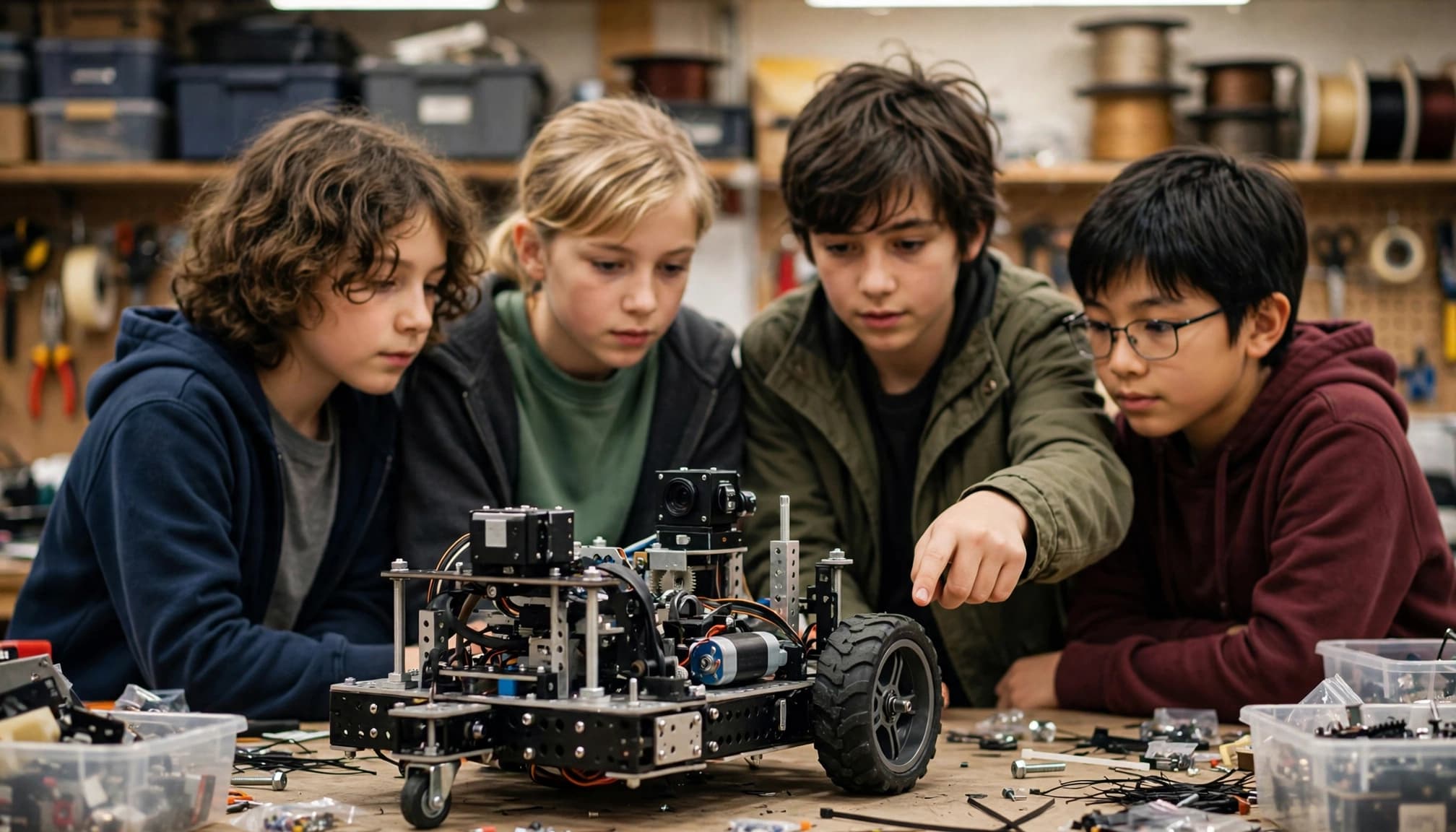
Explore gives younger children an introduction through themed LEGO work and teamwork. We recommend asking how much building each child does, how adults guide the group, and whether children explain their work themselves.
Participation matters. A child needs time to try a task, make a decision, and understand the result.
Challenge Requires More Responsibility
FIRST LEGO League Challenge adds programmed robot missions and an Innovation Project. FIRST suggests participants be at least 9, while Kentucky's current season rules determine the applicable upper limit.
The Kentucky FIRST LEGO League information at NKU is an important local reference. NKU's CINSAM has hosted Kentucky FIRST LEGO League events annually since 2012.
We recommend asking whether beginners receive instruction before competitive expectations increase. Children must learn the equipment, but they must also learn to share equipment, explain decisions, and accept another teammate's contribution.
That responsibility deserves attention alongside the robot itself.
Teen Robotics Requires Steady Participation
Older students need opportunities that match their growing ability to design, program, and take responsibility. Kentucky FIRST lists FIRST Tech Challenge for grades 7-12 and FIRST Robotics Competition for grades 9-12.
FIRST Tech Challenge Builds Team Responsibility
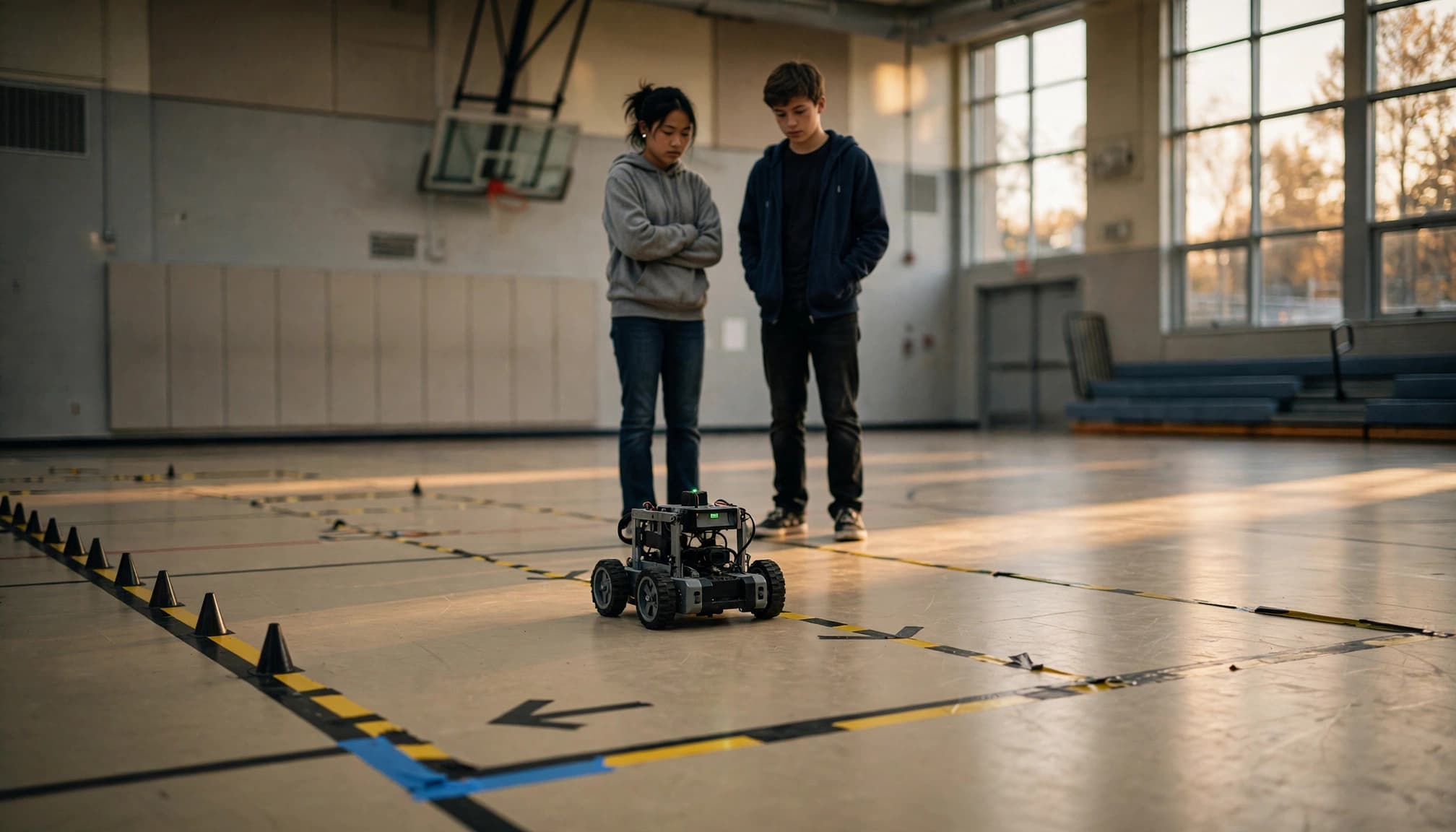
FIRST Tech Challenge asks students to develop a robot for a seasonal competition. The work includes mechanical design, programming, testing, and decisions about how the robot will complete its tasks.
Kentucky's registration process includes registration with FIRST, followed by Kentucky FIRST registration for league placement and competition. Its published structure includes two league meets and a league tournament.
We recommend asking how that schedule affects weekends, transportation, and schoolwork. League assignments depend on the school or organization's location and can change annually.
Don't assume a Kentucky team competes only near home.
FIRST Robotics Competition Needs a Fuller Commitment
FIRST Robotics Competition is a high school pathway with larger robot projects and substantial teamwork. Students can contribute through technical work, planning, documentation, and other team responsibilities.
Ask how a team introduces beginners and assigns meaningful work. Previous experience shouldn't be assumed, but neither should beginner instruction be assumed.
For our Northern Kentucky families, the practical question is whether your teen can attend consistently. A program may be worthwhile and still be the wrong fit for a crowded semester.
Choose responsibility your child can sustain, rather than a schedule your family will struggle to keep.
Find a Team Before Planning Around One
A statewide program list doesn't confirm an active team in Florence, Covington, Newport, or Fort Thomas. We recommend beginning with your child's school, then checking current team listings and contacting organizers directly.
The FIRST team and event search allows searches by location and program. A listing is a lead, not a guarantee of enrollment, visitor access, or open membership.
Ask whether the team accepts students outside its school or sponsoring organization. Confirm its meeting location, because the place where a team gathers may differ from the place where it competes.
Starting a Team Requires Adults
NKU explains that FIRST LEGO League teams can form through schools, homeschool groups, neighborhoods, churches, Scouts, clubs, or friends. Its team-formation guidance recommends recruiting 2-10 children.
We recommend settling adult supervision, meeting space, equipment storage, and transportation before registering.
Registration Has Its Own Calendar
NKU says FIRST LEGO League registration generally opens in May and continues until mid-September or capacity is reached.
For an October inquiry, ask about existing-team openings and future registration. Don't assume a new team can enter the current season immediately.
Understand Costs and Access Before Enrolling
A family's commitment includes money, travel, time, and the conditions in which a child learns. We recommend getting those answers before purchasing equipment or paying a deposit.
Ask for the Complete Family Cost
There isn't one dependable price that covers every Northern Kentucky robotics option. Team arrangements and camp offerings differ, so a quoted registration fee needs explanation.
Ask whether the amount includes equipment use, competition entry, uniforms, travel, and meals. Confirm whether the robot belongs to the team and whether families must buy anything for home.
Equipment access is different from equipment ownership. A child may use a shared robot without needing a complete personal kit.
Also ask about scholarships, sponsorships, refunds, and missed sessions. An affordable enrollment fee can become a difficult commitment when transportation and weekend expenses are added.
Match the Setting to Your Child
A child who concentrates well in a small room may struggle in a crowded competition space. We recommend discussing noise, group size, lighting, breaks, and transitions with the organizer beforehand.
Ask whether a caregiver can remain nearby and whether children have access to a quieter space when needed. Don't assume every team meeting and tournament offers the same accommodations.
Accessible seating, nearby restrooms, and a clear pickup procedure matter. Those details determine whether a family can participate comfortably, and they deserve direct answers.
Make Robotics Fit a Northern Kentucky Visit
Our Kentucky trips work best when one worthwhile activity leaves room for a meal, a break, and an unhurried return. Robotics can fit that kind of day, provided you choose an opportunity intended for visitors.
Camps Need Confirmed Dates
NKU CINSAM has listed a LEGO SPIKE Prime robotics camp for rising grades 4-5. Its published listing is marked full, with registration closed, so don't treat it as an available reservation.
That page also directs families to a separate iSPACE robotics camp hosted at NKU. Ask about future dates, eligibility, price, and session length before making travel plans.
Our guide to Northern Kentucky summer camps helps you compare broader camp choices when robotics enrollment doesn't fit your dates.
Spectator Events Can Suit a Short Stay
NKU hosted Kentucky FIRST LEGO League championships on February 28 and March 14, 2026, in Griffin Hall, according to LINK nky's championship coverage. Those are past events, not upcoming dates.
For another event, confirm public admission, hours, parking, and which activities visitors may watch.
Spectator admission lets your family observe a competition. It doesn't enroll your child or promise hands-on robot time.
Pair a confirmed event with one nearby stop. Our guides to family-friendly museums near Northern Kentucky and Northern Kentucky family outings can help you keep the rest of the day manageable.
Frequently Asked Questions
Can a Beginner Join a Robotics Team?
Ask the team directly. Programs provide a structure for learning, but each team decides how it recruits and supports beginners.
We recommend explaining your child's age, interests, and experience plainly. Ask what the first month involves and whether your child can observe a meeting before committing.
Can Visitors Attend One Robotics Session?
Only when the organizer offers that option. Competition teams usually follow an ongoing schedule, while workshops and camps have their own enrollment requirements.
Confirm one-session participation in advance. Don't arrive expecting a regular team meeting to operate as a public attraction.
How Can Families Prepare Without Buying a Robot?
We recommend beginning with careful observation and simple explanations. Ask your child to describe how a moving toy works, what changed when something stopped working, and what they would test next.
Before buying a kit, ask the prospective team what equipment it uses. A home purchase should support the actual program, not create an unnecessary expense.
Choose a Program Your Family Can Sustain
Northern Kentucky gives families a meaningful local connection to youth robotics through NKU and Kentucky FIRST. The right choice still depends on confirmed enrollment, suitable instruction, and a workable schedule.
We recommend one clear next step: contact a team or organizer with your child's age and your available dates. Whether you live here or are visiting Kentucky, a well-matched opportunity gives your child room to build, understand, and return with confidence.