


Northern Kentucky Festivals Families Should Plan Around in 2026
We do not need a dozen weak weekend ideas. We need the right dates, the right places, and the kind of gatherings that give children room to move and parents room to breathe. Northern Kentucky festivals do that well in 2026, and if we plan early, we get more than an...
20 Best Churches in Northern Kentucky | Honest Guide for Faith Seekers
Top 20 Best Churches in Northern Kentucky: A Guide for Local Faith Seekers Life in Northern Kentucky moves fast—river cities, rolling hills, neighbors who wave from front porches. But where do you go when your soul needs a place to land? If you’ve searched for the...Most Popular
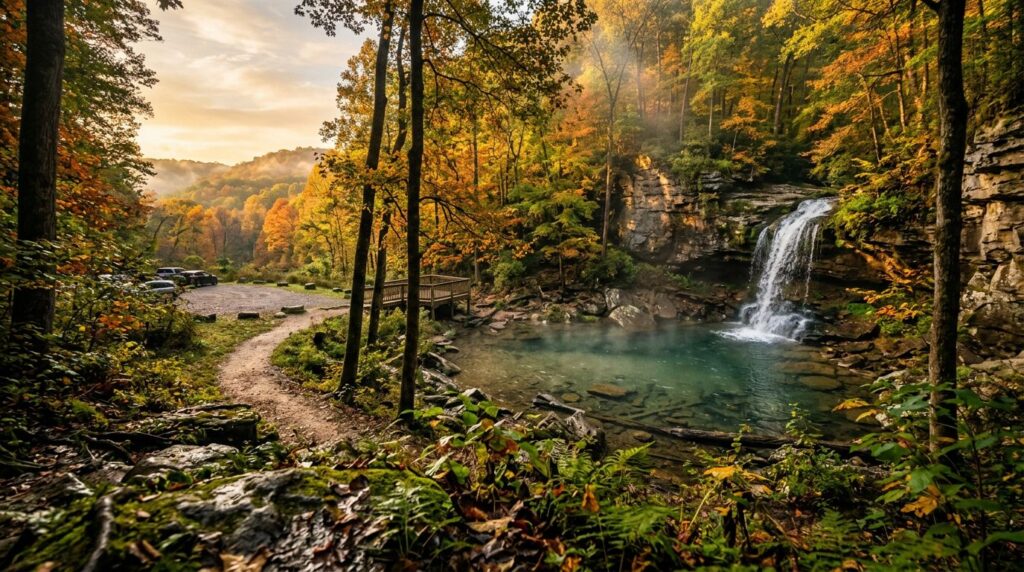 Best Waterfalls Near Northern Kentucky for Easy Day TripsWe do not have to drive across half the state to find water, stone, and a little peace. The best waterfalls near Northern Kentucky are the ones that give us a clear view, a manageable walk, and a day that still leaves room for lunch, family, or one more stop on the way home.
When we choose well, the waterfall does not wear us out. It resets us. That is the standard we should keep.
What Makes an Easy Waterfall Day Trip Worth Taking
Easy does not mean dull. It means the road is reasonable, the trail is short enough to keep our legs honest, and the view arrives before the day starts to feel like labor.
A waterfall trip is only easy when the road, the trail, and the return all stay simple.
That is the test we should use. If the drive is long, the trail is steep, and the parking is uncertain, the outing stops being a calm day trip and turns into a project. We do not need projects when we are looking for clean air and moving water. We need something clear, direct, and worth the fuel.
This is why waterfalls near Northern Kentucky matter so much for local travelers. We are close to river country, close to state parks, and close to several places where a waterfall does not demand a full expedition. The right trip feels like a gift because it still leaves us time for the rest of the day.
The Closest Falls Right Here in Northern Kentucky
If we want the simplest possible waterfall outing, we start close to home. Moser Branch Double Falls, also called Mammoth Cave Double Falls, sits in the Fort Wright Nature Center. That alone changes the tone of the trip. We are not planning a mountain climb. We are taking a short walk to something beautiful.
The park is only 16 acres, and the trail is short. Wildflowers line the path at the right time of year, which gives the stop a quiet, local charm. This is the kind of place we recommend when we want a waterfall without turning the day into a long road story.
If we want to keep the outing low-cost, our free parks and nature spots in Northern Kentucky list pairs well with this stop. That matters because easy travel is not only about walking less. It is also about spending less, worrying less, and keeping the day open.
Moser Branch is not the biggest waterfall on this list, and it does not need to be. It gives us a nearby place where water and rock do their work without much help from us. Sometimes that is exactly what we need.
The Short-Drive Waterfalls That Still Feel Easy
Once we move beyond the border counties, the list gets stronger and the drive gets longer, but the walking can still stay friendly. That is the real wisdom here. We are not choosing the hardest waterfall we can survive. We are choosing the one that matches the kind of day we want.
The quick comparison below keeps the options plain.
WaterfallWhy we choose itAccessBest fitMoser Branch Double FallsRight here in Fort Wright, short trail, local feelVery short walkA quick reset close to homeCreation FallsAbout 1.5 hours away, scenic Red River Gorge settingEasy hike on a well-known trailA strong day trip without overdoing itCumberland FallsAbout 2.5 hours south, four developed viewing platformsVery easy viewingThe classic waterfall driveYahoo FallsShort, paved trail and simple accessLow-effort walkTravelers who want easy footing
The pattern is plain. We can go farther when the trail stays kind. We can go closer when time is tight. Either way, the right waterfall keeps the day from becoming a test.
Cumberland Falls
Cumberland Falls is the name people know, and for good reason. It is about a 2.5-hour drive from Northern Kentucky, which still keeps it in day-trip territory, and it has four developed viewing platforms. That matters. We do not need a hard hike to get a strong view.
This is the waterfall we choose when we want the classic Kentucky answer. The water is broad, the gorge is serious, and the whole place has weight. For a bigger sweep of falls across the state, the Kentucky Wildlands Waterfall Trail gives us a wider map to follow later. Cumberland is the one that reminds us why Kentucky keeps drawing people back to the outdoors.
Yahoo Falls
Yahoo Falls belongs on this list because it does not make a simple day trip harder than it needs to be. The trail is short and paved, which is exactly the kind of detail people notice after a long week. A lot of travel plans fall apart because the return walk is too much. Yahoo Falls does not ask for that kind of payment.
It is a good choice when we want a straightforward outing and a path that stays manageable. If we want to keep collecting waterfall ideas for future weekends, the Kentucky Hiker waterfall guide is a practical place to keep going. Yahoo Falls gives us the easy walk first, which is the part many travelers care about most.
Creation Falls
Creation Falls gives us a different sort of easy. It is about 1.5 hours away in Red River Gorge, and the Rock Bridge Trail makes the trip feel earned without becoming punishing. The setting is one of Kentucky's best-known outdoor corridors, and the waterfall fits it well.
This is the kind of stop we send people to when they want a scenic drive, a clear trail, and a payoff that feels larger than the effort. The walk is friendly enough for most casual day-trippers, and the gorge gives us enough stone and forest to make the day feel full. Creation Falls is proof that easy can still be beautiful.
How We Keep the Day Simple
The best waterfall day trips fail when we try to stack too much into them. We do not need three stops, a complicated lunch, and a schedule that leaves no room for weather, parking, or rest. We need enough structure to move with purpose and enough slack to enjoy the view.
A few habits keep the day honest:
Start early so the trail and parking stay calm.
Wear shoes that can handle wet ground and a little mud.
Bring water, even for short walks, because Kentucky heat does not care about our enthusiasm.
Leave one meal flexible, so the day does not feel rushed by the clock.
If we want to turn a waterfall outing into a fuller water day, the best places for kayak rentals in Northern Kentucky can help us keep the theme going without making the plan complicated. That is the right kind of extension. It adds water, not stress.
The truth is simple. A good trip has room in it. It leaves us time to look, time to breathe, and time to drive home without feeling wrung out.
Conclusion
Northern Kentucky sits close enough to several waterfalls that we do not need to treat them like rare prizes. We can reach them, enjoy them, and return home with the day still intact.
The strongest choice depends on what we want most. Moser Branch Double Falls gives us the closest local outing. Cumberland Falls gives us the big classic view. Yahoo Falls and Creation Falls give us easy walks with real scenery. If we keep easy access at the center, the whole trip stays clear.
That is the real measure of a good waterfall day trip. It should refresh us, not exhaust us. [...]



Latest
 Northern Kentucky Fencing Classes for BeginnersOctober 20, 2026For beginner fencing classes near Northern Kentucky, Cincinnati Fencing Club's introductory course offers seven sessions of foil instruction for ages 10 and older. The classes take place across the river in Cincinnati, so the Ohio address belongs in your travel plans.
We recommend beginning with supervised instruction and provided equipment, because learning the rules should come before buying a weapon. Whether you live here or you're spending an extended vacation in our part of Kentucky, give the lesson enough time to be worthwhile.
Key Takeaways
Cincinnati Fencing Club teaches beginner foil at Clifton Community Center, 320 McAlpin Avenue, Cincinnati.
The course includes seven classes, with separate charges of $50 for instruction and $20 for equipment rental.
A Cincinnati Recreation Commission membership is required, with an additional annual fee based on age.
Monday instruction begins at 7 p.m. and usually finishes around 8:45 p.m.; first-class arrival is earlier for paperwork.
A beginner course requires attention and repeat attendance. Build your plans around that commitment before adding it to a Kentucky visit.
Beginner Fencing Classes Near Northern Kentucky
Cincinnati Fencing Club in Clifton
Cincinnati Fencing Club offers a defined starting point: beginner foil instruction, a seven-class course, and equipment available for classroom use. That gives a new student a foundation without requiring a personal equipment purchase before the first lesson.
The location is Clifton Community Center, 320 McAlpin Avenue, Cincinnati, Ohio 45220. Keep that distinction clear. This is a regional option for Northern Kentucky families, rather than a Kentucky-side fencing school.
The beginner class accepts participants ages 10 and older, and the club doesn't divide that course by age or gender. Adults and children therefore enter through the same introductory program, rather than separate advertised beginner tracks.
Monday Evening Class Times
Instruction begins at 7 p.m. on Mondays, with classes typically ending around 8:45 p.m. The club directs first-time participants to arrive around 6:15 p.m. for paperwork. For later classes, the listed arrival time is around 6:45 p.m.
The course consists of seven classes, which aren't necessarily seven consecutive weeks. Its attendance structure allows missed classes to be made up.
The club's beginner instructions allow registration and recreation membership purchase on the first night. We recommend treating that earlier arrival as part of the lesson itself. Paperwork, finding the room, and getting equipment all belong in the evening's schedule.
Understand the Full Beginner Course Cost
The instructional charge is $50 for seven sessions, paid to Clifton Community Center. Equipment rental is another $20 per participant for the course, paid to Cincinnati Fencing Club.
The rental includes a mask, jacket, glove, and foil for class use. Those items remain with the program; you don't take them home between lessons.
A required Cincinnati Recreation Commission membership adds an annual charge. The beginner information lists these age-based fees:
Participant AgeAnnual Recreation Membership17 and Under$218 Through 24$1025 Through 49$2550 and Older$10
The important distinction is between the course charges and the recreation membership. They cover different things, and the membership belongs in your budget alongside instruction and rental.
We recommend using the loaner equipment while you learn. A beginner needs time to understand the sport before choosing personal gear, and a family needs time to decide whether regular attendance fits ordinary life.
Keep travel in the budget, too. For a Northern Kentucky household, repeated trips across the river are part of the commitment. A reasonable class fee doesn't remove the time required to attend.
What Beginner Fencing Instruction Should Teach
Footwork Comes Before Speed
Fencing begins with controlled movement. You learn how to stand, how to advance, how to retreat, and how to judge the space between yourself and another fencer.
Distance means the space that determines whether an attack can reach. Timing means choosing when to act within that distance. These ideas give purpose to the movement; without them, a beginner can move quickly while accomplishing very little.
We recommend valuing clear instruction over the appearance of excitement. Repeating a movement slowly gives the instructor something to correct. That correction matters more than rushing into a bout before you understand what your feet and weapon should do.
A successful first lesson gives you something you can explain and repeat. Winning isn't the measure of whether you learned.
Learn the Weapon and the Scoring
Cincinnati Fencing Club's beginner course teaches foil, one of fencing's three weapons. Foil, epee, and saber have different target areas and scoring rules, so the weapon matters when you compare programs.
In foil, touches are made with the tip, and the valid target is the torso. Foil also uses right-of-way rules, which determine priority when both fencers register a touch.
This means beginners must learn more than how to reach an opponent. They must understand the sequence of an attack, a defense, and a response. We recommend staying with the instructor's explanation until those distinctions become clear. Speed has value only when the action follows the rules.
Prepare for the Lesson With Care
Dress for Movement
We recommend comfortable athletic clothing that allows you to bend your knees and move without restriction. Supportive athletic shoes are a sensible starting point. Leave sandals and clothing that catches underfoot out of the lesson.
Bring water, and arrive with enough time to settle before instruction begins. A child who enters tired, hungry, or hurried has another difficulty to overcome before learning starts.
The club supplies its listed rental equipment, so beginners don't need to arrive carrying a purchased foil or mask. Let the instructor direct equipment fitting and explain how the class uses it.
Attention Matters as Much as Age
Cincinnati Magazine's introduction to the club also identifies 10 as its starting age. Age, however, doesn't tell the whole story of a child's readiness.
A beginner must listen when an instructor stops an activity, respect another student's space, and accept correction without turning practice into a contest.
We recommend describing those expectations before the lesson. Tell your child that learning includes waiting, repeating, and being corrected. Those are ordinary parts of instruction.
If a younger child needs a different activity, our guide to kids' martial arts schools offers another direction for comparing age-appropriate lessons.
Fit Fencing Into a Northern Kentucky Visit
Give the Lesson Enough Room
Here in Northern Kentucky, we recommend building the day around one main activity. A fencing lesson deserves attention, and children deserve time to recover their energy afterward.
For this Monday evening course, a substantial attraction visit belongs earlier in the day or on another day. After an 8:45 p.m. finish, returning to your lodging is a sound plan.
If you're staying in Covington, Newport, or farther south, allow room for the river crossing, parking, and finding the classroom. The first-night arrival instruction is 6:15 p.m., not the 7 p.m. teaching time.
Also consider relatives who aren't fencing. A family plan should include them without requiring everyone to share the same activity.
Choose One Kentucky-Side Stop
For a separate daytime outing, Goebel Park in Covington has a playground and its distinctive clock tower. It's a manageable choice when children need outdoor movement rather than another structured lesson.
Newport on the Levee offers a different setting, with dining, shops, and riverfront surroundings. We recommend leaving that visit flexible instead of attaching another demanding appointment to it.
Our guide to Northern Kentucky family activities can help you shape the rest of a longer stay. When weather limits outdoor plans, our Northern Kentucky indoor activities guide provides other options.
The purpose of an outing is time together. Additional stops should support that purpose, rather than leave the family exhausted before class begins.
Frequently Asked Questions
Can Adults Begin Without Any Fencing Experience?
Yes. Cincinnati Fencing Club's introductory course accepts participants ages 10 and older, including adults, and it teaches beginner foil.
We recommend entering as a learner without measuring yourself against experienced fencers. Adults need the same foundation children need: controlled movement, attention to instruction, and an understanding of the rules. Previous experience isn't a requirement for beginning.
Can a Parent and Child Take the Same Beginner Course?
The beginner program doesn't separate participants by age or gender, and children must meet the minimum age of 10.
That makes the course a practical option for a parent and an eligible child who both want to learn. Each participant has their own instructional, rental, and applicable recreation membership charges. Budget for the people participating, rather than treating the lesson as one family admission.
Does This Course Fit a Short Vacation?
The seven-session format is better suited to local families or an extended stay than a brief weekend visit. Its Monday evening schedule also matters when choosing travel dates.
The published course structure doesn't establish a one-day visitor package. We wouldn't present it as a drop-in attraction. For a short Kentucky vacation, choose activities whose format matches the time you have.
Begin With Instruction the Family Can Sustain
Beginner fencing near Northern Kentucky offers families a chance to learn a demanding sport through patient, supervised practice. Cincinnati Fencing Club provides a defined course, loaner equipment, and published charges across the river.
We recommend choosing it for the instruction and the commitment it requires. Give the lesson its place, keep the rest of your Kentucky visit manageable, and leave enough room for your family to enjoy both. [...]
 Northern Kentucky Youth Choirs: A Family GuideOctober 19, 2026Northern Kentucky has two similarly named groups: the NKU Youth Choir and the Northern Kentucky Youth Choir (NKYYC). Their schedules and musical purposes differ, so knowing the difference matters.
For Kentucky families, the choice is between enrolling for a season of music and attending a performance during a family outing.
Key Takeaways
NKU's youth choir welcomes students in grades 5 through 12, ages 10 to 17. Holly Bowen is the collaborative pianist; annual tuition is $250.
NKYYC lists reading children ages 5 through 17 and Roman Catholic worship, secular, and ecumenical repertoire.
Families visiting can choose a public concert without taking on a weekly commitment.
Compare Northern Kentucky Youth Choirs
These are separate programs. The NKU program is part of NKU's music preparatory programming and is directed by Holly Bowen. The Northern Kentucky Youth Choir (NKYYC) is a regional community arts organization with a stated interest in supporting school and church choir programs.
Published details give families different starting points.
ProgramPublished RangeRehearsal LocationAnnual TuitionNKU programGrades 5 through 12, approximately 10 through 17NKU, room FA 378, Highland Heights$250, payable in two paymentsNorthern Kentucky Youth Choir, NKYYCReading students ages 5 through 17, according to its 2024 enrollment announcementBehringer-Crawford Museum Education Center, CovingtonCurrent fee not published in the available program information
NKU provides a dated 2026-27 schedule and price. NKYYC's earlier enrollment announcement establishes its broader age range, but its current public information doesn't provide the same complete tuition and enrollment schedule.
We recommend Northern Kentucky families begin with their student's age, then consider the music and weekly commitment.
NKU Youth Choir Has a Defined Weekly Schedule
Illustrative youth choir rehearsal, not a photograph of either program.
Rehearsal Schedule and Cost
The NKU Youth Choir program welcomes students throughout greater Cincinnati and Northern Kentucky. Eligibility covers grades 5 through 12, roughly 10 to 17 years old.
The choir meets Tuesdays, 4:30 to 6 p.m., in room FA 378. The listed fall semester began Tuesday, September 15, 2026.
Tuition is $250 for the academic year, with payment available in two installments. That's an annual program fee, not a semester charge or private voice-lesson package. Confirm the current schedule and cost with NKU before registration. Families comparing music programs should keep these distinctions clear.
Holly Bowen Leads the Choir
She is the collaborative pianist for the NKU School of the Arts choral department. She holds a master's degree in choral conducting from the University of Kentucky and received the KMEA District 6 Middle School Teacher of the Year award in 2023.
Her conducting and music-teaching background is relevant for young singers learning to follow a conductor and work as an ensemble.
The program page provides the registration route. For director questions, contact Holly Bowen at bowenh4@nku.edu; NKU also lists 859-572-7737 as a contact number.
NKYYC Connects Singing With Worship and Community
Illustrative setting, not a photograph of NKYYC.
Younger Singers Have a Published Starting Point
A past 2024 registration announcement described a regional youth choir for ages 5 through 17, with reading expected of its youngest children. Families should confirm current age requirements, schedule, and fees with the program contact.
The program meets weekly at the Behringer-Crawford Museum Education Center. Event listings include Tuesday meetings, but they don't confirm a full 2026-27 schedule.
Rebecca Wells handles enrollment at 859-240-3738 or nkyYouthChoir@gmail.com. These are NKYYC's contact details, separate from NKU's.
Liturgical Music Has a Defined Purpose
NKYYC teaches the structure of Roman Catholic Liturgies, including Mass, Vespers, and Benediction. Liturgical music connects the words of a service with its structure and purpose.
The repertoire also includes secular and ecumenical pieces, chant, Gospel, Jewish traditions, classical composers, other languages, and STEM subjects. Families should consider this breadth alongside the Catholic liturgical emphasis.
The choir's organizational description identifies the Notre Dame Children's Choir model and its support for school and church programs. Families considering NKYYC are choosing musical instruction with a stated connection to worship and community work.
Public Performances Give Families a Clear Destination
Public concerts are a practical choice when your family wants to hear young singers during a visit to the area.
NKU's Winter and Spring Concerts
NKU's Music Prep calendar lists the NKU Youth Choir and NKU Youth Symphony Orchestra Combined Winter Concert for Saturday, December 12, 2026, at 3 p.m. in Greaves Concert Hall.
NKU's spring concert is scheduled for Saturday, April 24, 2027, also at 3 p.m. in Greaves Concert Hall.
These performances are upcoming as of October 2026. A concert is a good first introduction for students interested in singing but not ready to take on a full choir season.
The Composer Competition Leads to a Premiere
NKU's composer competition connects students with new choral writing. The 2026-27 composer competition criteria list an October 13 open rehearsal, which has passed, and a submission deadline of November 20, 2026.
The composer competition's winning composition will receive its world premiere from the choir. The document lists November 30, 2026, as the date for the winner announcement.
The composer competition gives students a chance to perform a new work the public hasn't heard before.
NKYYC's Museum Concert Is a Past Event
NKYYC's official museum concert listing records a performance with the Cincinnati Recorder Consort on Saturday, November 15, 2025, at 11 a.m., in the Behringer-Crawford Museum's Rivers Gallery. The ensemble's recorder players performed on recorder instruments.
That date is historical, not an upcoming November 2026 concert. The announcement listed museum admission of $9 for adults, $8 for seniors 60+, and $5 for visitors 3 through 17, with members and visitors under 3 admitted free.
Those were the published museum admission charges for that event.
Choose the Singing Format Your Child Can Sustain
A young singer's interest in singing deserves instruction that fits. Choose a participation format before focusing on the most appealing performance.
Choir and Private Lessons Ask Different Things
An ensemble teaches young singers to listen as a group, follow shared direction, and prepare music together. Private instruction gives teachers more time to address students' voices and questions.
Neither format should be chosen just because another young singer enjoys it. A child may enjoy singing with a group but feel uncomfortable alone, while another may prefer individual attention before joining a youth choir.
Our guide to Northern Kentucky music lessons explains the broader lesson options. Use that distinction to decide whether your child wants group membership, individual singing instruction, or both.
Musical Theater Requires a Different Commitment
Children drawn to characters, movement, and spoken scenes may prefer musical theater to a choir alone. Singing remains part of the work, while acting and movement add instruction and rehearsal responsibilities.
Our guide to children's musical-theater training separates class-based learning from longer performance commitments. A weekly lesson, a seasonal camp, and a production each ask different things of a family.
Choose according to the work your child wants to do. The desire to perform is a beginning; the willingness to rehearse gives that desire somewhere to go.
Make Music Part of a Kentucky Family Visit
A visitor's calendar and a resident family's calendar have different limits. A resident may build Tuesday afternoons around rehearsal. A visiting family needs an experience that fits the days they're here.
We recommend giving a concert a defined place in your trip rather than treating it as another stop between attractions. Children need time to arrive, settle, and listen without being hurried toward the next activity.
For an outing near the Behringer-Crawford Museum, our guide to family activities in Covington offers nearby planning ideas. Keep the day manageable. A performance and one additional family activity can give your family more room to enjoy Kentucky.
Attendance and enrollment are different commitments. Hearing a choir can be a complete family experience and a chance to share music with the community, even when joining one isn't part of your plans.
Frequently Asked Questions
Can a Five-Year-Old Join the NKU Youth Choir?
The NKU Youth Choir's published eligibility starts at about age 10, or grade 5. The program is for singers through grade 12, usually about age 17.
A separate program, NKYYC, said children as young as 5 could read music in its 2024 enrollment announcement. We keep the requirements separate because similar names can lead families to the wrong program.
Can a Visiting Family Participate for One Afternoon?
Published program details describe regular commitments, not drop-in activities for vacationing families.
For a short visit, we recommend attending a public event. NKU has dated concerts on December 12, 2026, and April 24, 2027, for families who want to hear the group without committing to a season.
Is the November Museum Performance Coming Up Again?
The documented NKYYC event took place on November 15, 2025. It shouldn't be treated as a recurring annual booking.
There isn't a confirmed upcoming NKYYC public event date in current listings. NKU's published dates are the clearest upcoming options for families planning around a public event.
Choose the Right Commitment
Each choir has its own age range, musical purpose, and weekly responsibilities. Choose a choir whose stated work fits your child, rather than treating similar names as interchangeable; Holly Bowen's NKU ensemble is one option.
For visiting families, a public concert is a worthy destination in its own right. Give everyone time to listen, and let Kentucky's young singers enjoy singing and music. [...]
 Northern Kentucky Makerspaces for Kids and TeensOctober 18, 2026Northern Kentucky makerspaces give children room to create, test, and learn through hands-on learning. Access comes first, because eligibility varies by program.
Here in Kentucky, choose a program before comparing equipment. For visitors, a public reservation may be more useful than tools reserved for enrolled students. Check who can enter a makerspace, then consider what your child wants to make.
Key Takeaways
NKY's makerspace centers on scheduled K-12 learning for students, including field trips, workshops, and camps.
NKU's Stego Studio is for its university community, not the general public.
Cincinnati's Downtown Main Library welcomes public visits, with free equipment use and charges for some materials.
A child's readiness, the reservation length, and the project's requirements should guide the outing.
Choosing Northern Kentucky Makerspaces by Access
A makerspace is a shared place where people use equipment, materials, and instruction to make things. The term covers several kinds of spaces, but it doesn't establish public admission.
These three makerspaces have different access models. Having tools on site doesn't establish public admission.
SpaceLocationFamily Access and CostNKY MakerspaceIgnite Institute, ErlangerScheduled K-12 programs, field trips, workshops, and eventsStego StudioNKU, Highland HeightsFor NKU students, faculty, and staffDowntown Main Library MakerSpace800 Vine Street, CincinnatiPublic reservations; no charge for use, with some materials fees
Choose the access model before the machine. For a visiting family without university connections, the Downtown library offers the clearest public reservation route, with no membership required.
The terminology deserves the same care. A hackerspace generally emphasizes computers and electronics. A Fab Lab follows the Fab Foundation model. TechShop helped popularize full-scale workshops before announcing bankruptcy in 2017.
Those names describe approaches to making. They don't establish children's admission, supervision, or permission to operate machines.
NKY Makerspace Began With Students
The NKY Makerspace program is based at the Ignite Institute in Erlanger and centers on K-12 learning. Its program description lists field trips, workshops, internships, after-school events, Super Saturdays, and summer camps.
Students Asked for a Place to Build
The Northern Kentucky Makerspace opened in 2015 after sixth-, seventh-, and ninth-grade robotics students approached the Boone County Board of Education about creating a dedicated space.
KET reported that more than 8,000 students had participated and that the building could accommodate about 120 at once. Those figures describe the program's history, not current attendance or capacity.
The origin matters because students asked for a place to do the work. They wanted room to build, test, and learn through their own decisions.
Six Labs Supported Different Interests
KET described six labs: a woodshop, an audio lab, a video lab with a green screen, a design room with seven 3D printers, a robotics lab, and a Toyota-sponsored engineering room.
That historical arrangement shows the program's breadth. Making includes sound, video, construction, and engineering, each requiring its own kind of attention.
For families visiting our area, this is a scheduled educational opportunity where children can create, not a walk-in attraction with daily admission.
NKU Stego Studio Has Clear Boundaries
NKU's Stego Studio is free for university students, faculty, and staff. Users must complete an access-and-usage agreement and may need to show an NKU All Card.
For fall 2026, makerspace hours are Monday, Wednesday, and Friday, 10 a.m. to 4 p.m., and Tuesday and Thursday, 1 to 4 p.m. The studio is in LA 524 in Landrum Academic Building during Steely Library's temporary relocation. Check the linked NKU page for current hours, access requirements, and registration rules.
3D Printing Requires the Right File and Purpose
The studio accepts STL or OBJ files. Prints exceeding 12 hours need approval from a Makerspace Supervisor, and large, multi-part projects are limited to one build plate at a time.
Steely Library supplies filament and consumables. Research and instruction projects receive priority, and commercial purposes aren't permitted.
Eligible users can use the studio for learning, but can't treat its materials and machines as a production service for merchandise.
Scanning Requires a Suitable Object
The studio's equipment includes three 3D scanners. For 3D scanning, objects can't be black, white, high-gloss, mirror-like, or have holes.
Staff help users choose and operate a scanner. Objects must meet the studio's requirements to produce a useful digital model.
University access remains the deciding condition. The studio fits this guide for eligible older users, but its equipment listing doesn't give visiting children general public access.
Cincinnati's Library Offers Public Reservations
Across the river, the Cincinnati & Hamilton County Public Library MakerSpace offers public access to a library makerspace. Anyone can make a reservation, and equipment use is free. Some machines require materials available for a small additional charge.
The Downtown Main Library is at 800 Vine Street, Cincinnati. Its hours are Monday through Wednesday, 10 a.m. to 8 p.m.; Thursday through Saturday, 10 a.m. to 6 p.m.; and Sunday, 1 to 5 p.m.
The service includes 3D printers, Adobe software, and other creative tools. Families book online, so they can plan the activity as part of the day.
Before visiting, check the official booking information for current hours, availability, age or supervision rules, and materials charges.
This public-access option suits visitors who want a making activity without purchasing a workshop membership. The lack of a machine-use fee keeps starting costs modest, though materials remain part of the budget.
Keep the geography clear. This stop is in Ohio, even when it's part of a Northern Kentucky vacation. Our guide to Northern Kentucky family activities offers Kentucky-side outings to build around the same trip.
Membership Workshops Require a Different Commitment
Paid workshops belong in the regional picture, but they differ from school programs and public library reservations. Ongoing access follows the workshop's rules.
The Manufactory Is a Large Cincinnati Workshop
The Manufactory describes itself as a 17,000-square-foot membership workshop in northern Cincinnati and calls itself the city's only fully equipped makerspace.
Its listed users include makers, artisans, engineers, inventors, prototype builders, crafters, stage and prop builders, restorers, entrepreneurs, and repair technicians.
That range explains the workshop model. People bring continuing projects that require equipment, workspace, and repeated visits. A family looking for one afternoon should distinguish that commitment from a single introductory activity.
An equipment list alone doesn't confirm youth access or permission to use every machine.
Kre8now Illustrates the Class-Based Route
In its feature on Kentucky makerspaces, KET described Lexington's Kre8now offering formal classes without requiring ongoing access. Subjects included CNC machines, 3D printing, sewing, coding, and woodworking.
Its executive director emphasized access to a collection of tools rather than ownership of one table saw. A partner compared participation to exercising the mind and creative abilities through a gym-style arrangement.
KET's account documents past offerings, not an October 2026 class calendar. Lexington is also a separate Kentucky trip, not a nearby Northern Kentucky stop.
A First Visit Should Have One Clear Purpose
We recommend beginning with one skill and one manageable project. A child can learn more from a modest task completed with attention than from an ambitious plan that exceeds the session.
Match the Work to the Child
Readiness includes listening, waiting, following instructions, and accepting that a machine has limits. A child's interest matters, but it doesn't replace training.
Safety instruction may cover approved materials, woodworking tools, protective equipment, emergency stops, hot surfaces, moving parts, and when staff assistance is required. Students and parents should follow the same boundaries they expect children to respect.
For a first outing, choose an activity that leaves time for explanation and cleanup. The finished object is only part of the learning.
Begin With a Model That Fits
Thingiverse and Printables offer downloadable models, while TinkerCAD provides a starting point to create your own design. University 3D modeling resources offer another way to understand files and design choices.
A downloadable file still needs review for size, print time, materials, and permissions. Downloading something doesn't mean a particular machine can produce it during your reservation.
Our Northern Kentucky craft stores guide supports simpler projects your family can continue away from specialized equipment.
Frequently Asked Questions
What Is a Makerspace in a Library?
A library makerspace is a shared area where patrons can use creative tools and technology. Depending on the location, it may include design software, sewing equipment, or other tools.
At Cincinnati's library, schools, companies, and clubs can arrange tours or group visits through MakerSpace staff.
Can a Library 3D Print Continue After Closing?
At the Downtown Main Library MakerSpace, 3D printing stops when a session expires or the library closes. Your project must fit within the reservation's limits.
NKU's 12-hour printing threshold isn't a library-wide rule. Downtown Main printing is bounded by the reserved session and closing time.
This distinction matters when choosing a file. A model that takes several hours requires a different plan than a short introductory print.
Give the Project Room to Succeed
Northern Kentucky makerspaces can offer a worthwhile experience when the child and project are a good fit. Choose a manageable first experience that leaves enough time to complete a project responsibly.
For a Kentucky family outing, one purposeful session can be enough. Children can make something, learn from the result, and carry that understanding home. [...]
 Northern Kentucky Debate Clubs: A Teen’s Starting GuideOctober 17, 2026School teams and independent clubs are the two practical routes for teens seeking Northern Kentucky speech & debate clubs. Start with your child's school, then use national resources such as NCFCA to find independent or online opportunities.
Here in Kentucky, we believe learning to speak deserves the same care as learning to listen. Choose instruction your teen can sustain, with regular practice and responsibilities that fit the family calendar.
Begin with the program, because a tournament listing alone doesn't establish a club your child can join.
Key Takeaways
The NSDA school map lists schools with current or recent speech and debate teams.
NCFCA supports independent clubs, which set their own goals and operations.
Fort Mitchell's Beechwood Tiger Tournament appears on the state competition calendar, alongside statewide and online events.
A continuing team commitment fits a resident family's plans; a short visit requires a different arrangement.
Finding Northern Kentucky Debate Clubs
A school team is the first route we recommend for an enrolled student. Start near the place where your teen already learns, then widen the search if that route doesn't offer a program.
Use the NSDA School Map
The National Speech & Debate Association's Find a Program resources include a school map. Use the NSDA school map to find schools that have or recently had a speech and debate team.
A listing shows a school's connection to speech and debate, but doesn't mean every nearby student can enroll.
For families in Florence, Covington, Newport, or Fort Thomas, use the map to find school contacts, not as a directory of drop-in activities.
Request the Right School Contact
The NSDA contact form asks for a school name and state when requesting contact information for key school officials. Enter the school and state to direct your request.
Families without a particular school in mind can leave the school field blank and describe their situation. Include the student's grade, location, and interest in school-based or independent participation.
A useful introduction gives the organizer something to act on. Explain whether your teen wants to learn formal debate, prepare individual speeches, or explore both before choosing an event.
Independent Clubs Give Families Another Route
Independent speech and debate clubs offer another option when a school team doesn't fit. Locally operated independent clubs have a practical distinction: the organization that supports a club and the people who run it have different responsibilities.
Understand NCFCA Club Independence
NCFCA provides networking and resources, while local leaders set each club's goals and operations. NCFCA is responsible for support, not local decisions.
NCFCA's new-club guidance allows weekly, biweekly, monthly, and other meeting schedules. It also describes audiences that include teen competitors, younger students, and families with younger children.
Local leaders decide how their club uses NCFCA resources. That flexibility gives families several possible arrangements, but it doesn't make every club the same.
For families organizing broader enrichment, our guide to Northern Kentucky homeschool co-ops helps distinguish continuing group learning from occasional educational outings.
Find Local or Online Connections
NCFCA's club connection guidance directs families to support when they need help finding a connection.
When no nearby club appears, the NCFCA Club Support Manager can help families learn about clubs starting in the region. NCFCA also shares online opportunities. Clubs may meet in person, online, or through a combination of both.
We recommend stating the need plainly: a teen in the region, the student's age, and whether regular travel is possible. A clear request gives support staff a better basis for connecting your family.
Joining Requires a Sustainable Commitment
Debate means presenting a position, supporting it, and responding to another person's reasoning. Students need to prepare between meetings as well as participate during them.
We favor a manageable commitment that families can maintain. A full calendar doesn't prove that a child is learning.
Use a clear sequence when approaching a team:
Identify the student by grade and school, and explain whether they're new to speech and debate.
Request beginner placement or an introductory conversation with the person responsible for instruction.
Describe the attendance your family can sustain, including transportation and existing school obligations.
Choose an event and tournament plan with the coach once the student understands the preparation involved.
Practice deserves a place on the calendar. Research, drafting, speaking aloud, and responding to feedback all take time.
For local families, the place where a team practices may differ from where it competes. Plan for those trips separately. A convenient meeting location doesn't make every competition a short drive, and an online event still requires protected time.
Event Dates for 2026 and 2027
The Tabroom Kentucky tournament listings provide event dates, locations, registration deadlines, and judging information. The 2026-2027 listings include these competitions.
TournamentLocationEvent DateRegistration DeadlineWyatt OctoberLouisvilleOctober 24, 2026October 19, 6:00 p.m. EDTBeechwood Tiger TournamentFort MitchellNovember 7, 2026November 3, 2026Racer ClassicMurrayNovember 14, 2026November 11, 2026PLD Raise Every Voice Fall InvitationalLexingtonNovember 21, 2026November 17, 2026TOC Digital Speech and Debate Series 1NSDA Campus, onlineDecember 4-6, 2026November 30, 2026Kentucky Keynote Speech InvitationalOnlineJanuary 8-11, 2027January 7, 2027
For families seeking competition close to home, the Fort Mitchell listing gives the Beechwood event local relevance. Families should compare drives to Louisville, Lexington, and Murray. Murray may be more practical for western Kentucky families, while northern families should check the longer route to Murray and whether an overnight stay is needed.
Compare the listed invitationals by format, location, and travel needs. These invitationals may suit families looking for events that fit their schedules.
The registration deadline comes before tournament day. Give the coach time to organize entries and judging responsibilities before that deadline arrives.
The tournament calendar lists each event's date and registration process. It doesn't establish weekly instruction, outside-student membership, or spectator admission. Keep those distinctions clear when deciding whether an event belongs in your family's plans.
Online Competition Still Requires Preparation
An online tournament can reduce travel, but Digital Speech and Debate still requires preparation, an appropriate event, and protected time for rounds.
The University of Kentucky's TOC bid tournament information includes the Digital Speech and Debate Series, which uses NSDA Campus for online competition.
Events include Policy, often listed as CX; Public Forum, or PF; Lincoln-Douglas, or LD; Congressional Debate, or CD; speech events; and World Schools Debate.
Series 2 is scheduled for February 19-21, 2027, with registration due February 15. Series 3 follows March 5-7, 2027, with registration due March 1.
Choose an event through instruction rather than because its abbreviation looks familiar. A prepared speech, a policy round, and congressional debate require different skills.
Online participation removes the drive, but students still need a working connection, a suitable room, and a household schedule that protects speaking time.
Starting a Team Requires Adult Responsibility
When a school has no team, contact the school directly about starting one. NSDA provides tools for pitching a program, and administrative support matters for both classes and after-school activities.
A useful proposal names the adult who will teach, where students will meet, and how the program will begin. Start modestly, with clear responsibility and adult leadership.
Give Coaches a Defined Role
NSDA member coaches receive coaching tools and support. The organization also offers an Intro to Coaching Course for adults starting this work.
NSDA's jobs board lists coaching positions, including virtual, remote, full-time, and part-time roles. Schools need different kinds of support.
For an independent group, NCFCA's new-club planning guide covers meeting schedules and the students a club intends to serve. It also outlines how NCFCA supports new clubs as they plan.
Judges and Judging Have a Separate Responsibility
Adults can also contribute through judging. NSDA's judge board lists remote and in-person opportunities, and its free judge training materials offer an entry point.
Previous coaching experience isn't the only route into this work. Training and each event's judge requirements determine the appropriate assignment.
We believe judging requires careful preparation. Students put time into their arguments and speeches, so adults should give each evaluation the same attention.
Frequently Asked Questions
Can Beginners Learn Speech and Debate?
Beginners need instruction before facing demanding competitive expectations. We recommend programs that give students practice, explain event rules, and offer feedback they can use in the next round.
A teenager who speaks readily still needs to learn evidence and listening. A quieter teenager deserves time to prepare and speak without being treated as though confidence must come first.
Can Debate Fit a Northern Kentucky Vacation?
A continuing team usually needs more time than a short visit allows. An event shouldn't be treated as an open attraction just because its date appears online.
For visiting families, arrange participation through an established program rather than building a day around an assumed drop-in opportunity. Our family activities in Northern Kentucky offer broader outing ideas when siblings need a different pace.
Kentucky deserves time to be enjoyed, and a worthwhile educational experience deserves enough room in the day to hold your child's attention.
Give the Right Program Time to Work
Local debate clubs are most useful when instruction, attendance, and family responsibilities agree. Begin with a school connection or an independent-club route such as NCFCA, then let preparation guide the tournament plan.
We recommend steady participation over a crowded schedule. Give your teen room to study a position, listen carefully, and speak with reasons they can explain.
The right beginning gives that work time to become a skill. [...]
 Northern Kentucky Language Classes for Kids and TeensOctober 16, 2026Local small-group programs, private instruction, and online options serve different purposes and require different commitments. We recommend starting with your child's learning goal, since speaking with relatives, strengthening schoolwork, and exploring another culture call for different instruction.
Here in Kentucky, we want families to find worthwhile learning without crowding every afternoon. Local families need a sustainable routine, while visiting families need a commitment that fits their stay. Start with that distinction, then consider the programs below.
Key Takeaways
PolyFluent describes small-group foreign language instruction for young children, with students grouped by age and knowledge.
International Language Plus offers in-person, virtual, and one-on-one instruction, with customized plans and no contracts or minimum commitments.
Kentucky Adult Education services include English learning, GED preparation, and College Prep Online.
A program's purpose matters as much as its name. An adult services listing, a university course, and a children's class shouldn't be treated as interchangeable.
Compare Northern Kentucky Programs by Purpose
We begin with what each program teaches and how that instruction is organized.
ProgramMain PurposeFormat or Defining FeaturePolyFluentForeign language learning for young childrenSmall groups matched by age and knowledgeInternational Language PlusCustomized language learningIn-person, virtual, and one-on-one sessionsNKU ed2goNon-credit language studyOnline courses with completion certificatesKentucky Adult EducationAdult English and educational supportFree services through local centers
The distinction is practical. Children who need repeated speaking turns require a different setting than adults preparing for citizenship.
Families comparing programs should check whether a teen's course is for personal enrichment or meets school requirements. A useful course can support learning without providing high school credit. The course title alone doesn't establish what a school will accept.
Children's Classes Begin With the Right Group
PolyFluent Groups Children by Age and Knowledge
PolyFluent's children's language program comes from a local nonprofit that offers foreign language classes in small groups. Its approach places children alongside others with similar ages and existing knowledge.
That grouping deserves attention. A beginning learner needs room to hear, repeat, misunderstand, and try again without competing with children who already know the material. We recommend choosing instruction that gives your child a real part in the lesson, rather than a seat in a group moving beyond their understanding.
Participation Matters More Than Promises
PolyFluent cites research reporting increased brain activity and stronger problem-solving and critical-thinking skills among bilingual and multilingual children compared with monolingual peers. Those are the organization's stated reasons for encouraging early language learning.
For the family decision, we place greater weight on the work your child will willingly do. A useful beginning includes listening, responding, and returning to familiar words until those words carry meaning.
Homeschool families can consider language study alongside other subjects through our guide to Northern Kentucky homeschool enrichment. Give the subject a defined place in the week, with time to practice between lessons.
Private Instruction Provides a Different Kind of Flexibility
International Language Plus Offers Several Formats
International Language Plus language courses include in-person and virtual classes, one-on-one sessions, and customized learning plans. The Cincinnati school has served Southwestern Ohio and families across the river since 1986.
It teaches complete beginners through advanced speakers and requires no contracts or minimum commitments. That removes a long-term enrollment obligation, though regular practice still requires commitment from the learner.
We recommend matching the format to the difficulty your child is facing. Individual instruction gives focused attention to pronunciation, understanding, or a specific learning goal. Virtual sessions also remove the drive across the river.
Language Choice Should Have a Clear Purpose
The school's foreign language offerings include Spanish, French, German, Mandarin Chinese, Portuguese, Italian, Japanese, and Korean. It also offers TOEIC and TOEFL preparation.
A teen studying for an English proficiency exam has a different purpose than a child beginning French for personal interest. Keep that purpose clear when comparing instruction.
International Language Plus lists 513-402-0184 as its contact number. Its Cincinnati location matters for Kentucky-side families weighing travel. Serving families across the river doesn't make every classroom a Kentucky-side stop.
Online Language Courses Need a Clear Purpose
NKU ed2go Provides Non-Credit Speed Spanish Study
NKU's ed2go Speed Spanish course provides 24 hours of online instruction through non-credit online courses. Students receive a certificate of completion.
Non-credit means the course doesn't award university academic credit. A completion certificate records course completion; it isn't a university degree or an automatic substitute for a school language requirement.
That distinction helps families compare language instruction options. We recommend treating Speed Spanish as enrichment rather than assuming a university name makes it a children's program. The structure and purpose matter more than the institution's name.
Asynchronous Learning Separates Practice From Meeting Time
A University of Kentucky account of online language teaching describes a summer when elementary Spanish 101, 102, and 201 moved online for the first time. Instruction used Canvas, Zoom meetings and office hours, and recorded speaking activities. Canvas hosted course materials.
Students could complete asynchronous assignments by recording two-minute videos and responding to classmates. These recorded activities offered a speaking option alongside Zoom meetings. Asynchronous means participants complete activities at different times instead of joining a Zoom meeting together.
That format can suit a hesitant speaker who benefits from preparation before recording. It still requires spoken work and attention to classmates. This historical example explains a teaching method, rather than offering a current Northern Kentucky youth enrollment option.
Free English Classes Belong to Adult Education
Adult English Services Are Separate From Children's Classes
The state offers free English language classes through its English as a Second Language (ESL) program, with a local center in every county. These services help adults improve fluency, prepare for U.S. citizenship tests, and develop job-seeking skills.
The Kentucky Adult Education center directory identifies local services. These programs help adults who need English for everyday communication, employment, or further education.
Adult English services and children's foreign language instruction have different purposes. Free adult English services aren't free Spanish or French classes for school-age children.
Adult Program and GED Support
Northern Kentucky Adult Education states that Adult Basic Education services are free for people who live or work in Kentucky and are at least 18 years old. That makes the age rule relevant to older teens entering adulthood.
GED preparation includes enrollment, evaluation, resources, instruction, and tutoring at no cost. GED testing is also included at no cost.
The program lists 859-443-9762 for English Language (ESL) services and 859-442-1186 for GED and general information. Its College Prep Online work covers general college preparation, academic English, college math, and college composition.
We include these services because a family search often brings adult and children's listings together. The eligibility and learning purpose must remain clear.
Make Language Learning Fit a Local Stay
Language learning asks for attention before it asks for another appointment afterward. We recommend giving that work enough room in the day, whether your family lives here or is staying for an extended visit.
For a family based in Covington, Newport, Florence, or Erlanger, travel belongs in the decision. A Cincinnati lesson includes a river crossing and the rest of the route. An online lesson removes that drive, but still needs a quiet place and an uninterrupted stretch of time.
Visitors should distinguish ongoing instruction from an occasional outing. A recurring class depends on attendance across several dates; a vacation activity must fit the days you're here. Flexible private instruction and continuing group enrollment carry different obligations.
Afterward, leave room for something less demanding. Our guide to family activities nearby offers ways to enjoy the area without adding another formal lesson.
A relaxed afternoon can include recalling a few familiar words. It doesn't need to become another test. Children deserve time to enjoy Kentucky, notice their surroundings, and talk about what interested them.
Frequently Asked Questions
Are Children's Language Programs Free?
The services identified here are Kentucky Adult Education's adult English as a Second Language and educational programs. Its English language classes are for adults, so they don't establish a children's foreign language option. PolyFluent's non-profit status alone doesn't mean its instruction has no cost.
Does International Language Plus Teach In Person and Online?
Yes. It offers in-person and virtual instruction, including one-on-one sessions and customized learning plans. There are no contracts or minimum commitments, and instruction covers beginner through advanced skill levels.
Does NKU Speed Spanish Provide College Credit?
No. NKU ed2go's Speed Spanish course is non-credit continuing education. The course lists 24 course hours and provides a completion certificate, rather than academic credit toward a university degree.
How Soon Should a Child Become Fluent?
These program details don't establish a guaranteed fluency timeline. We recommend looking for understandable progress first: recognizing familiar speech, answering without a prompt, and using learned words beyond the lesson. Progress should be visible without promising a finish date.
Choose Instruction Your Child Can Sustain
The best fit gives your child suitable instruction and asks for a commitment your family can sustain. We recommend separating children's groups, private instruction, online enrichment, and adult education before choosing among them.
Steady participation matters. Choose a clear learning purpose, protect time for practice, and leave enough room in the week for family life. A worthwhile class should fit the way your child learns and the time your family can give. [...]