For beginners looking for archery lessons in Northern Kentucky, Center Shot Archery in Covington lists an introductory class, and M&M Archery Range offers lessons farther south in Jonesville. Both give you a Kentucky option, but location is only part of the decision. Instruction comes before independent practice, especially when you're picking up a bow for the first time.
We recommend choosing a lesson before buying equipment or planning a full range day. Here is what those options offer and how to make the outing work for your family or vacation.
Key Takeaways
- Center Shot Archery in Covington lists an Intro to Archery class and offers indoor range sessions and equipment rental.
- M&M Archery Range in Jonesville advertises lessons for beginners through advanced archers, with indoor and outdoor facilities.
- A range fee and a rental fee are separate from the cost of a lesson. They should not be treated as a class package.
- For a Kentucky visit, one lesson and one nearby attraction can make a good day without making it a crowded one.
Where to Find Beginner Archery Lessons
Center Shot Archery in Covington
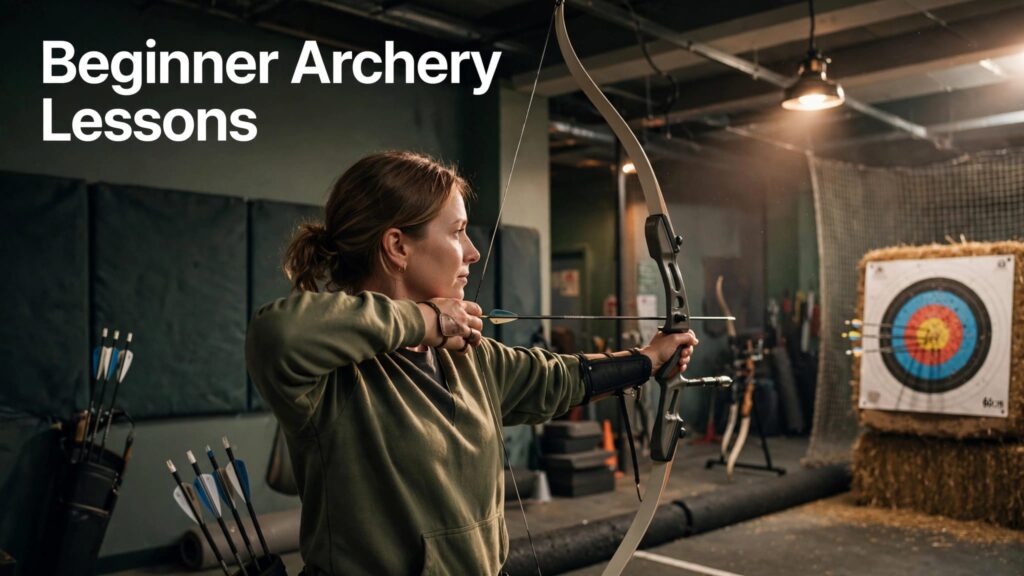
Center Shot Archery is at 12 Inez Street in Covington, making it the Kentucky-side choice in the heart of Northern Kentucky. Its services page lists lessons and classes, including an Intro to Archery class.
The indoor range is a useful option when weather is part of your travel plans. Center Shot also lists range sessions and equipment rental, but those are distinct services. A beginner who needs instruction should start with the class rather than assume a rental includes coaching.
For visitors staying near Covington, the location makes it possible to arrange an archery outing without building the day around a long drive. That matters when children, meals, and other stops are already part of the plan.
M&M Archery Range in Jonesville
M&M Archery Range is at 300 Kerns Lane in Jonesville, also identified as Wheatley, Kentucky. It advertises lessons and training for beginners through advanced archers, with certified coaches and instruction for all ages.
The facility lists a 20-yard indoor range, an outdoor range, and a 10-target Rinehart 3D range. Three-dimensional targets give archers a different setting from a flat paper target, though a first lesson should begin with the basics your instructor teaches.
Keep the geography clear. Jonesville is a regional option south of the core Northern Kentucky counties, so it calls for more driving than a Covington stop. If you want a lesson and a chance to see more of Kentucky, that distinction can help shape the day.
What Happens at a First Archery Lesson
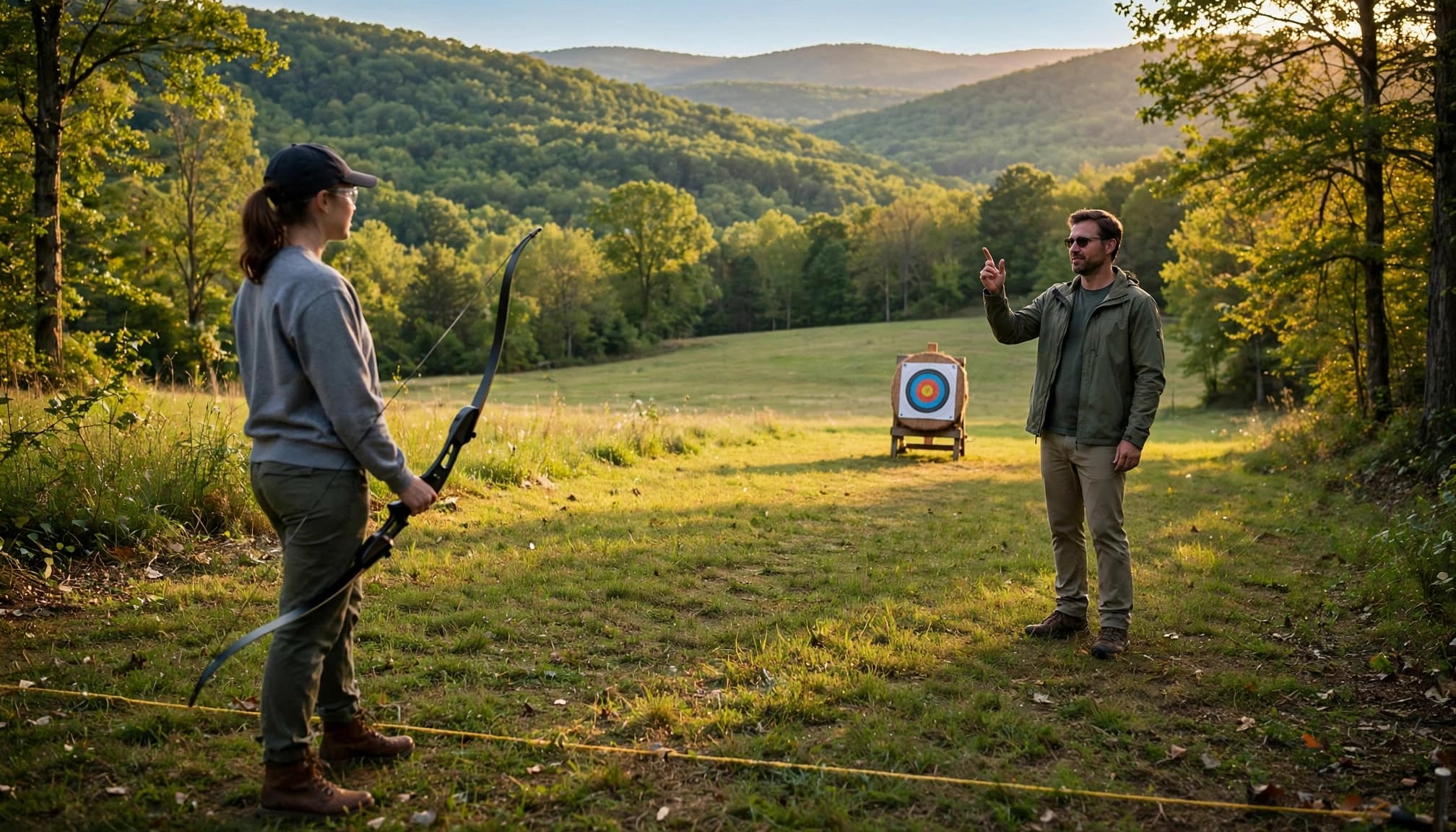
A beginner lesson gives you a place to learn the range rules, handle equipment under supervision, and practice a shooting sequence. We recommend giving those foundations your attention, because accuracy becomes more meaningful when you understand how to shoot safely and repeat the process.
Learn the Range Before the Target
Your instructor should explain where to stand, when shooting begins, and when everyone may go forward to collect arrows. Those directions apply to the whole group. An archery range works because each person follows the same signals.
The bow and arrows also need to fit the student. A comfortable starting setup lets you pay attention to instruction instead of struggling against equipment that is too difficult to use.
Give Your Form Time to Develop
A lesson can introduce stance, drawing the bow, aiming, and releasing the string. Your instructor can help you adjust each part as you practice.
We wouldn't make the first session a contest over the center of the target. A consistent routine gives you something useful to repeat, while a single well-placed arrow tells you much less about what you've learned.
Archery Safety Comes First
The target may be the most visible part of the range, but the shooting line is where a beginner learns responsibility. You must follow the instructor's commands and the rules of the facility throughout the session.
Follow the Instructor’s Signals
Stay behind the shooting line until the group is told to shoot or retrieve arrows. Never go forward to collect an arrow while anyone is still shooting. If something falls beyond the line, leave it until the instructor says it is safe to retrieve it.
Keep arrows pointed toward the target area, and draw a bow only when you're on the line and directed to do so. The Oregon Department of Fish and Wildlife's archery range rules offer a useful introduction to range safety and etiquette.
Handle Equipment With Care
Don't release a drawn bowstring without an arrow. This is called a dry fire, and it can damage the bow or injure the archer. If equipment feels damaged or something doesn't seem right, stop and let the instructor handle it.
Children need the same clear boundaries as adults, along with close supervision appropriate to their age. Listening for the signal is part of learning archery, not a step to rush past on the way to shooting.
Beginner Equipment and Range Costs
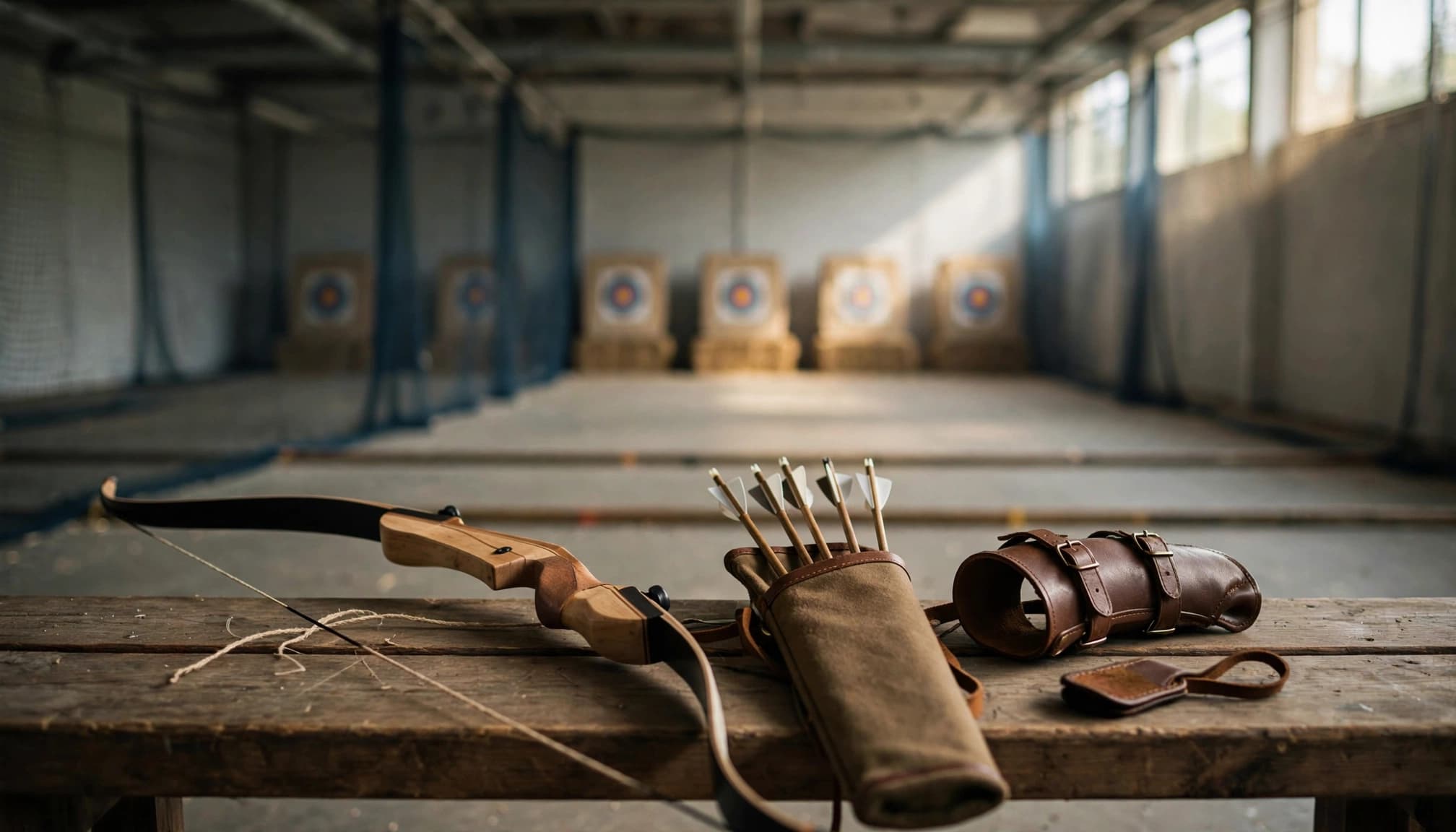
You don't need to buy a bow before your first lesson. We recommend learning with suitable equipment first, because draw weight, fit, and the type of shooting you enjoy all matter when you eventually choose your own.
Understand the Equipment
A beginner may encounter a recurve bow or a compound bow. A recurve has limbs that curve away from the archer at the tips. A compound uses a system of cams and cables. Both can be used for target archery, and an instructor can introduce the equipment available for your lesson.
An arm guard protects the inside of the bow arm from contact with the string. Finger protection may also be used when drawing with the fingers. Let the instructor show you how the equipment is worn and used.
Separate Rental Fees From Lesson Fees
Center Shot lists a one-hour range session at $14 for bag or paper targets. It also lists a Genesis bow rental for $5, with arrows and an arm guard. Together, those published range and rental charges total $19.
That $19 is not a stated lesson price. Center Shot says rental customers need indoor-range experience or must sign up for the Intro to Archery class. The distinction is important: paying for a lane and bow gives you range access and equipment, while a lesson gives you instruction.
Choosing Archery for Kids and Families
Match the Lesson to the Child
A child doesn't need prior archery experience to begin learning, but they do need to listen to directions and follow the range signals. Consider your child's comfort with a structured activity, their ability to wait, and how they respond to an instructor's guidance.
M&M advertises training for all ages. For a family with children of different ages, that broad offering is a useful starting point. The lesson itself should still fit each participant's size and readiness, since equipment that works for an adult may not suit a child.
A caregiver who understands the range rules can reinforce them without turning the session into a competition. Give children room to learn at their own pace and let the instructor make the equipment and technique decisions.
Decide Between a Lesson and Ongoing Practice
A single lesson can be a memorable part of a Northern Kentucky vacation. A club or recurring program is a different commitment, suited to a child who wants regular instruction and practice after the trip.
USA Archery's youth programs describe Junior Olympic Archery Development, or JOAD, clubs that offer training and event preparation. Many clubs also have rental equipment available. That gives families a way to explore the sport before deciding how much equipment they want to own.
Plan an Archery Day in Northern Kentucky
A lesson can be the main event without taking over the whole day. Leave time for a meal and a rest, particularly if younger children are learning a new activity that asks them to concentrate.
For a Covington outing, keep the rest of the schedule modest. Our guide to family activities in Northern Kentucky offers ideas for adding another stop without asking everyone to keep the same pace all day.
If your family wants outdoor time, Big Bone Lick State Historic Site has trails, fossils, and a recreated Ice Age marsh. It offers a different kind of Kentucky outing after the focused instruction of an archery lesson. Choose the parts that fit your group's energy rather than trying to see everything.
For another structured sport, our guide to beginner fencing classes near Northern Kentucky explains a nearby option across the river in Cincinnati. Keep the state and address in mind when combining activities with a Kentucky stay.
Continue Practicing After Your Lesson
A first lesson gives you a foundation. Continued practice gives you time to repeat what you learned, ask questions, and develop consistency under appropriate supervision.
Find a Club
USA Archery's club finder lets you search by state or ZIP code. A club can be a useful next step if you want regular instruction rather than an occasional vacation activity.
Think about what you want to practice. Some archers prefer paper targets indoors, while others want to spend time on an outdoor or 3D range. Your first lesson can help you decide which setting holds your interest.
Understand Public Range Access
A public range and a beginner class are different things. A range provides a place to shoot; a class provides instruction. New archers should learn the rules and receive guidance before treating an open range as their starting point.
Kentucky Fish and Wildlife's shooting range map identifies department facilities and explains that an annual or one-day shooting range permit is required at department-managed, leased, or affiliated ranges. That requirement concerns those facilities, not every private archery business in Kentucky.
Start With a Lesson
Northern Kentucky visitors have a clear place to begin in Covington, along with a regional lesson option in Jonesville. Choose the location that fits your day, and keep instruction separate from range access and rental charges.
A first lesson should give you safe habits and a repeatable routine. Give those foundations your attention, and the target will be there when you're ready to practice again.