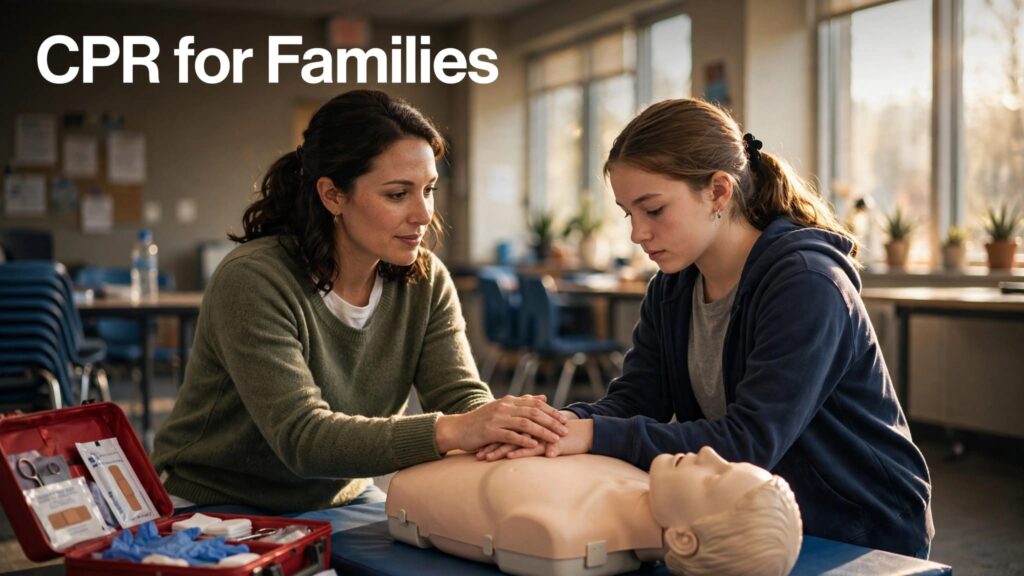
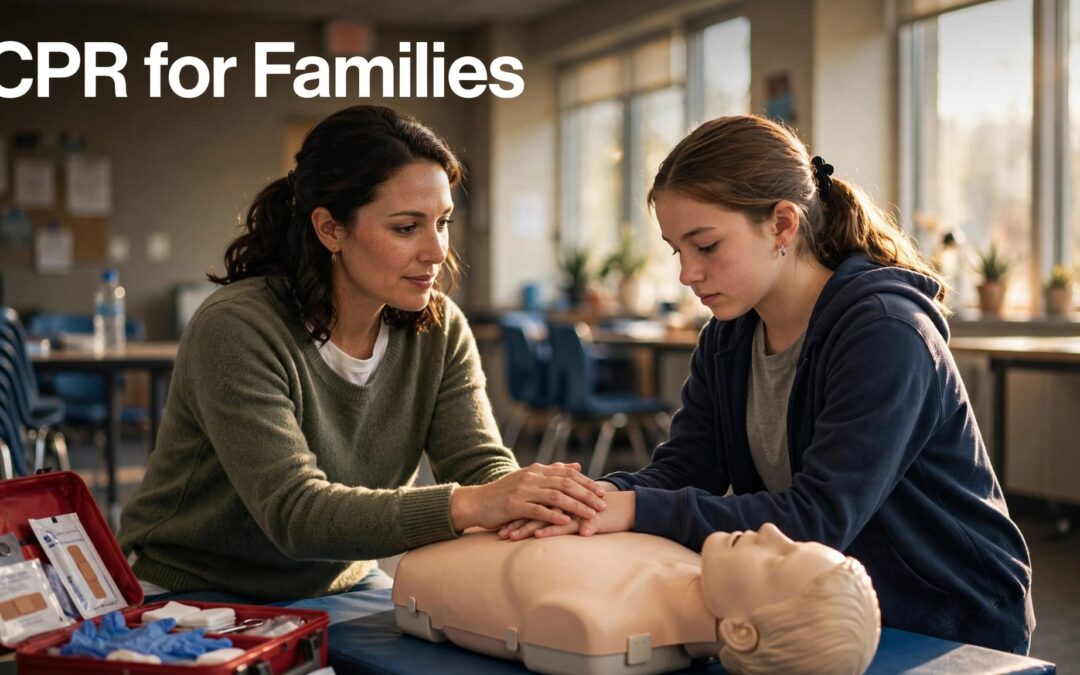
For parents and teens, Northern Kentucky CPR classes should match the people you care for and the credential you need. St. Elizabeth Healthcare offers two Erlanger classes on December 5, 2026: family CPR instruction and a separate first aid, CPR, and AED certification course.
Here in Kentucky, we recommend choosing practical preparation, whether your teen babysits, your family enjoys swimming, or you're preparing to care for a new baby. You need instruction that explains the response and gives you time to practice the response.
Begin with the difference between learning a skill and earning a certification.
Key Takeaways
- St. Elizabeth's December 5 classes cost $50 per participant for Friends & Family instruction or $75 for First Aid, CPR AED certification.
- The family class provides a participation certificate; the certification course provides an eCard valid for two years.
- Teens need instruction suited to their readiness, and babysitting education shouldn't be treated as automatic CPR certification.
- Hands-on practice matters, especially when you're learning to respond to an emergency involving a child or infant.
Northern Kentucky CPR Classes in Erlanger
The St. Elizabeth December 5 classes take place at the St. Elizabeth Training & Education Center, 3861 Olympic Blvd., Erlanger, KY 41018. Both include a student workbook, but their credentials differ.
Friends & Family Instruction
HeartSaver Friends & Family CPR, AED costs $50 per participant. It covers one-rescuer adult, child, and infant CPR, AED use, choking, drug overdose, and drowning.
This class gives families a defined place to begin. Parents, grandparents, and other caregivers need to understand that an infant's emergency requires age-appropriate instruction, just as an adult's emergency requires an appropriate response.
The course includes a certificate of participation. It isn't a certification class. We recommend it for family learning when a workplace, school, or other organization doesn't require a certification card.
First Aid With CPR Certification
HeartSaver First Aid, CPR AED costs $75 per participant. It includes adult, child, and infant CPR and AED instruction, choking, drug overdose, drowning, and basic first aid.
Successful completion provides a certification eCard valid for two years. Two participants would pay $150 in course fees.
We favor this broader option when you need both emergency-response instruction and a certification credential. The added first aid instruction matters because a caregiver may face an injury or sudden illness that doesn't require CPR.
Choose according to the responsibility you're preparing to carry, rather than the lower price alone.
Choose Training That Covers Your Family
A course title tells you where to begin. Its content tells you whether the instruction fits your household.

Adult, Child, and Infant Skills
CPR means cardiopulmonary resuscitation. An AED is an automated external defibrillator, a device that analyzes heart rhythm and provides a shock when indicated.
Parents need to understand these terms, but understanding the terms is only the beginning. Instruction must also give you practice with the equipment and the age groups you're preparing to help.
The American Heart Association's pediatric first aid course options address illnesses and injuries involving infants and children until professional help arrives. We recommend pediatric coverage for anyone regularly responsible for younger children.
First Aid Beyond CPR
First aid means the immediate care given for an injury or illness before further medical care is available. A first aid course broadens preparation beyond cardiac arrest.
The Erlanger certification class includes basic first aid alongside CPR and AED instruction. That distinction deserves attention when you're comparing Northern Kentucky CPR classes for a household with children.
Read the course as a whole. CPR, choking response, and first aid are related responsibilities, but one course title doesn't automatically promise every subject.
Teens Need Readiness and Clear Responsibilities
A teenager can learn meaningful emergency-response skills. That learning deserves serious instruction, patient practice, and responsibilities the teen can understand.
We recommend presenting the course as preparation to help, without promising that a certificate removes fear or guarantees a particular outcome.
Age Alone Doesn’t Measure Ability
The American Heart Association's training frequently asked questions state that it doesn't mandate a minimum age for learning CPR. Physical ability depends more on strength than age alone.
This guidance concerns learning CPR. It doesn't establish admission rules for every local class.
A teen's readiness also includes listening, following directions, and accepting correction during practice. A student who understands the sequence still needs to demonstrate the physical skills. Give that distinction its proper place, without turning strength or speed into a competition between students.
Babysitting Requires Broader Preparation
The American Red Cross offers in-person babysitting classes designed for ages 11 through 16, with hands-on activities and instruction about caring for children and infants.
Babysitting education and CPR certification serve different purposes. A teen needs everyday caregiving judgment as well as preparation for an emergency.
We recommend treating those subjects as complementary. A babysitter must follow household instructions, understand when adult help is needed, and know how to communicate an emergency. CPR instruction adds an emergency-response skill; it doesn't replace the rest of that responsibility.
Understand Course Formats and Credentials
Hands-on training gives you an opportunity to perform the skill, receive correction, and practice again. That matters when the lesson involves body position, equipment, and a sequence you may need under pressure.
In-person classes place instruction and practice together. Blended courses combine online learning with an in-person skills session. The online portion is one part of that course, rather than a substitute for the required skills work.
The Red Cross distinguishes these formats from online-only learning. Its in-person and blended First Aid/CPR/AED courses include hands-on skills and two-year certification. Online-only learning has no skills verification and may not satisfy workplace requirements.
A participation certificate records participation. A certification card records completion of the requirements for that credential. We keep that distinction clear because families deserve to know what their course provides.
A certificate of participation shouldn't be presented as a CPR certification card, even when both courses teach useful family skills.
For an employment or school requirement, the required credential belongs at the beginning of your decision. General family preparation gives you more freedom to choose an introductory course.
Put First Aid and Prevention Together
Emergency preparation belongs beside everyday prevention. Families need both, particularly when a Kentucky visit includes a hotel pool, outdoor play, or time near water.
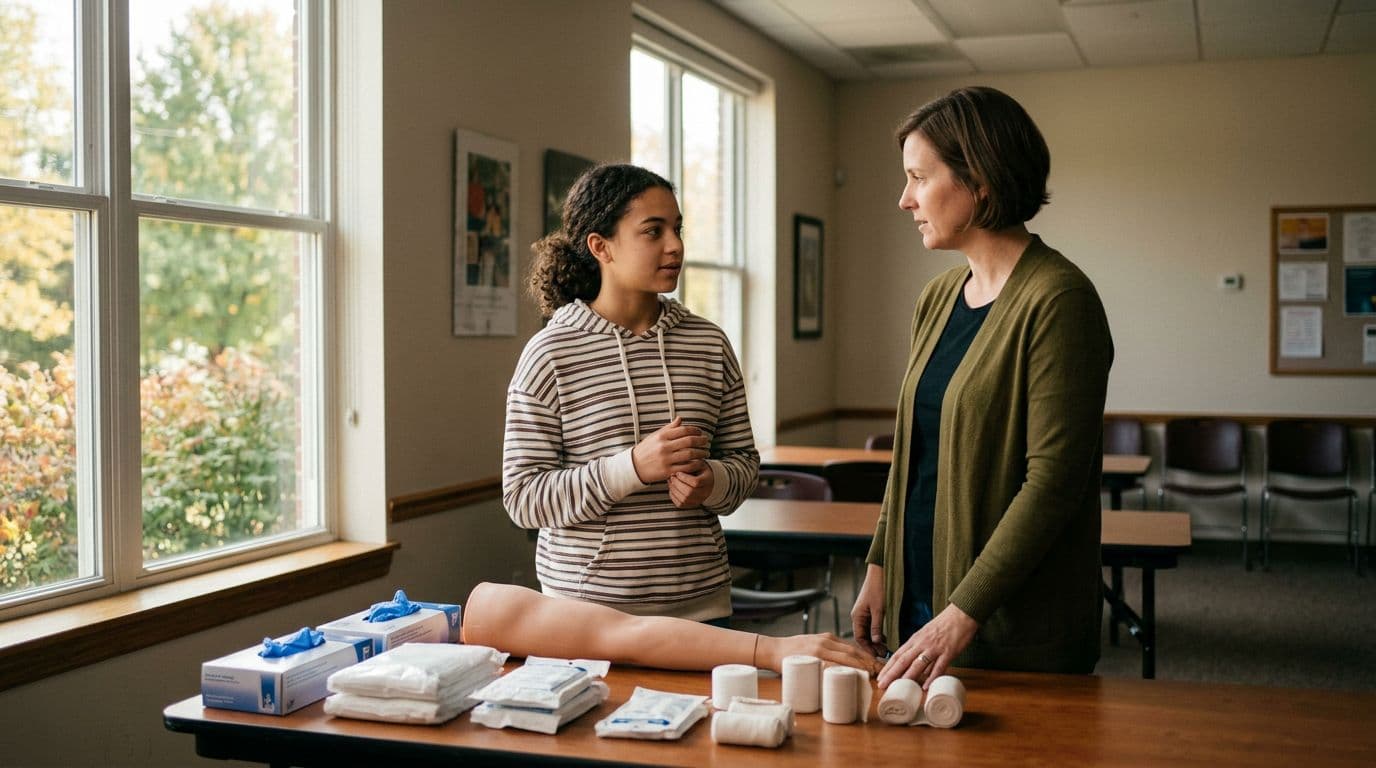
Swimming lessons teach water skills. CPR teaches an emergency response. Neither removes the need for close, attentive supervision around water.
We recommend giving supervision a clear owner. An adult who is responsible for watching children needs to understand that responsibility, rather than assume someone else is watching. A teen's new training shouldn't become a reason to hand over more responsibility than the teen can manage.
At home or in your lodging, make the emergency plan understandable. Your teen should know the address, how to call 911, and how to reach a responsible adult.
Keep first aid supplies accessible to the people expected to use them. Practice CPR on training manikins, not on family members. Good habits should support the instruction long after the classroom session ends.
Leave Room for a Kentucky Family Outing
A training day can still leave room to enjoy our corner of Kentucky. We recommend one flexible activity afterward, rather than a full afternoon of reservations.
For a Covington stop, the Behringer-Crawford Museum at 1600 Montague Road offers regional history exhibits and a model train display. It gives families something to explore together without adding another class to the day.
For an outdoor choice, the scenic overlook at Devou Park offers a place to pause and enjoy the view. Let your family's energy determine whether the outing stays short.
Our guide to Northern Kentucky family activities offers more choices for relatives who aren't attending training or for another day of your visit.
A local family needs a manageable Saturday. A visiting family needs a plan that fits its stay. Give the course enough room in either schedule.
Frequently Asked Questions
Are CPR Classes Only for Healthcare Workers?
The American Heart Association's Heartsaver courses are designed for people with little or no medical training. Parents, caregivers, and other community members can learn these skills without beginning with a healthcare background.
How Long Does the Erlanger Certification Last?
St. Elizabeth's December 5 First Aid, CPR AED course provides a certification eCard valid for two years. Its Friends & Family course provides a participation certificate instead. The two-year certification applies to the certification course, not to the family participation certificate.
Can CPR Training Replace Swimming Lessons?
CPR training prepares you to respond to an emergency. Swimming instruction develops water skills, while supervision addresses the child's immediate safety around water. We recommend keeping all three in their proper place. A child who swims confidently still needs appropriate supervision, and a trained caregiver still needs to prevent avoidable risks.
Choose Preparation That Fits the Responsibility
The right Northern Kentucky CPR classes provide instruction for the people you may need to help, with a credential that matches your purpose. For families considering the December 5 Erlanger options, the central choice is participation instruction or first aid and CPR certification.
We recommend choosing that purpose first, then giving the practice your full attention. A useful family skill deserves more than a place on the calendar; it deserves patient learning and clear responsibility.