
Some family outings begin with excitement and end with exhaustion because the noise, crowds, lights, and waiting become too much. We know that feeling, and we understand how difficult it can be to find activities that accommodate neurodivergent children. Fortunately, Northern Kentucky has better choices for families who need a calmer way to spend the day.
A sensory-friendly Northern Kentucky trip is not about finding a place with no sounds or surprises. Instead, it is about choosing attractions with more control, clear breaks, outdoor space, and accessible play. Whether your family is navigating challenges related to autism spectrum disorder or simply prefers a quieter environment, planning the setting as carefully as the activity allows everyone to enjoy a full day together.
Key Takeaways
- Newport Aquarium stands out as a premier indoor choice, particularly when visitors take advantage of their sensory-friendly and holiday-themed programming.
- Boone Woods Park provides excellent inclusive outdoor play, serving as one of the best accessible attractions for families who need space to move and reset.
- Nearby Cincinnati offers additional resources, such as sensory-friendly movies, inclusive gym environments, and sensory-friendly performances at various local venues.
- Always check schedules, anticipated crowd levels, quiet space availability, and accessibility details before leaving home to ensure a smooth experience.
- A shorter outing that includes a planned break is far more successful than forcing a long day that eventually leads to distress.
Begin With Calmer Indoor Attractions
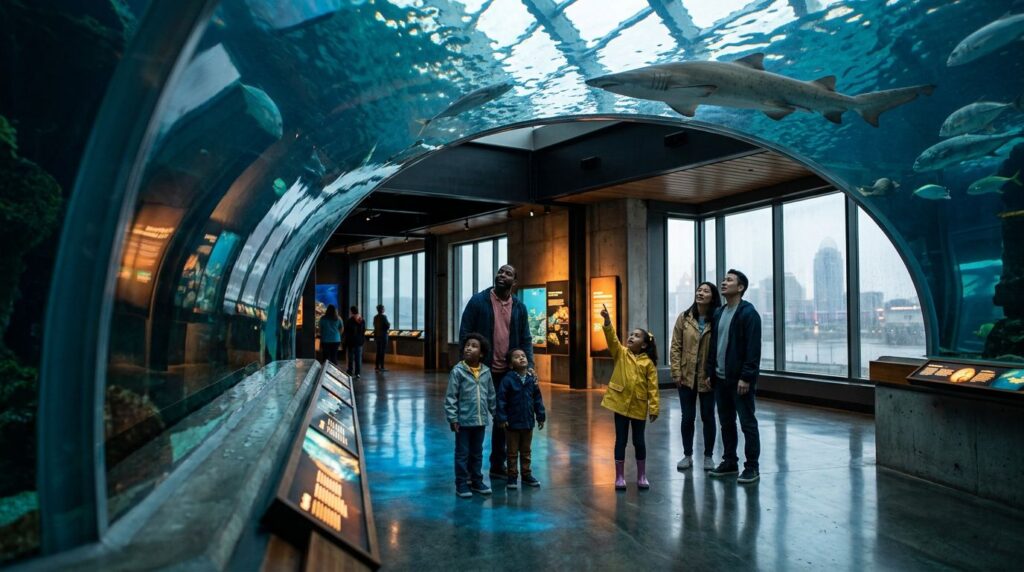
When we talk about sensory-friendly Northern Kentucky, the Newport Aquarium belongs near the top of the list. The exhibits are indoors, the route is easy to follow, and families can move at their own pace. The Newport Aquarium has long supported guests by offering sensory bags, quieter areas during selected programs, and dedicated sensory-friendly early hours.
Its holiday programming has also included Family Inclusive Sensory Hours and sensory-friendly Scuba Santa events. These programs do not run every day, and dates can change each year, so we should check the current calendar before making plans. An early visit on a less crowded day is often easier than arriving during the busiest afternoon hours.
A visit to the Newport Aquarium can still include bright displays, crowds, and sudden sounds. That does not make it unsuitable. It means we should build in permission to pause, step away, or leave one exhibit unfinished. We do not have to see every tank for the day to count as a success.
Families looking for more local guidance can also browse our list of autism-friendly activities and best indoor activities in Northern Kentucky before choosing a rainy-day plan.
The Creation Museum in Petersburg and the Ark Encounter in Williamstown are larger accessible attractions that may work for families who prefer structured routes and a mixture of indoor and outdoor areas. Both include animal experiences and large exhibits, but neither should be treated as automatically quiet. We should review current accessibility information, consider the walking distance, and plan breaks before visiting.
During the holiday season, An Old Kentucky Christmas in Burlington has offered a Special Needs Event with an early opening, added ramps, extra staff, dimmed lighting, and reduced crowds. Those accommodations can change from year to year. We should confirm the 2026 details before driving, especially when the event is part of a larger Christmas outing.
A successful outing does not require us to finish every activity. It requires us to leave with good memories still intact.
Let Outdoor Space Do Some of the Work
Outdoor attractions give families something indoor venues cannot always provide: room to spread out. When the lights, voices, or movement become too strong for those with sensory sensitivities, a park gives us a place to walk, breathe, and regain control without ending the entire day.
Boone Woods Park is one of the clearest choices in Northern Kentucky. The Boone County park has been identified as the county's first ADA-accessible playground, with an inclusive play structure and accessible paths. Children can choose active play, sensory exploration, or a quieter walk while adults stay close. These design features are vital for children with sensory processing disorder, as they allow for a customized play experience that accommodates different needs.
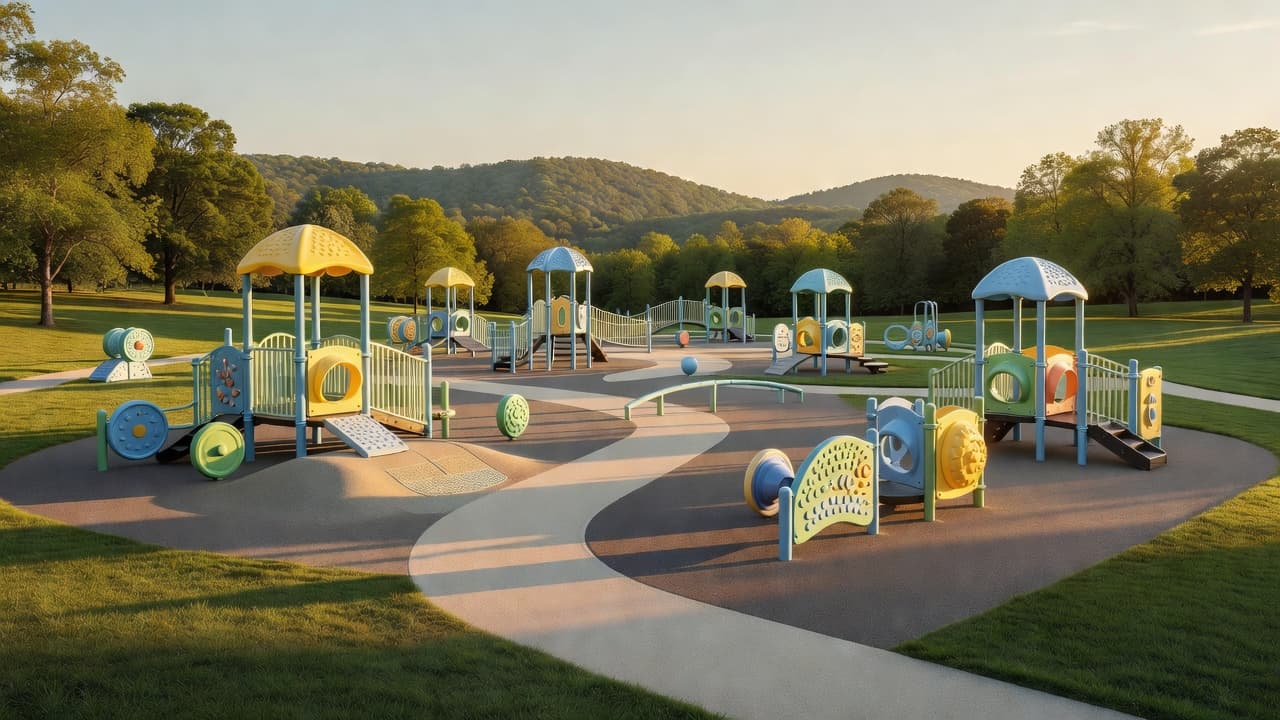
We recommend visiting parks earlier in the day when temperatures and crowds are usually easier to manage. Bring familiar snacks, headphones, water, and a change of clothes when those items help your child stay comfortable. Outdoor play is more flexible, but weather, insects, and wet surfaces can create their own sensory challenges.
Riverfront parks in Newport, Covington, and neighboring communities can also work well for families who prefer movement without a fixed schedule. A walk beside the Ohio River, a short look at the bridges, or time on a bench can be enough. We don't need to turn every visit into a major production.
Families who want more low-cost options can use our guide to free family-friendly activities in Northern Kentucky. Parks, library programs, and open-air spaces give us more ways to enjoy the area without paying for a long admission window.
We should still check bathrooms, parking, shade, and the distance from the car. A beautiful park becomes difficult when the walk is too long or there is nowhere to retreat. By researching accessible attractions and prioritizing autism-friendly activities in advance, the right outdoor space becomes not only fun, but also perfectly manageable.
Add Cincinnati Favorites Across the River
Northern Kentucky families have access to a broader regional network because Cincinnati is only minutes away. By crossing the river, we can discover sensory-friendly performances and attractions designed around lower sound, adjusted lighting, flexible movement, or dedicated quiet spaces.
AMC Newport on the Levee 20 is an easy place to begin. They frequently host sensory-friendly films that utilize dimmed lighting and lower sound levels to provide a more comfortable experience. These sensory-friendly films generally maintain a relaxed expectation regarding movement and talking. Family screenings are commonly offered on the second and fourth Saturdays, while some Tuesday showings are intended for mature audiences. We should confirm the current movie and time before purchasing tickets.
We Rock the Spectrum in Cincinnati is an excellent inclusive play gym that welcomes families from Northern Kentucky. As a popular indoor playground, this facility features tunnels, suspended balance equipment, crash mats, sensory toys, and a zip line. We Rock the Spectrum offers an open play session that gives children the freedom to move without the strict rules of a traditional classroom. During an open play session, children can explore at their own pace in a supportive environment.
The Cincinnati Zoo and Botanical Garden is another strong regional choice. Its Access for All resources include sensory bags with fidgets, sunglasses, chewable tools, and noise-canceling headphones. The zoo also provides sensory maps, calming rooms, and a sensory-friendly restroom. Families can read more about local resources in Cincinnati Family Magazine's guide for special-needs kids.
The Cincinnati Museum Center adds indoor exhibits when the weather turns bad. While the Duke Energy Children's Museum features hands-on areas like the Energy Zone and Kids Town, parents should expect active play and standard museum noise. If your child requires a break, you may seek out areas with dimmed lighting to help manage overstimulation. We can choose one exhibit instead of trying to cover the entire building.
For sports families, TQL Stadium has a dedicated room near the Guest Experience Center on the concourse behind Section E6 and Section 220. These quiet zones offer a place to reset if the excitement of a match becomes overwhelming. We should ask guest services about access on the day of the event. A soccer match may still be loud, but this space ensures families have a retreat to maintain a positive experience.
Plan the Visit Before We Arrive
The best sensory-friendly activity can become a poor choice when we arrive without a plan. Because we know that navigating public spaces with sensory sensitivities requires preparation, we should treat the schedule as part of the attraction rather than an afterthought.
Before visiting, we recommend checking four things: the busiest hours, available quiet areas, restroom locations, and the venue's current accessibility program. A phone call can answer questions that a general website page may not cover, especially for families supporting individuals with autism spectrum disorder or developmental disabilities. When calling, we should ask whether headphones are allowed, whether re-entry is available, and whether staff can explain a quiet route. It is also helpful to inquire about specific events like sensory-sensitive Sundays, which provide a more predictable environment.
Kings Island in Mason is a good example of why advance planning matters for those with sensory sensitivities. The park offers a Boarding Pass Program for guests with diverse access needs. Families should visit the accessibility office or contact the park before arrival to learn how the program works, where to receive assistance, and which rides fit their needs.
We should also set a clear stopping point before the day begins. That may mean one movie, two aquarium galleries, or 45 minutes at a playground. When everyone knows the plan, leaving early does not feel like failure. It is simply part of the strategy.
A useful day might look like this:
- Visit an attraction during its first available hour.
- Choose one main activity instead of several crowded stops to better accommodate sensory sensitivities.
- Schedule food and a quiet break before anyone reaches overload.
- Keep transportation flexible so that leaving remains an option.
- Finish with a familiar meal or a short walk.
Regional listings can help us find additional programs, including sensory-friendly after-school activities and community providers in Cincinnati and Northern Kentucky. Beaming Health's Cincinnati activity listings are a helpful place to compare options regarding museum accessibility and adaptive programming for children with autism spectrum disorder or developmental disabilities, but we should still confirm each provider's current schedule.
The important word is choice. We should give children a way to participate, pause, move, wear headphones, or go home. That freedom makes outings more respectful and more enjoyable for everyone.
Frequently Asked Questions
How can I find out if a venue has specific sensory-friendly programming?
Before visiting, we recommend checking the attraction’s official website for an accessibility or sensory resources page. If the information is not clear, calling the venue directly to ask about their quiet zones, sensory bags, or upcoming inclusive events is the most reliable way to prepare.
Are there any admission costs for these sensory-friendly outings?
Northern Kentucky offers a mix of both paid and free activities to suit different budgets. While major attractions like the Newport Aquarium or local theme parks require tickets, many public parks and community spaces are free to access and provide plenty of room to roam.
What should I pack to make our outing more comfortable?
It is helpful to bring tools that allow your child to manage their environment, such as noise-reducing headphones, familiar snacks, and comfort items. Having a few go-to items can help children stay regulated, especially when encountering unexpected crowds or loud noises.
Is it necessary to stay for an entire event or exhibit?
Not at all, and in fact, planning for a shorter visit is often more successful than forcing a long day. We recommend setting a clear stopping point beforehand so that leaving early feels like a planned part of the trip rather than a failure.
Choose Comfort Over a Packed Itinerary
Sensory-friendly Northern Kentucky offers families the flexibility to prioritize comfort and control over a rigid schedule. Whether you are exploring the Newport Aquarium or enjoying the open air at Boone Woods Park, it is helpful to bring tools like noise-reducing headphones to manage the environment. By focusing on autism-friendly activities, we can ensure our children feel supported while visiting museums, the zoo, or inclusive play spaces across the river in Cincinnati.
We do not have to prove anything by staying until closing time. A successful outing is defined by our ability to engage in autism-friendly activities without pushing anyone past their limits. When we plan for frequent breaks and remain flexible, we create a positive experience for everyone involved. Ultimately, these trips are about quality time, and by prioritizing the needs of our children, we strengthen the connection within our local special needs community.