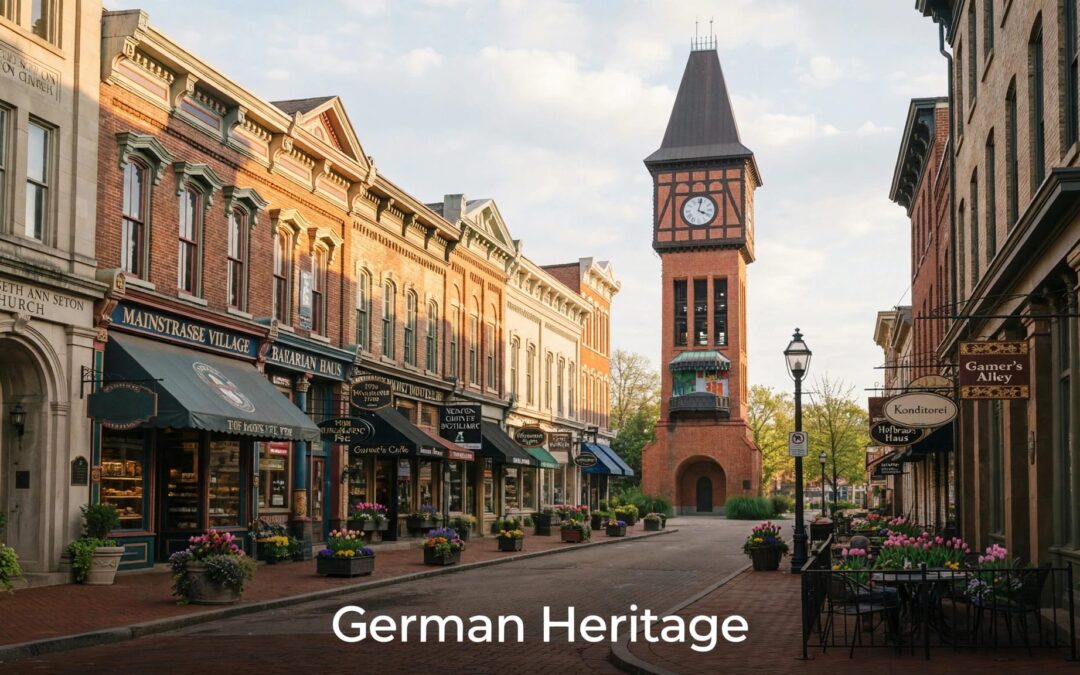
Northern Kentucky German heritage is best explored in Mainstrasse Village, Newport's historic streets, and the brewing traditions shared across the Ohio River. We recommend beginning on the Kentucky side, where neighborhood history gives a meal, a walk, or a museum stop its proper meaning.
German immigrants built businesses, formed congregations, established societies, and endured hostility that changed the names on their streets. To understand what remains, begin with the people who made these river cities their home.
Key Takeaways
- Mainstrasse offers a manageable first stop, with historic buildings and German-inspired public landmarks.
- Newport's history includes early taverns, immigrant societies, brewing wealth, and wartime prejudice.
- Cincinnati adds Over-the-Rhine and Oktoberfest Zinzinnati, but Northern Kentucky deserves a full outing of its own.
How Northern Kentucky German Heritage Took Root
German Settlement Began Before the Immigration Boom
German settlement in the Ohio Valley began before the American Revolution. Many early arrivals came through Pennsylvania and Virginia, carrying their language and customs westward.
Moravian missionary Johann Heckewelder recorded German residents on both sides of the Ohio River in 1792. That matters because German life here was established before the great nineteenth-century immigration waves.
In Newport, Heinrich Pickele received permission to open the town's first tavern in 1795. Johann Bartel established its first brewery in 1798. These businesses helped establish the places where residents traded, gathered, and heard local news.
The River Connected German Communities
Across the river, Heidelberg-born David Ziegler, a veteran of American military service, became Cincinnati's first mayor in 1802. German influence was already reaching civic government.
German immigration expanded sharply during the following decades. Families settled near employment, congregations, and people who spoke their language.
We encourage you to understand the river as a connection between communities. Newport and a neighboring Kentucky river city, along with Cincinnati, developed distinct identities, but their German residents shared commercial, cultural, and family ties.
Begin With Covington’s Mainstrasse Village
Understand the Village’s Two Histories
Mainstrasse contains older neighborhood history and a later effort to celebrate that history. Its German-village identity was developed during the 1970s around existing nineteenth-century buildings.
The Mainstrasse Village history helps explain that distinction. The neighborhood wasn't built all at once as a visitor attraction.
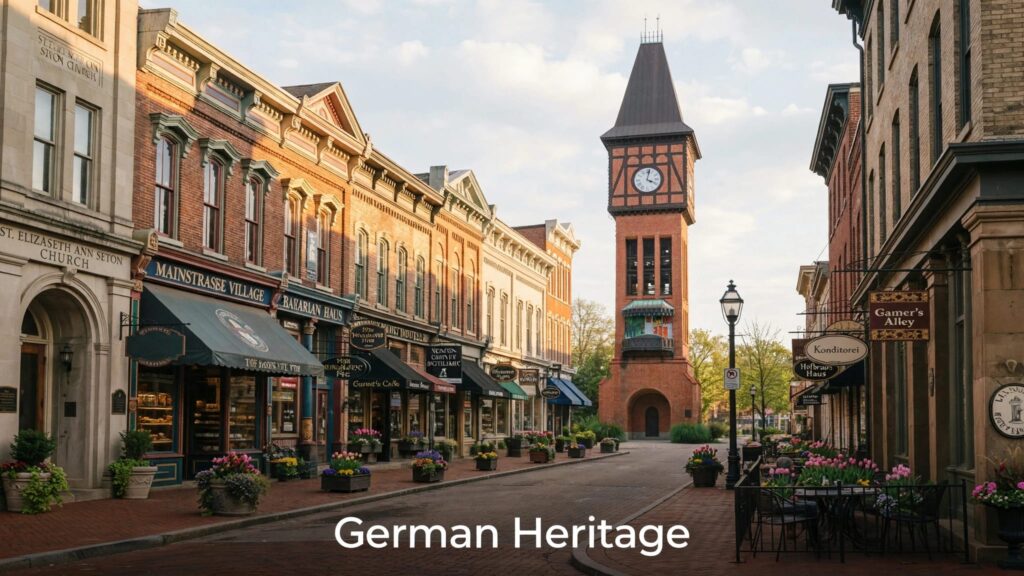
We recommend walking the blocks around Main Street and Sixth Street. Look at the narrow storefronts, upper-story windows, and buildings where commerce and domestic life occupied the same address.
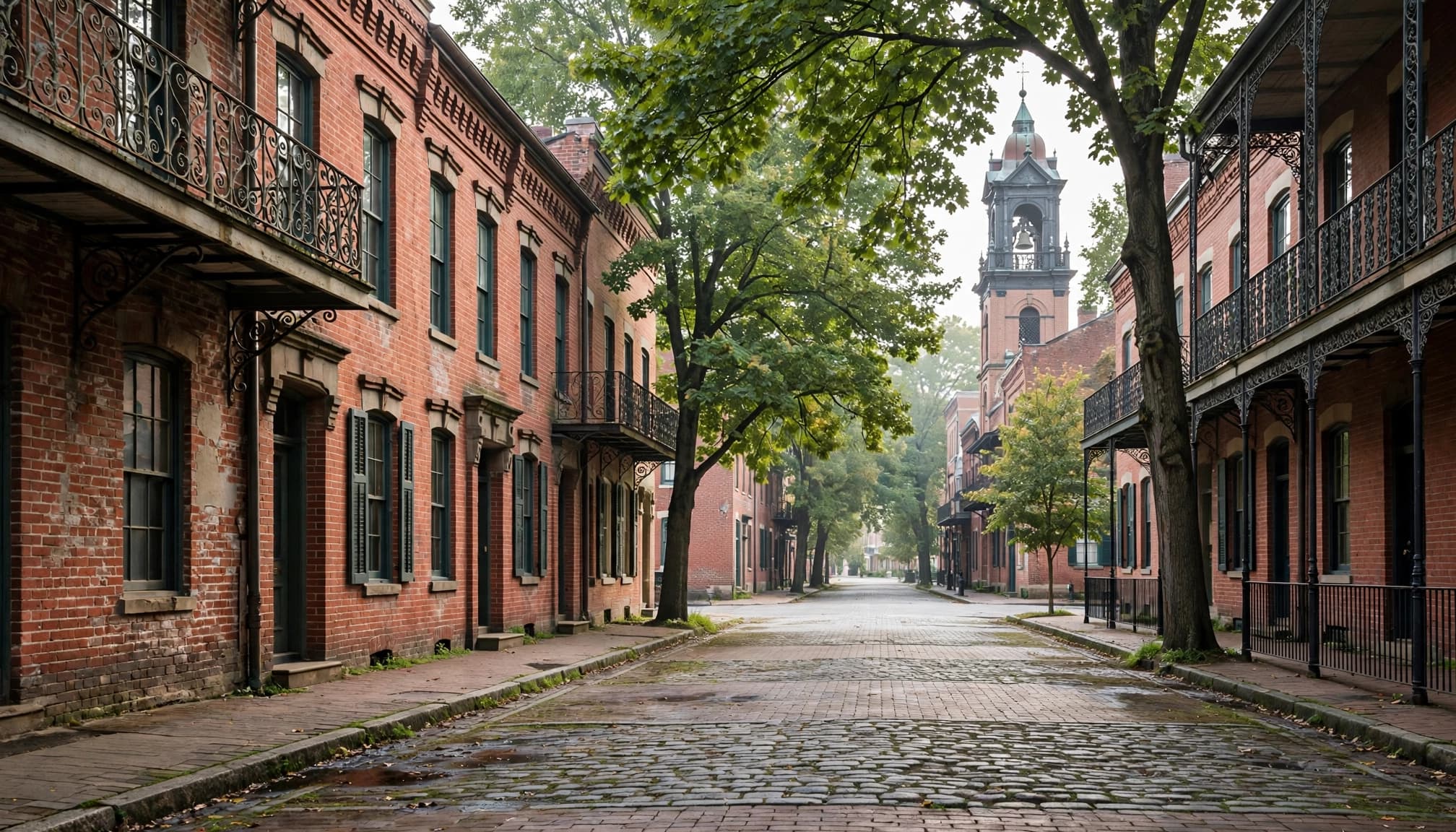
Illustrative German-American river-city streetscape.
Give the Public Landmarks Their Proper Place
The 100-foot Carroll Chimes Bell Tower was completed in 1979 and contains 43 bells. It belongs to the neighborhood's heritage-revival period.
The local visitor guide identifies the tower and Goose Girl Fountain among Mainstrasse's German-American landmarks.
Churches deserve attention alongside those public spaces. German and Irish Catholic immigrants established parishes where worship, schooling, feast days, and neighborhood support belonged together.
Our guide to Northern Kentucky's historic churches gives that religious history more room. A neighborhood's heritage becomes clearer when you consider where people worshipped as well as where they worked.
Newport’s German Societies Built Community
The Turnverein Joined Exercise With Civic Life
Newport's Turnverein was founded in 1852 after the arrival of the 48ers, refugees associated with the failed German revolutions of 1848.
A Turnverein was a gymnastics association, but that definition alone is too small. Turner organizations also supported education, social gatherings, and political discussion. Physical training and civic participation belonged to the same organization.
Newport's German Pioneer Society followed in 1877. German Day celebrations in 1883 gave local residents another opportunity to publicly acknowledge their ancestry.
These institutions show how deliberately immigrants organized community life. Language and shared origins became clubs, meeting places, and public celebrations.
The 1856 Violence Must Be Remembered
That public presence also brought hostility. The Know-Nothing movement opposed immigrants and Catholics, and Northern Kentucky was not spared its influence.
In 1856, armed Turners and nativists clashed in Covington. The violence led to arrests and legal proceedings. Most defendants had their cases dismissed; the remaining defendants were freed after trial.
We believe this belongs beside the more comfortable stories about beer and festivals. German residents were building a place in American society while facing people who challenged their right to belong.
Follow the Brewing Story on Both Riverbanks
Wiedemann Made Newport a Brewing Center
George Wiedemann moved to Newport in 1870 after working at the Kauffman Brewery in Over-the-Rhine. His company grew into what regional histories describe as the largest brewery south of the Ohio River and east of the Mississippi.
That scale helps explain why brewing occupies such a large place in Newport's German history. It generated employment, investment, and substantial industrial wealth.
National Prohibition halted most legal beer production and disrupted an industry closely tied to Newport's German community.
Cincinnati had its own earlier commercial beginning. Davis Embree opened a brewery along the Ohio River in 1812 and closed his operation in 1825. Newport's 1798 brewery and Cincinnati's 1812 commercial brewery refer to different cities, so the dates need not be confused.
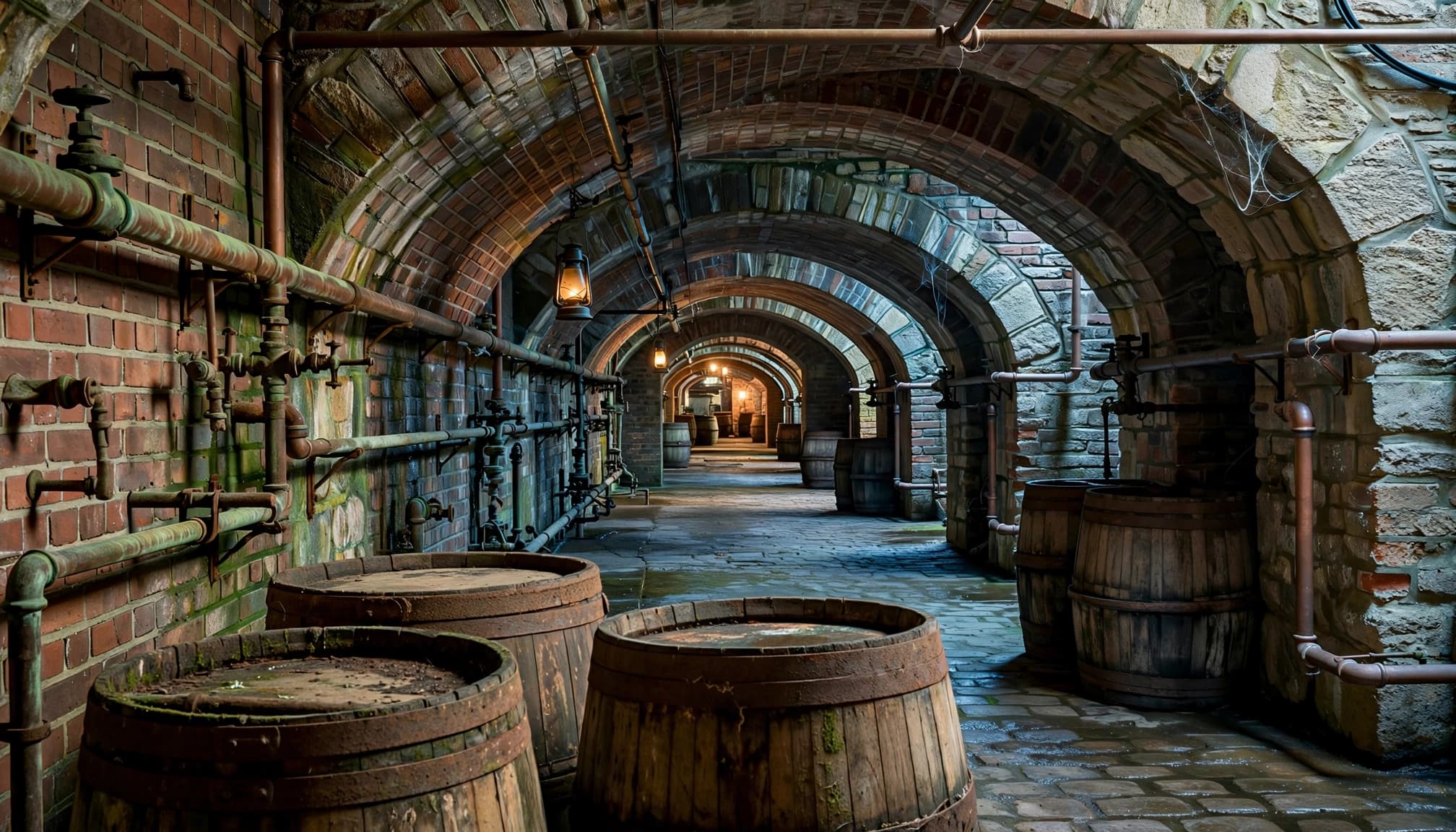
Illustrative view of a historic lager cellar.
Connect Industrial History With a Present-Day Stop
Visit Cincy's brewing history credits Cincinnati with 36 breweries producing more than 30 million gallons by the mid-nineteenth century. Underground cellars and tunnels provided cool storage for lager before mechanical refrigeration became standard.
For a Kentucky-side history stop, the Bavarian Brewery Exhibit is at 1840 Simon Kenton Way in Covington. Listed access is Monday through Friday, 8 a.m. to 5 p.m.
For a meal, Hofbräuhaus Newport at 200 E. Third Street offers German food and house-brewed beer. It opened in April 2003 as the first American Hofbräuhaus franchise.
We recommend treating the exhibit and beer hall as different experiences. One explains an industry; the other offers a contemporary expression of German hospitality.
World War I Changed What Remained Visible
German Street in Newport became Liberty Street during World War I. The new name reflected a period when German language and public identity became targets of suspicion.
The Kenton County Public Library's account of anti-German hysteria in Greater Cincinnati places these local changes within the region's wartime backlash.
An honorific German Street sign later acknowledged the earlier name through cooperation between Newport and the German-American Citizens League. We should understand that recognition as public remembrance, rather than assume the wartime renaming was reversed.
Newport's Turner Hall closed in 1936. Its loss removed a longstanding gathering place, even though German ancestry and family traditions continued.
A closed hall and a renamed street are part of the heritage, too. They reveal what disappeared from public view and why surviving buildings tell only part of the story.
Cross the Ohio for Over-the-Rhine and Oktoberfest
Cincinnati adds another chapter without replacing the Kentucky story. We recommend it as an extension when your schedule allows.
The official Over-the-Rhine guide explains the neighborhood's German associations. Residents compared crossing the Miami and Erie Canal with crossing the Rhine into a German neighborhood. Central Parkway follows the former canal corridor.
Look for Italianate architecture, especially tall windows, decorative cornices, and repeated brick facades. Those buildings help you understand the density of the immigrant city, where homes, shops, workplaces, and gathering places stood close together.
Oktoberfest Zinzinnati festival information provides the direct event resource for the annual September celebration. It is the largest Oktoberfest in the United States and attracts hundreds of thousands of visitors.
We recommend choosing deliberately between a neighborhood walk and a festival-centered day. A major celebration requires more time and patience than a short history outing, especially when children or visitors with limited walking stamina are part of your group.
Build a Heritage Day That Leaves Room to Learn
We'd begin in Mainstrasse, where a street walk introduces the buildings and neighborhood scale without requiring a timed admission.
On a weekday, add the Bavarian Brewery Exhibit before continuing to Newport. On a weekend, keep more time for the public streets and a meal. Hofbräuhaus opens at 11 a.m. daily, which makes lunch a practical anchor.
Allow room between stops. Historic sidewalks, crossings, restaurant entrances, and outdoor seating can make a short route take longer than a map suggests. A shorter walk with time to observe will teach more than a crowded itinerary.
Our relaxed Northern Kentucky itinerary offers a broader framework for combining the two Kentucky river cities. We recommend adding Cincinnati only after you have given the Kentucky stops the attention they deserve.
Questions About German Heritage in Northern Kentucky
Is Cincinnati Mostly German?
German ancestry is an important part of Cincinnati's identity, but ancestry and birthplace are different measures. Neither should be used casually as a description of every resident.
The useful point for visitors is the visible influence: German immigration shaped neighborhoods, brewing, associations, religious life, and festivals on both sides of the river.
Where Can Family Historians Begin?
The Kenton County Public Library's history and genealogy resources are a useful starting point for Northern Kentucky family research.
We recommend gathering full names, approximate dates, addresses, and religious affiliations first. Parish records and civil records answer different questions, and immigrant names may appear with different spellings. A family's church connection can help distinguish people who otherwise share similar names.
Give Northern Kentucky’s German History a Full Day
Northern Kentucky German heritage deserves attention beyond a festival tent or a restaurant menu. Mainstrasse's buildings, Newport's societies, the brewing industry, and wartime street changes belong to one connected history.
We recommend a manageable day with meaningful stops. Begin in Covington, continue to Newport, and leave enough time to understand the places rather than merely pass them. The reward is a clearer view of the people who helped build our river cities.