


Best Northern Kentucky Toy Stores for Local Shopping
A vacation day doesn’t need another generic stop where every shelf looks the same. Northern Kentucky toy stores and collectible shops give families, nostalgia hunters, and comic fans a reason to slow down, look closely, and bring home something with a story. The...
Northern Kentucky Farmers Markets Worth Planning a Trip Around
A good farmers market can rescue a vacation morning. You step out with a tote bag, find tomatoes that still smell like the field, meet the people who grew the food, and suddenly the day has a center. The Northern Kentucky farmers markets do more than sell produce....
Northern Kentucky Thrift Stores Worth the Stop
A good thrift store changes the whole shape of a vacation day. You might walk in looking for a rain jacket, a paperback, or a cheap suitcase, then walk out with a story you couldn’t have planned. Northern Kentucky thrift stores give budget-minded visitors a...
Northern Kentucky Antique Stores Worth a Weekend Visit
A good antique stop doesn’t feel like another errand. It feels like opening a door into somebody else’s attic, workshop, parlor, or childhood, and finding the one thing you didn’t know you had been looking for. Northern Kentucky antique stores give...
Northern Kentucky Boutique Shops for Local Gifts
A good vacation gift should not feel like an afterthought grabbed beside a cash register. It should carry a little of the place home with you, whether that means Kentucky-made soap, a bourbon keepsake, a hand-poured candle, or a toy a child will remember for years....Most Popular
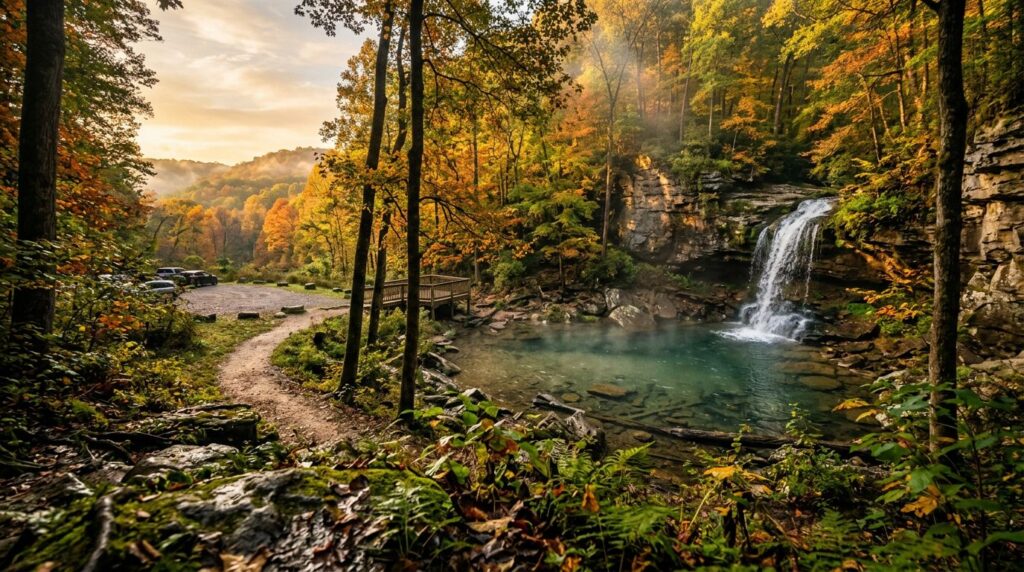 Best Waterfalls Near Northern Kentucky for Easy Day TripsWe do not have to drive across half the state to find water, stone, and a little peace. The best waterfalls near Northern Kentucky are the ones that give us a clear view, a manageable walk, and a day that still leaves room for lunch, family, or one more stop on the way home.
When we choose well, the waterfall does not wear us out. It resets us. That is the standard we should keep.
What Makes an Easy Waterfall Day Trip Worth Taking
Easy does not mean dull. It means the road is reasonable, the trail is short enough to keep our legs honest, and the view arrives before the day starts to feel like labor.
A waterfall trip is only easy when the road, the trail, and the return all stay simple.
That is the test we should use. If the drive is long, the trail is steep, and the parking is uncertain, the outing stops being a calm day trip and turns into a project. We do not need projects when we are looking for clean air and moving water. We need something clear, direct, and worth the fuel.
This is why waterfalls near Northern Kentucky matter so much for local travelers. We are close to river country, close to state parks, and close to several places where a waterfall does not demand a full expedition. The right trip feels like a gift because it still leaves us time for the rest of the day.
The Closest Falls Right Here in Northern Kentucky
If we want the simplest possible waterfall outing, we start close to home. Moser Branch Double Falls, also called Mammoth Cave Double Falls, sits in the Fort Wright Nature Center. That alone changes the tone of the trip. We are not planning a mountain climb. We are taking a short walk to something beautiful.
The park is only 16 acres, and the trail is short. Wildflowers line the path at the right time of year, which gives the stop a quiet, local charm. This is the kind of place we recommend when we want a waterfall without turning the day into a long road story.
If we want to keep the outing low-cost, our free parks and nature spots in Northern Kentucky list pairs well with this stop. That matters because easy travel is not only about walking less. It is also about spending less, worrying less, and keeping the day open.
Moser Branch is not the biggest waterfall on this list, and it does not need to be. It gives us a nearby place where water and rock do their work without much help from us. Sometimes that is exactly what we need.
The Short-Drive Waterfalls That Still Feel Easy
Once we move beyond the border counties, the list gets stronger and the drive gets longer, but the walking can still stay friendly. That is the real wisdom here. We are not choosing the hardest waterfall we can survive. We are choosing the one that matches the kind of day we want.
The quick comparison below keeps the options plain.
WaterfallWhy we choose itAccessBest fitMoser Branch Double FallsRight here in Fort Wright, short trail, local feelVery short walkA quick reset close to homeCreation FallsAbout 1.5 hours away, scenic Red River Gorge settingEasy hike on a well-known trailA strong day trip without overdoing itCumberland FallsAbout 2.5 hours south, four developed viewing platformsVery easy viewingThe classic waterfall driveYahoo FallsShort, paved trail and simple accessLow-effort walkTravelers who want easy footing
The pattern is plain. We can go farther when the trail stays kind. We can go closer when time is tight. Either way, the right waterfall keeps the day from becoming a test.
Cumberland Falls
Cumberland Falls is the name people know, and for good reason. It is about a 2.5-hour drive from Northern Kentucky, which still keeps it in day-trip territory, and it has four developed viewing platforms. That matters. We do not need a hard hike to get a strong view.
This is the waterfall we choose when we want the classic Kentucky answer. The water is broad, the gorge is serious, and the whole place has weight. For a bigger sweep of falls across the state, the Kentucky Wildlands Waterfall Trail gives us a wider map to follow later. Cumberland is the one that reminds us why Kentucky keeps drawing people back to the outdoors.
Yahoo Falls
Yahoo Falls belongs on this list because it does not make a simple day trip harder than it needs to be. The trail is short and paved, which is exactly the kind of detail people notice after a long week. A lot of travel plans fall apart because the return walk is too much. Yahoo Falls does not ask for that kind of payment.
It is a good choice when we want a straightforward outing and a path that stays manageable. If we want to keep collecting waterfall ideas for future weekends, the Kentucky Hiker waterfall guide is a practical place to keep going. Yahoo Falls gives us the easy walk first, which is the part many travelers care about most.
Creation Falls
Creation Falls gives us a different sort of easy. It is about 1.5 hours away in Red River Gorge, and the Rock Bridge Trail makes the trip feel earned without becoming punishing. The setting is one of Kentucky's best-known outdoor corridors, and the waterfall fits it well.
This is the kind of stop we send people to when they want a scenic drive, a clear trail, and a payoff that feels larger than the effort. The walk is friendly enough for most casual day-trippers, and the gorge gives us enough stone and forest to make the day feel full. Creation Falls is proof that easy can still be beautiful.
How We Keep the Day Simple
The best waterfall day trips fail when we try to stack too much into them. We do not need three stops, a complicated lunch, and a schedule that leaves no room for weather, parking, or rest. We need enough structure to move with purpose and enough slack to enjoy the view.
A few habits keep the day honest:
Start early so the trail and parking stay calm.
Wear shoes that can handle wet ground and a little mud.
Bring water, even for short walks, because Kentucky heat does not care about our enthusiasm.
Leave one meal flexible, so the day does not feel rushed by the clock.
If we want to turn a waterfall outing into a fuller water day, the best places for kayak rentals in Northern Kentucky can help us keep the theme going without making the plan complicated. That is the right kind of extension. It adds water, not stress.
The truth is simple. A good trip has room in it. It leaves us time to look, time to breathe, and time to drive home without feeling wrung out.
Conclusion
Northern Kentucky sits close enough to several waterfalls that we do not need to treat them like rare prizes. We can reach them, enjoy them, and return home with the day still intact.
The strongest choice depends on what we want most. Moser Branch Double Falls gives us the closest local outing. Cumberland Falls gives us the big classic view. Yahoo Falls and Creation Falls give us easy walks with real scenery. If we keep easy access at the center, the whole trip stays clear.
That is the real measure of a good waterfall day trip. It should refresh us, not exhaust us. [...]



Latest
 Northern Kentucky Tennis Lessons for Kids and AdultsNovember 5, 2026Northern Kentucky tennis lessons give children and adults a place to learn the game, practice their strokes, and spend time on the court. Five Seasons NKY offers programs for kids, teens, and adults, while nearby Cincinnati has additional instruction across the river.
The right lesson begins with the player in front of you. A child holding a racket for the first time needs a different starting point than an adult returning to the game. Here is where we recommend beginning.
Key Takeaways
Five Seasons NKY offers clinics and training programs for children, teenagers, and adults, with 15 tennis courts, including eight indoor courts.
Cincinnati Sports Club and Cincinnati Tennis Club offer instruction across the river in Ohio.
Group lessons give beginners a chance to learn alongside other players. Individual instruction gives one player the teacher's attention.
Visitors can fit tennis into a Northern Kentucky trip and still leave time for a riverfront outing or family attraction.
A Northern Kentucky Tennis Option for the Whole Family
Five Seasons NKY is our starting point for families who want tennis instruction on the Kentucky side of the river. Its programs include clinics and training for children, teens, and adults, so parents and children can consider the same facility while choosing instruction suited to their own ages and abilities.
The court count matters. Five Seasons lists 15 tennis courts, eight of them indoors. Indoor courts give players an option when rain or cold makes an outdoor lesson less comfortable.
A facility with many courts can offer room for different kinds of play, but the lesson itself still needs to fit the player. A beginner who wants to learn the basics and a teenager preparing for competition have different needs, even if both enjoy being on the court.
For families interested in other activities, our guide to Northern Kentucky youth sports for beginners offers more ideas for children trying a sport for the first time.
Tennis Lessons for Kids in Northern Kentucky
A good first lesson gives a child time to understand the racket, the ball, and the court. We want children to experience the game at a pace they can follow, because early instruction should give them a reason to return.
Starting With the Right Equipment
A child can have trouble swinging a racket that is too long or heavy, even when that child is eager to play. Equipment suited to the player makes it easier to practice a controlled swing and make contact with the ball.
USTA Midwest's Swing, Hit & Ace program is an example of a beginner approach that uses modified balls and rackets. It shows how equipment can make the game more approachable; the program listing doesn't establish a Northern Kentucky location.
Helping Children Stay Engaged
Some children enjoy learning in a group, especially when they can watch other beginners and take turns. Others need more individual attention or a quieter setting before they feel comfortable.
We recommend paying attention to how a child responds to instruction. A good lesson can include repeated practice, breaks, and encouragement without expecting every shot to land perfectly. The goal is to help the child learn what to do next, then give them a chance to try it.
Adult Tennis Lessons and Recreation
Adults have good reasons to take lessons too. You may be picking up a racket for the first time, returning after years away, or looking for a more consistent serve. Each starting point deserves instruction that meets you where you are.
Beginning as an Adult
A beginner lesson can introduce the grip, forehand, backhand, and basic movement around the court. It can also explain where to stand and how a rally works, which gives you a foundation for playing with another person.
We recommend starting with instruction that allows you to ask questions and repeat each skill. Learning a stroke takes practice, and a lesson should give you enough time to understand the movement before moving on.
Returning to the Game
An adult who has played before may want help with a particular stroke, serve placement, or movement. A clinic can provide structured practice with other players, while individual instruction can focus on one person's technique.
Across the river in Ohio, Cincinnati Sports Club's tennis program lists adult and junior lessons, clinics, and competitive leagues. Cincinnati Tennis Club also offers instruction for all ages and levels at 1880 Dexter Avenue in Cincinnati.
Those are Cincinnati options, not Northern Kentucky facilities, but they can be useful for visitors staying near the river.
Choosing a Tennis Lesson Format
The word lesson can describe several different experiences. A group class, a clinic, and an individual session may all include instruction, but the amount of personal attention and the way players practice can differ.
Group Lessons and Clinics
Group instruction gives players a chance to learn with others. A beginner can watch a demonstration, practice a stroke, and take turns with classmates. For children, the social part of a class can be a welcome reason to keep playing.
A clinic usually brings players together for structured practice. The subject and level matter more than the name. A player who wants an introduction to tennis needs a different session than someone seeking competitive practice.
Blue Ash Parks and Recreation, another Ohio option, lists tennis lessons through its recreation department. It is useful to know that community recreation programs can provide a different setting from a sports club.
Individual Instruction
An individual lesson gives the instructor time to focus on one player. That can be useful when someone needs a slower introduction, wants help with a particular stroke, or prefers fewer distractions.
Cost is part of the choice. Group instruction and individual instruction may be priced differently, and club membership or court fees can affect the total where they apply. We recommend choosing the format that fits both the player and the amount you want to spend.
What Beginners Learn on the Court
The first skills are simple to name, but they take time to practice. A player learns how to hold the racket, watch the ball, move into position, and swing with enough control to send the ball back across the net.
A forehand is generally played on the racket side of the body. A backhand is played on the opposite side. Beginners also learn to serve, which starts each point, and to recover their position after a shot.
Scoring can feel unfamiliar at first. A standard game counts points as 15, 30, and 40. When both players reach 40, the score is called deuce, and a player must win two consecutive points to take the game.
You don't need to understand every rule before your first lesson. We favor learning enough to participate, then adding the details as you begin to play points. A short rally can teach timing and movement before a beginner is ready to keep score.
Preparing for Your First Lesson
Comfortable clothing and athletic shoes are a sensible place to start. Tennis involves stopping, changing direction, and moving sideways, so footwear suited to that movement matters. Bring water, especially for an outdoor session in warm weather.
A racket should fit the player. Children and adults have different needs, and a racket that feels manageable is easier to use than one that is too large or heavy. If you're new to the sport, you don't need an elaborate collection of equipment to begin.
Give yourself time to settle in before play begins. A few gentle movements can help you prepare for activity, while a beginner's first swings are a chance to focus on control rather than power.
For children who are sensitive to noise or busy spaces, the setting matters as much as the activity. Our sensory-friendly Northern Kentucky guide has ideas for making family outings more comfortable.
Make Tennis Part of a Northern Kentucky Visit
A lesson can give a vacation day structure without taking over the entire trip. We recommend leaving room afterward for a meal, a break, and one attraction that the whole group can enjoy.
Newport Aquarium is a family destination in Newport, across the river from downtown Cincinnati. It gives children a different kind of experience after time on the court, and it keeps the day's plans on the Kentucky side.
Newport's riverfront also offers a view of the Cincinnati skyline. The city's Newport visitor information describes the riverfront and its attractions, including Newport Aquarium and Newport on the Levee.
If your family wants another active outing, our guide to Northern Kentucky pickleball courts covers a different racket sport. For a broader selection, see our Northern Kentucky family activities.
Frequently Asked Questions
Can Adults Take Beginner Tennis Lessons?
Yes. Adult beginners can start by learning racket grip, basic strokes, court movement, and scoring. Five Seasons NKY lists programs for adults, and Cincinnati Sports Club lists adult lessons across the river in Ohio.
Can Kids and Adults Learn at the Same Facility?
Yes. Five Seasons NKY offers clinics and training for kids, teens, and adults. That gives a family one Kentucky-side facility to consider, while allowing each person to choose instruction suited to their own ability.
Are Indoor Tennis Courts Available in Northern Kentucky?
Five Seasons NKY lists eight indoor tennis courts among its 15 courts. An indoor setting gives players an option when outdoor weather is uncomfortable or rain interrupts plans.
Is a Clinic the Same as a Private Lesson?
A clinic brings players together for structured instruction or practice. A private lesson focuses on one player. Both can be useful, but they offer different amounts of individual attention.
Choose the Lesson That Fits the Player
Northern Kentucky gives families a place to begin, and nearby Cincinnati adds more instruction options. The strongest choice is the one that fits the player's age, experience, and reason for being on the court.
We believe good instruction starts with a manageable first step. Choose a lesson that gives you or your child room to learn, then leave time to enjoy the rest of your Kentucky visit. [...]
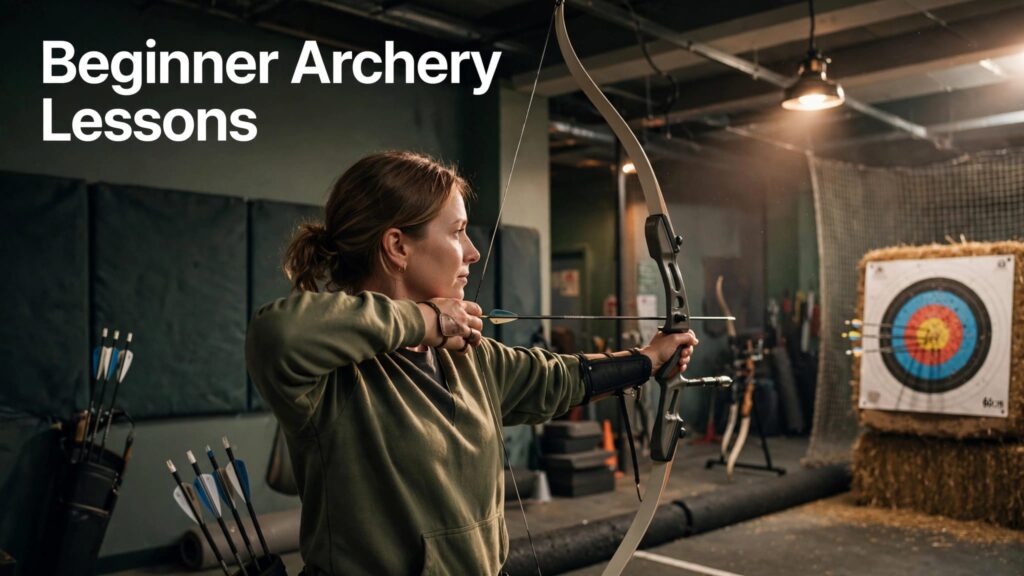 Northern Kentucky Archery Lessons for BeginnersNovember 4, 2026For beginners looking for archery lessons in Northern Kentucky, Center Shot Archery in Covington lists an introductory class, and M&M Archery Range offers lessons farther south in Jonesville. Both give you a Kentucky option, but location is only part of the decision. Instruction comes before independent practice, especially when you're picking up a bow for the first time.
We recommend choosing a lesson before buying equipment or planning a full range day. Here is what those options offer and how to make the outing work for your family or vacation.
Key Takeaways
Center Shot Archery in Covington lists an Intro to Archery class and offers indoor range sessions and equipment rental.
M&M Archery Range in Jonesville advertises lessons for beginners through advanced archers, with indoor and outdoor facilities.
A range fee and a rental fee are separate from the cost of a lesson. They should not be treated as a class package.
For a Kentucky visit, one lesson and one nearby attraction can make a good day without making it a crowded one.
Where to Find Beginner Archery Lessons
Center Shot Archery in Covington
Center Shot Archery is at 12 Inez Street in Covington, making it the Kentucky-side choice in the heart of Northern Kentucky. Its services page lists lessons and classes, including an Intro to Archery class.
The indoor range is a useful option when weather is part of your travel plans. Center Shot also lists range sessions and equipment rental, but those are distinct services. A beginner who needs instruction should start with the class rather than assume a rental includes coaching.
For visitors staying near Covington, the location makes it possible to arrange an archery outing without building the day around a long drive. That matters when children, meals, and other stops are already part of the plan.
M&M Archery Range in Jonesville
M&M Archery Range is at 300 Kerns Lane in Jonesville, also identified as Wheatley, Kentucky. It advertises lessons and training for beginners through advanced archers, with certified coaches and instruction for all ages.
The facility lists a 20-yard indoor range, an outdoor range, and a 10-target Rinehart 3D range. Three-dimensional targets give archers a different setting from a flat paper target, though a first lesson should begin with the basics your instructor teaches.
Keep the geography clear. Jonesville is a regional option south of the core Northern Kentucky counties, so it calls for more driving than a Covington stop. If you want a lesson and a chance to see more of Kentucky, that distinction can help shape the day.
What Happens at a First Archery Lesson
A beginner lesson gives you a place to learn the range rules, handle equipment under supervision, and practice a shooting sequence. We recommend giving those foundations your attention, because accuracy becomes more meaningful when you understand how to shoot safely and repeat the process.
Learn the Range Before the Target
Your instructor should explain where to stand, when shooting begins, and when everyone may go forward to collect arrows. Those directions apply to the whole group. An archery range works because each person follows the same signals.
The bow and arrows also need to fit the student. A comfortable starting setup lets you pay attention to instruction instead of struggling against equipment that is too difficult to use.
Give Your Form Time to Develop
A lesson can introduce stance, drawing the bow, aiming, and releasing the string. Your instructor can help you adjust each part as you practice.
We wouldn't make the first session a contest over the center of the target. A consistent routine gives you something useful to repeat, while a single well-placed arrow tells you much less about what you've learned.
Archery Safety Comes First
The target may be the most visible part of the range, but the shooting line is where a beginner learns responsibility. You must follow the instructor's commands and the rules of the facility throughout the session.
Follow the Instructor's Signals
Stay behind the shooting line until the group is told to shoot or retrieve arrows. Never go forward to collect an arrow while anyone is still shooting. If something falls beyond the line, leave it until the instructor says it is safe to retrieve it.
Keep arrows pointed toward the target area, and draw a bow only when you're on the line and directed to do so. The Oregon Department of Fish and Wildlife's archery range rules offer a useful introduction to range safety and etiquette.
Handle Equipment With Care
Don't release a drawn bowstring without an arrow. This is called a dry fire, and it can damage the bow or injure the archer. If equipment feels damaged or something doesn't seem right, stop and let the instructor handle it.
Children need the same clear boundaries as adults, along with close supervision appropriate to their age. Listening for the signal is part of learning archery, not a step to rush past on the way to shooting.
Beginner Equipment and Range Costs
You don't need to buy a bow before your first lesson. We recommend learning with suitable equipment first, because draw weight, fit, and the type of shooting you enjoy all matter when you eventually choose your own.
Understand the Equipment
A beginner may encounter a recurve bow or a compound bow. A recurve has limbs that curve away from the archer at the tips. A compound uses a system of cams and cables. Both can be used for target archery, and an instructor can introduce the equipment available for your lesson.
An arm guard protects the inside of the bow arm from contact with the string. Finger protection may also be used when drawing with the fingers. Let the instructor show you how the equipment is worn and used.
Separate Rental Fees From Lesson Fees
Center Shot lists a one-hour range session at $14 for bag or paper targets. It also lists a Genesis bow rental for $5, with arrows and an arm guard. Together, those published range and rental charges total $19.
That $19 is not a stated lesson price. Center Shot says rental customers need indoor-range experience or must sign up for the Intro to Archery class. The distinction is important: paying for a lane and bow gives you range access and equipment, while a lesson gives you instruction.
Choosing Archery for Kids and Families
Match the Lesson to the Child
A child doesn't need prior archery experience to begin learning, but they do need to listen to directions and follow the range signals. Consider your child's comfort with a structured activity, their ability to wait, and how they respond to an instructor's guidance.
M&M advertises training for all ages. For a family with children of different ages, that broad offering is a useful starting point. The lesson itself should still fit each participant's size and readiness, since equipment that works for an adult may not suit a child.
A caregiver who understands the range rules can reinforce them without turning the session into a competition. Give children room to learn at their own pace and let the instructor make the equipment and technique decisions.
Decide Between a Lesson and Ongoing Practice
A single lesson can be a memorable part of a Northern Kentucky vacation. A club or recurring program is a different commitment, suited to a child who wants regular instruction and practice after the trip.
USA Archery's youth programs describe Junior Olympic Archery Development, or JOAD, clubs that offer training and event preparation. Many clubs also have rental equipment available. That gives families a way to explore the sport before deciding how much equipment they want to own.
Plan an Archery Day in Northern Kentucky
A lesson can be the main event without taking over the whole day. Leave time for a meal and a rest, particularly if younger children are learning a new activity that asks them to concentrate.
For a Covington outing, keep the rest of the schedule modest. Our guide to family activities in Northern Kentucky offers ideas for adding another stop without asking everyone to keep the same pace all day.
If your family wants outdoor time, Big Bone Lick State Historic Site has trails, fossils, and a recreated Ice Age marsh. It offers a different kind of Kentucky outing after the focused instruction of an archery lesson. Choose the parts that fit your group's energy rather than trying to see everything.
For another structured sport, our guide to beginner fencing classes near Northern Kentucky explains a nearby option across the river in Cincinnati. Keep the state and address in mind when combining activities with a Kentucky stay.
Continue Practicing After Your Lesson
A first lesson gives you a foundation. Continued practice gives you time to repeat what you learned, ask questions, and develop consistency under appropriate supervision.
Find a Club
USA Archery's club finder lets you search by state or ZIP code. A club can be a useful next step if you want regular instruction rather than an occasional vacation activity.
Think about what you want to practice. Some archers prefer paper targets indoors, while others want to spend time on an outdoor or 3D range. Your first lesson can help you decide which setting holds your interest.
Understand Public Range Access
A public range and a beginner class are different things. A range provides a place to shoot; a class provides instruction. New archers should learn the rules and receive guidance before treating an open range as their starting point.
Kentucky Fish and Wildlife's shooting range map identifies department facilities and explains that an annual or one-day shooting range permit is required at department-managed, leased, or affiliated ranges. That requirement concerns those facilities, not every private archery business in Kentucky.
Start With a Lesson
Northern Kentucky visitors have a clear place to begin in Covington, along with a regional lesson option in Jonesville. Choose the location that fits your day, and keep instruction separate from range access and rental charges.
A first lesson should give you safe habits and a repeatable routine. Give those foundations your attention, and the target will be there when you're ready to practice again. [...]
 Northern Kentucky Improv Classes for Kids and AdultsNovember 3, 2026Northern Kentucky improv classes give children and adults a place to practice listening, speaking, and creating scenes with other people. We recommend starting with Improv Northern Kentucky in Fort Thomas if you want to stay on our side of the river, then considering Cincinnati programs when their age groups and schedules fit.
The right commitment matters as much as the location. A visitor spending a weekend in Kentucky needs something different from a resident who can attend a weekly course. Let's begin with the local option and then look across the river.
Improv Classes in Northern Kentucky
Improv Northern Kentucky, known as INK, is based at 8 North Center for the Arts, 8 N. Fort Thomas Ave., in Fort Thomas. For visitors staying in Northern Kentucky, it gives the search a Kentucky starting point rather than sending you immediately across the Ohio River.
According to LinkNKY's report on INK's opening, the theater opened in May 2026 and offers classes, workshops, and performances. That combination matters because learning improv and watching improv are different experiences. A class asks you to participate; a performance lets you see the form before deciding whether you want to try it.
INK's reported course structure includes Improv Fundamentals 101, Character & Game 201, Advanced Scene Work 301, and Advanced Performance 401. The Northern Kentucky Tribune's description of the program gives beginners and returning students a useful distinction: fundamentals come first, while later courses focus on more developed scene and performance work.
We recommend beginning with fundamentals when you're new to improv. A course with a higher number may sound more exciting, but a beginning class gives you room to learn how a scene works before taking on advanced material.
Fort Thomas is also a practical choice when staying on the Kentucky side is part of your plan. You can make the class or performance the main event without treating a trip into Cincinnati as a requirement.
Improv Classes for Kids and Teens
A good children's improv class gives young people a chance to listen, respond, and use their imaginations with others. Age matters because a fourth grader and a teenager may need different instructions, different partners, and a different pace.
Cincinnati Playhouse's Think Fast! Improv
Cincinnati Playhouse in the Park lists Think Fast! Improv for students in grades 4 through 8 at 962 Mt. Adams Circle, Cincinnati. Its published price is $140, including a $25 nonrefundable registration fee, and the class description includes a showcase during the final class.
For Northern Kentucky families, this is an Ohio option, not a Kentucky location. That distinction is important when a class meets more than once. The drive across the river becomes part of the commitment, along with the class time and the student's interest in returning.
A final showcase can give children a goal, but it also changes the experience for a child who feels nervous about an audience. We recommend choosing with the child in mind. A student who enjoys performing may welcome that final class, while another may prefer a less public introduction.
Other Children's Theater Options
Some children want to explore acting without choosing an improv course. The Children's Theatre of Cincinnati offers classes and camps that include acting, singing, and dance. These are broader theater options, so families should distinguish them from a class devoted to improvisation.
Our guide to Northern Kentucky theater classes for children also covers Kentucky-side training. A weekly class, a camp, and a youth production carry different responsibilities. Choose the format your child can willingly attend before choosing the biggest performance opportunity.
Adult Improv Classes and Workshops
Adults have two nearby Cincinnati options with distinct structures. One is a four-session class listed by Cincinnati Playhouse in the Park. The other is Improv Cincinnati's longer academy format.
Cincinnati Playhouse in the Park
Cincinnati Playhouse lists Improv (For Adults!) for Tuesdays, February 2 through February 23, 2027, from 7 to 8:30 p.m. The class is at 962 Mt. Adams Circle in Cincinnati and costs $125, including a $25 nonrefundable registration fee. The listed registration deadline is February 1, 2027.
Four evening sessions are a clear commitment for someone who wants a defined introduction. You can consider the travel time alongside the class time and decide whether four Tuesdays fit your schedule.
For a Kentucky visitor, this is a class across the river that can fit a longer stay. For a resident, it offers a scheduled series without requiring the same length of commitment as a year-long theater program.
Improv Cincinnati
Improv Cincinnati offers Improv-101 Fundamentals for beginners. Its regular academy format consists of six weekly classes, each lasting 2.5 hours, followed by a showcase in the seventh week.
The program is intended for adults 18 and older. Teens ages 14 through 17 may enroll with a fully paid adult who also participates. That is a meaningful option for a teen who wants an adult to take the class alongside them, but it is a different commitment from a children's class where a parent only provides transportation.
The longer class sessions give students more time in each meeting. They also ask more of your calendar, so compare the full seven-week structure with the four-session Playhouse listing before choosing.
What an Improv Class Teaches
Improv means creating a scene without relying on a completed script. Participants listen to one another and respond as the scene develops. The words are important, but the listening comes first, because each person needs to recognize what the other has offered.
Listening Comes Before a Response
A beginner may believe that improv requires a constant supply of jokes. We see the starting point differently: pay attention to your scene partner, accept the information in the scene, and respond in a way that gives both people something to work with.
The phrase "yes, and" describes a common improv principle. You accept an idea offered within the scene and add something that helps it continue. It doesn't mean agreeing to every request outside the exercise or ignoring your own boundaries.
For a child, listening can mean waiting long enough to hear another student's idea. For an adult, it can mean releasing the pressure to prepare a perfect line while someone else is speaking. Both are practical skills to bring into a class.
Scenes Grow Through Cooperation
Improv is shared work. One participant can introduce a character or a situation, but the scene needs responses from others to keep moving. Students practice making choices that their partners can understand and use.
An introductory course is a place to learn that cooperation. Advanced work may add more attention to character, recurring patterns, and performance, as the INK course levels suggest. A beginner doesn't need to arrive with those skills already polished.
Choose a Class That Fits the Student
The best starting point is the person taking the class. Age, willingness to participate, and the ability to attend are more useful than choosing solely by a theater's name.
Give Beginners Room to Learn
A beginner can be nervous and still be ready. What matters is a willingness to listen, try an exercise, and return for another session. We don't expect a child or an adult to walk into a first class with a finished stage presence.
A fundamentals course gives that beginner a clear place to start. Someone with previous improv experience may prefer more demanding scene work, but a returning student should still consider whether the course matches what they want to practice.
For children, pay attention to the kind of participation required. A student who enjoys group games may welcome improvisation, while a student drawn to songs and choreography may prefer musical theater. Both are worthwhile, but they teach different things.
Consider Comfort and Access
A class should leave room for students to participate without unnecessary pressure. Group exercises, changing partners, and a final showcase can be enjoyable, but they may also feel demanding to someone adjusting to a new setting.
If a student needs sensory accommodations, a quieter space, or another form of support, include those needs in the decision before paying. The student should understand what participation involves, and the family should understand the commitment.
We also recommend leaving enough time to arrive without rushing. A calm beginning gives a child or adult a better chance to settle into an unfamiliar room and listen to the first instructions.
Understand the Full Class Commitment
Price is only one part of a class. The schedule, travel, registration terms, and final performance all belong in the same decision.
Cincinnati Playhouse's published adult price is $125, while its Think Fast! Improv youth listing is $140. Each includes a $25 nonrefundable registration fee. That fee is part of the stated price, not an additional charge on top of it.
Improv Cincinnati's academy structure includes a seventh-week showcase after six classes. For a teen attending with a participating adult, both students must be fully paid. A family considering that option should treat it as a commitment for two people, not one.
Attendance also matters. Missing a class can mean missing shared work that helps the group develop scenes together. If your Kentucky stay covers only a weekend, a multiweek course may not be the right purchase even when the subject interests you.
For local families, the question is whether the weekly trip can fit alongside school, work, and other obligations. A manageable class gives the student a better chance to keep learning.
Make Improv Part of a Northern Kentucky Visit
We want visitors to enjoy our Kentucky communities without turning a short stay into a demanding rehearsal schedule. A performance can be a sensible choice when your dates don't fit a class series.
Let a Performance Be the First Step
Watching improv allows you to experience the exchange between performers before joining an exercise yourself. INK offers performances as well as instruction, giving Fort Thomas visitors a way to include improv in an outing.
Families interested in a broader stage experience can use our Northern Kentucky family theater guide. A show designed for young audiences may be a better fit for a child who wants to watch before deciding whether to take part.
Adults who enjoy comedy can also explore our guide to Northern Kentucky comedy clubs. Stand-up and improv are different forms, so choose the performance that matches the evening you want.
Leave Room for the Rest of Kentucky
An improv class can be one part of a visit rather than the entire plan. Fort Thomas keeps you in Northern Kentucky, while Cincinnati classes add a river crossing to the day.
If you're staying near Newport, our guide to things to do in Newport, Kentucky offers ways to spend time on the Kentucky side. Give the class its proper place, then leave room to enjoy the community around it.
Give the First Class a Clear Purpose
The right improv class gives a student a beginning they can sustain. INK provides a Fort Thomas starting point, while Cincinnati Playhouse and Improv Cincinnati offer nearby options with different ages and commitments.
Choose the format that fits the student and the time you have. A class should give you room to listen, participate, and return ready to learn more. [...]
 Northern Kentucky Floral Classes for AdultsNovember 2, 2026Northern Kentucky floral classes can be part of a Kentucky getaway, with hands-on workshops across the river in Cincinnati and an online course offered through Northern Kentucky University. The difference is the kind of instruction you want: a seasonal workshop gives you one project, while a longer course teaches floral design in greater depth.
Here in Kentucky, we recommend choosing the lesson before filling the rest of your day. Give the flowers your attention, then make room to enjoy the towns and river views that brought you to Northern Kentucky.
Key Takeaways
Eve Floral Co. in Cincinnati lists a Thanksgiving centerpiece workshop for $125 and winter wreath workshops for $100.
The Flower Lady OTR describes a Bloom Club with weekly lessons in four- or six-week sessions.
Northern Kentucky University's online floral design course costs $1,801 and provides 240 hours of instruction.
A Cincinnati workshop can fit into a Northern Kentucky vacation, but it belongs on the Ohio side of your travel plans.
A flower shop, a supply store, and a teaching studio have different purposes. Choose instruction when learning is what you want.
Begin With the Right Location
A nearby floral class and a Kentucky classroom are different things. The in-person workshops featured here are in Cincinnati, Ohio, while the NKU course is online. That distinction matters when you're staying in Covington, Newport, Florence, or another Northern Kentucky community.
A river crossing can be a comfortable part of the day when you give it room. We recommend treating the class as the main appointment, then choosing your Kentucky stops around it. You don't need to pack the hours with activities to have a worthwhile visit.
The same principle applies to supplies. A florist may sell beautiful arrangements, and a craft store may stock vessels and ribbon, but neither fact establishes that instruction is offered. Our guide to Northern Kentucky craft stores is useful when you want materials for a project of your own.
Eve Floral Co. Offers Seasonal Workshops
Eve Floral Co.'s flower workshops give adults a way to make a finished project in Cincinnati. The studio welcomes all experience levels and includes the flowers or other materials, vessels, and tools needed for its classes.
The studio is at 3706 Eastern Ave., Cincinnati, Ohio 45226. That puts the lesson across the Ohio River from Northern Kentucky, so we recommend allowing travel time on both sides of the class.
Thanksgiving Centerpiece on November 22
Eve Floral Co. lists a Thanksgiving Centerpiece Floral Workshop for November 22, 2026, at $125. A centerpiece is a useful place to begin because the project has a clear setting: it is designed to sit on a table where people will gather.
Pay attention to the height and spread of the arrangement as you work. Flowers should have room to show their shape, while the finished piece should fit the place where you intend to display it. That is the kind of decision a hands-on lesson can make clear.
Winter Wreath Workshops in December
Winter wreath workshops are listed for December 5 and December 19, 2026, at $100. A wreath gives you a different design problem than a vase arrangement: the materials follow a circular base rather than rising from a container.
We recommend this option when you want a seasonal project you can display on a door or wall. Choose the centerpiece if you want to work with a table arrangement, and choose the wreath if its shape and holiday setting appeal to you.
The Flower Lady OTR Offers Repeated Lessons
A single workshop gives you one project. Repeated lessons give you the chance to return to the work and practice a skill again. Both have value, but they call for different amounts of time.
Bloom Club Sessions
The Flower Lady OTR describes its Bloom Club as a weekly, one-hour class offered in four- or six-week sessions. It also describes custom lessons for adults and other age groups.
For someone staying in Northern Kentucky for several weeks, that structure may be more useful than a single afternoon. You have time between lessons to look at your work, remember the instruction, and return with a clearer sense of what you want to learn.
Choosing a Series for Your Stay
A weekly series asks you to build the lesson into your regular schedule. Consider the river crossing and the return trip as part of that commitment, not as an afterthought.
For a short vacation, a one-session workshop is usually the simpler choice. You can give it a full place in the day without making the rest of your Kentucky visit depend on another class meeting.
NKU's Online Course Teaches Floral Design in Depth
Preston Bailey's Fundamentals of Floral Design is listed through Northern Kentucky University. It is an online, self-paced course, so you can study without traveling to a classroom.
What the Course Includes
The course listing reports 240 hours of instruction and six months to complete the work after registration. The listed price is $1,801, and enrollment is open.
NKU describes the course as suitable for beginners and lists no prerequisites. That makes it a starting point for someone who wants organized instruction rather than a single seasonal arrangement.
Who Should Choose a Longer Course?
We recommend thinking about the course as a commitment to study. Its price and length are different from Eve Floral Co.'s one-project workshops, and the experience is different as well.
An online course can fit around a Northern Kentucky stay because the classroom is wherever you choose to study. It also gives you a way to continue learning after you return home. A workshop, by contrast, places the instructor and the materials in front of you for one particular project.
What a Floral Design Class Can Teach
A good beginner lesson gives you more than a finished arrangement. It gives you a reason for the choices you make, so you can apply what you learned when you work with flowers again.
Shape and Placement
An arrangement has a shape, whether that shape is tall and narrow or low and wide. The vessel helps establish that shape, while the stems determine where the flowers sit within it.
We recommend watching how the instructor places the first stems. Those early choices create a structure for the rest of the arrangement. Look at the work from more than one side, especially if it will be placed in the middle of a table.
Color and Texture
Color draws your eye, but texture gives you another way to make flowers and foliage work together. A broad leaf, a small cluster of blooms, and an open flower each occupy space differently.
You don't need to use every available material to make a pleasing arrangement. Give each stem a purpose and leave enough room for its shape to be seen. The lesson is in understanding what belongs together, not in filling every opening.
Choose a Project That Fits Your Purpose
A Centerpiece for a Table
A centerpiece belongs in a place where people will eat, talk, and see one another. Its size matters because a piece made for a large table may crowd a smaller one.
Think about the container as part of the design. A low vessel encourages a different shape than a tall vase, and the width of the opening affects how stems sit together. Eve's Thanksgiving workshop gives you a specific occasion around which to make those decisions.
A Wreath for a Door or Wall
A wreath is built around a defined shape. You can study how the materials follow that shape and how their colors and textures look together across the circle.
The place where you display it matters, too. A wreath intended for a wall needs a suitable place to hang. Keep the finished size in mind when you make room for it in your vehicle.
For a different hands-on outing, our guide to woodworking classes near Northern Kentucky covers another kind of instruction across the river.
Make the Class Part of a Kentucky Visit
A class is one part of the day, and Northern Kentucky gives you room to make the rest of it enjoyable. Start with the workshop time and location, then leave space for a meal or a walk when the lesson is finished.
Spend Time in Covington
MainStrasse Village in Covington is a fitting place to spend part of your Kentucky day. Its streets and local shops offer a change of pace after the classroom.
We recommend leaving time to enjoy the neighborhood rather than treating it as a quick stop between appointments. Your arrangement will need a safe place in the car while you walk, especially if it contains water.
Leave Room for the Return Trip
A Cincinnati class means traveling back across the river if you're staying in Kentucky. Give yourself time for that drive before adding a dinner reservation or another scheduled activity.
If others in your group aren't taking the lesson, their plans matter, too. Choose a meeting place that works for everyone, and allow the person attending class enough time to finish without rushing out.
Bring Your Flowers Home in Good Condition
Protect the Arrangement in the Car
A finished piece needs a stable, level place to sit during the drive. A box can help keep a vase upright, with towels around the base to reduce movement. Keep water inside the vessel rather than filling it so high that it spills on the road.
Avoid leaving fresh flowers in a hot or freezing vehicle. If you're planning a longer stop after class, take the arrangement's needs into account when deciding where to go and when to return.
Care for Cut Stems
At home, remove any leaves that sit below the waterline. Refresh the water and trim the stem ends before returning them to the vessel.
A flower arrangement changes as its blooms open and age. Remove spent flowers as needed, and enjoy the opportunity to adjust the remaining stems. The choices you practiced in class are useful long after the original project is finished.
Frequently Asked Questions
Are These Floral Classes in Northern Kentucky?
The in-person options featured here are in Cincinnati, Ohio. NKU's course is online and offered through a Northern Kentucky university. Each can be part of a Kentucky visit, but they are different ways to learn.
Can Beginners Attend?
Eve Floral Co. welcomes all experience levels at its workshops. NKU also describes its online course as suitable for beginners and lists no prerequisites. Choose a workshop for a single project or the NKU course for longer study.
How Much Do the Featured Classes Cost?
Eve lists its November 22, 2026, centerpiece workshop at $125 and its December 5 and December 19 wreath workshops at $100. NKU lists its online course at $1,801.
Do All Floral Classes Use Fresh Flowers?
Projects differ. A centerpiece workshop focuses on a table arrangement, while a wreath workshop follows a circular form. Choose the project you want to make, then give yourself time to learn the design choices behind it.
Give the Lesson Its Place in Your Visit
Northern Kentucky is a good place to build a getaway around a creative lesson. A Cincinnati workshop gives you hands-on instruction nearby, while NKU's online course offers a longer path for study.
Choose the commitment that fits your time, and give the work your attention. The arrangement is worth bringing home, and so is the understanding of how you made it. [...]
 Northern Kentucky Woodworking Classes for Teens and AdultsNovember 1, 2026Northern Kentucky woodworking classes begin with a distinction that matters: the beginner lessons featured here are in Cincinnati, Ohio, across the river from Kentucky. They can be part of your Northern Kentucky vacation, but the classroom address belongs in your plan before you add the rest of the day.
We recommend choosing the lesson first. A teenager learning with hand tools needs a different starting point than an adult interested in a lathe or a shared workshop.
Here are the nearby options and what they mean for your visit.
Key Takeaways
ArtsConnect offers teen woodworking for ages 12 through 17 in Cincinnati, with hand tools and no power tools.
Adults can begin with ArtsConnect's introductory woodshop course or choose a skill-focused class at Woodcraft of Cincinnati.
The published teen session costs $120 for nonmembers or $108 for members and meets on Saturdays between November 7 and December 5, 2026.
A single class, a multiweek course, and a workshop membership require different commitments. Choose the one that fits your time in Northern Kentucky.
Location Comes First
A Cincinnati class is a nearby regional option, not a Kentucky classroom. That distinction matters whether you're staying in Covington, Newport, Florence, or another Northern Kentucky community, because your day includes a river crossing and a drive to the workshop.
ArtsConnect is at 9158 Winton Road, Building A, Cincinnati, Ohio 45231. Woodcraft of Cincinnati is at Tri-County Towne Center, 11711 Princeton Pike, Suite 271, Cincinnati, Ohio 45246.
We recommend putting the class address into your route before choosing lunch or another attraction. A lesson north of Cincinnati may fit your vacation plans, but it should have enough time around it for travel and parking.
A store and a teaching studio also have different purposes. Our guide to Northern Kentucky craft stores can help with a Kentucky-side supply stop, but a shop full of materials doesn't establish that woodworking instruction is available there.
ArtsConnect Offers a Starting Point for Teens
The ArtsConnect teen woodworking program gives young beginners a defined place to start. It is for ages 12 through 17, and students use hand tools rather than power tools.
That distinction is important. A teen can learn how wood behaves, how to measure a piece, and how tools shape a project without beginning at a powered machine. The lesson introduces the work in steps a beginner can follow.
A Saturday Course for Ages 12 Through 17
The published Saturday session runs between November 7 and December 5, 2026, with no class during Thanksgiving week. Meetings are scheduled for 10 a.m. to 1 p.m. The listed fee is $120 for nonmembers and $108 for members.
This is a course with repeated meetings, so it fits a family staying in the region or living nearby better than a visitor looking for one afternoon. A three-hour session also calls for attention and patience. We recommend treating the lesson as the main appointment of the day.
An Adult Introduction at the Same Arts Center
ArtsConnect also lists an adult Intro to Woodshop course. It consists of three three-hour classes, with students practicing on shop equipment and building a toolbox tote.
The adult introduction excludes the router table, mortiser, and lathe. Those details matter because an introductory woodshop class teaches a foundation; it doesn't promise instruction on every machine in the room. ArtsConnect lists Woodworking 2 as a later course for students who successfully complete the introduction and receive an instructor's recommendation.
Woodcraft Offers Skill-Focused Classes for Adults
Woodcraft of Cincinnati lists workshops at its Tri-County store. These are useful for adults who want to begin with a particular skill, rather than commit to a general course over several weeks.
Turning and Scroll Saw Projects
The store lists Turning 101 for November 7, 2026, from 9 a.m. to 4 p.m., at $150. The beginner class covers lathe operation, safety, tools, sharpening, and practice with spindle and bowl work.
Turning means shaping wood while it rotates on a lathe. It is a distinct introduction, and it suits someone interested in that process rather than a general first look at every part of a woodshop.
Woodcraft also lists Holiday Scroll Saw Projects for November 11, 2026, from 3 p.m. to 6 p.m., at $135. A scroll saw makes detailed cuts, so this class offers a different kind of project and a shorter time commitment.
Woodburning for Beginners
A Pyrography & Dyeing class is listed for November 14, 2026, from noon to 3 p.m., at $85. The listing describes it as beginner-friendly, with no previous experience necessary.
Pyrography uses heat to make designs on wood. It gives a visitor a way to work with a wood surface without choosing a full-day turning class. Woodcraft's available listing doesn't state a minimum age, so these adult-oriented classes shouldn't be presented as confirmed teen options.
What a Beginner Woodworking Class Teaches
A beginner class gives you instruction, a sequence to follow, and a chance to practice. Those are different from simply having access to a workbench. You learn what a tool is meant to do, how to approach the material, and when to stop and listen.
We recommend choosing a class by the skill it teaches. Someone who wants to make a useful object may appreciate a toolbox project. Someone drawn to bowls may prefer an introduction to turning. Both work with wood, but the tools and movements are different.
Hand Tools and Power Tools
Hand-tool instruction can include measuring, marking, sawing, shaping, and fitting pieces. Power-tool instruction adds machines and the operating procedures that come with them.
The distinction affects the pace of a first lesson. ArtsConnect's teen class identifies hand tools as its starting point, while its adult introduction includes shop equipment. Neither description means a beginner needs to arrive already knowing how to use the tools.
Attention Is Part of the Work
Safety instruction belongs to the class itself. We recommend listening to the instructor, wearing the protective equipment required for the lesson, and keeping loose clothing and long hair away from moving machinery.
A woodworking shop asks students to pay attention to other people as well as their own project. Waiting for direction and giving someone room at a machine are part of sharing the workspace.
Choose a Project That Fits the Learner
A first project should be manageable enough for the learner to follow the lesson and see how the pieces come together. A small box, a simple tote, or a scroll saw design can teach careful work without demanding a large furniture project.
The goal is a useful beginning. Measuring accurately, following a cut line, and understanding how pieces fit are skills that can continue after the vacation ends.
Match the Project to a Teen's Interest
A teenager interested in building may enjoy learning how individual pieces become an object. Another may prefer the detail of a design on a wood surface. Those interests lead toward different classes, even when both students are beginners.
Readiness matters too. A young person who can listen, wait for a turn, and accept instruction has a good foundation for a shared shop. ArtsConnect's stated age range gives families a clear starting point for its teen course.
Give Adults Room to Begin
An adult doesn't need to arrive with a workshop full of tools or a finished plan for a table. Beginning with a defined lesson gives you a chance to learn what kind of work holds your attention.
The toolbox tote at ArtsConnect and the turning class at Woodcraft offer different examples. One introduces a broader shop course; the other focuses on a lathe. Choose according to the work you want to learn, not the size of the equipment.
A Membership Workshop Is a Different Commitment
A class provides a scheduled lesson. A membership workshop offers a different arrangement, generally intended for people who want continuing access to workspace and equipment.
The Manufactory describes its northern Cincinnati facility as a 17,000-square-foot membership workshop. Its users include makers, artisans, engineers, restorers, and people working on prototypes or repairs.
That model may appeal to someone with an ongoing project or a reason to return. For a family on a short Kentucky vacation, a scheduled introductory class may fit more naturally. An equipment list alone also doesn't establish that teenagers may enter or operate every machine.
For Kentucky-side youth activities, our guide to Northern Kentucky makerspaces explains how access differs among student programs, university spaces, and public facilities. Those spaces shouldn't be assumed to offer the woodworking classes described here.
Plan the Cost and Time Together
The class fee is one part of the outing. Travel time, parking, meals, and any materials you decide to buy afterward belong in the same plan.
The published ArtsConnect teen price covers a course rather than one afternoon. Woodcraft's listed examples are individual workshops, with prices of $85 for Pyrography & Dyeing, $135 for Holiday Scroll Saw Projects, and $150 for Turning 101. These prices describe the named sessions, not every class at either location.
We recommend choosing the instruction before buying supplies. Once you understand the project and the tools involved, a shopping stop has a clearer purpose. A bag of materials cannot replace a teacher's demonstration.
Make the Class Part of Your Kentucky Visit
A woodworking lesson can give your trip a center without taking over every hour. Begin with its location and schedule, then leave room for the drive back to Northern Kentucky.
For an all-day class such as Turning 101, keep the rest of the day light. A meal and an unhurried evening may fit better than another timed reservation. For a shorter workshop, you may have room for a Kentucky-side outing afterward.
Our guide to Northern Kentucky family activities offers ideas for relatives who aren't taking the lesson. Their plans matter too, especially when one person needs to return for pickup.
Give the learner time to talk about the work afterward. A finished object can come home, but the lesson is also in what they learned to measure, cut, or shape.
Frequently Asked Questions
Are These Woodworking Classes in Northern Kentucky?
The named classes at ArtsConnect and Woodcraft are in Cincinnati, Ohio. They are regional options for people visiting or living in Northern Kentucky, rather than classrooms on the Kentucky side of the river.
Can Teenagers Take a Beginner Class?
ArtsConnect lists Teen Intro to Woodworking for ages 12 through 17. The course uses hand tools and doesn't use power tools. Woodcraft's available class listing doesn't state a minimum age.
Can Adults Attend Without Woodworking Experience?
Yes. ArtsConnect lists an adult introductory woodshop course, and Woodcraft describes Turning 101 and Pyrography & Dyeing as beginner options. Each teaches a different kind of work, so choose the subject that interests you.
Begin With a Lesson That Fits
Northern Kentucky is a good place to stay while exploring nearby woodworking instruction, provided you understand that the featured classrooms are across the river in Ohio.
We recommend choosing one clear skill and giving the lesson enough time. A teen's hand-tool course, an adult woodshop introduction, or a focused turning class can each offer a worthwhile beginning. [...]