


Best Northern Kentucky Dog Parks for Happy Pups
A restless dog can turn a fine getaway into a leash-tugging test. Here in Kentucky, we know the cure: Northern Kentucky dog parks with room to run, safe fences, and shade for humans, too. When we point visitors toward a day out, we don’t send them to tired...
Best Northern Kentucky Riverfront Walks for Scenic Views
If we want a walk that clears the head and lifts the eyes, the Ohio River gives it to us plain. Northern Kentucky riverfront walks offer the kind of scenery that stays with us, bridges in the distance, murals at our side, and water that keeps moving no matter how busy...
Best Things to Do in Newport KY Beyond the Aquarium
Newport can fool first-time visitors. Folks see the aquarium, buy the ticket, and think the day is complete. But Newport is more than the aquarium, and we say that as Kentuckians who know this river city has more to give. If you’re searching for things to do in...Most Popular
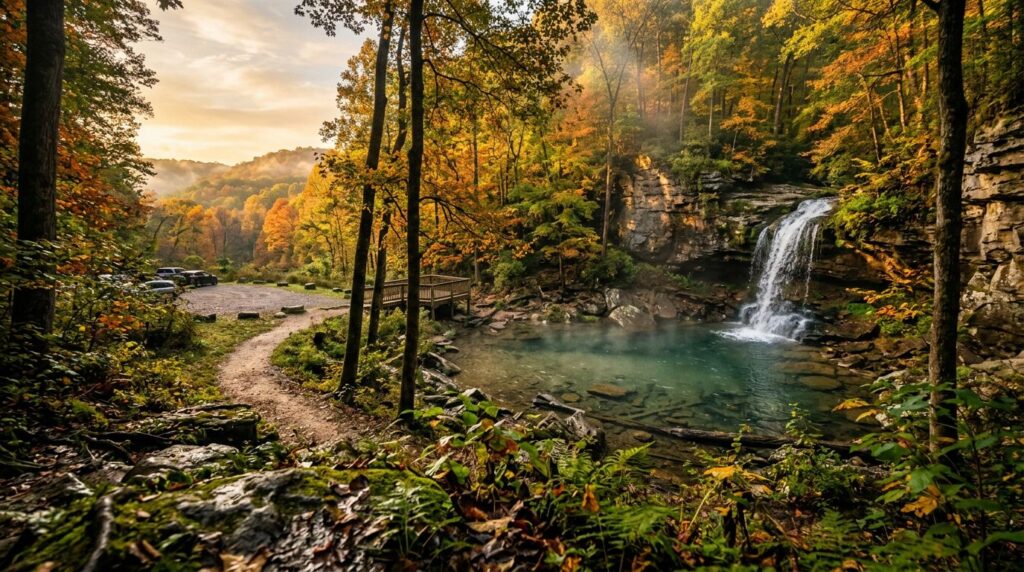 Best Waterfalls Near Northern Kentucky for Easy Day TripsWe do not have to drive across half the state to find water, stone, and a little peace. The best waterfalls near Northern Kentucky are the ones that give us a clear view, a manageable walk, and a day that still leaves room for lunch, family, or one more stop on the way home.
When we choose well, the waterfall does not wear us out. It resets us. That is the standard we should keep.
What Makes an Easy Waterfall Day Trip Worth Taking
Easy does not mean dull. It means the road is reasonable, the trail is short enough to keep our legs honest, and the view arrives before the day starts to feel like labor.
A waterfall trip is only easy when the road, the trail, and the return all stay simple.
That is the test we should use. If the drive is long, the trail is steep, and the parking is uncertain, the outing stops being a calm day trip and turns into a project. We do not need projects when we are looking for clean air and moving water. We need something clear, direct, and worth the fuel.
This is why waterfalls near Northern Kentucky matter so much for local travelers. We are close to river country, close to state parks, and close to several places where a waterfall does not demand a full expedition. The right trip feels like a gift because it still leaves us time for the rest of the day.
The Closest Falls Right Here in Northern Kentucky
If we want the simplest possible waterfall outing, we start close to home. Moser Branch Double Falls, also called Mammoth Cave Double Falls, sits in the Fort Wright Nature Center. That alone changes the tone of the trip. We are not planning a mountain climb. We are taking a short walk to something beautiful.
The park is only 16 acres, and the trail is short. Wildflowers line the path at the right time of year, which gives the stop a quiet, local charm. This is the kind of place we recommend when we want a waterfall without turning the day into a long road story.
If we want to keep the outing low-cost, our free parks and nature spots in Northern Kentucky list pairs well with this stop. That matters because easy travel is not only about walking less. It is also about spending less, worrying less, and keeping the day open.
Moser Branch is not the biggest waterfall on this list, and it does not need to be. It gives us a nearby place where water and rock do their work without much help from us. Sometimes that is exactly what we need.
The Short-Drive Waterfalls That Still Feel Easy
Once we move beyond the border counties, the list gets stronger and the drive gets longer, but the walking can still stay friendly. That is the real wisdom here. We are not choosing the hardest waterfall we can survive. We are choosing the one that matches the kind of day we want.
The quick comparison below keeps the options plain.
WaterfallWhy we choose itAccessBest fitMoser Branch Double FallsRight here in Fort Wright, short trail, local feelVery short walkA quick reset close to homeCreation FallsAbout 1.5 hours away, scenic Red River Gorge settingEasy hike on a well-known trailA strong day trip without overdoing itCumberland FallsAbout 2.5 hours south, four developed viewing platformsVery easy viewingThe classic waterfall driveYahoo FallsShort, paved trail and simple accessLow-effort walkTravelers who want easy footing
The pattern is plain. We can go farther when the trail stays kind. We can go closer when time is tight. Either way, the right waterfall keeps the day from becoming a test.
Cumberland Falls
Cumberland Falls is the name people know, and for good reason. It is about a 2.5-hour drive from Northern Kentucky, which still keeps it in day-trip territory, and it has four developed viewing platforms. That matters. We do not need a hard hike to get a strong view.
This is the waterfall we choose when we want the classic Kentucky answer. The water is broad, the gorge is serious, and the whole place has weight. For a bigger sweep of falls across the state, the Kentucky Wildlands Waterfall Trail gives us a wider map to follow later. Cumberland is the one that reminds us why Kentucky keeps drawing people back to the outdoors.
Yahoo Falls
Yahoo Falls belongs on this list because it does not make a simple day trip harder than it needs to be. The trail is short and paved, which is exactly the kind of detail people notice after a long week. A lot of travel plans fall apart because the return walk is too much. Yahoo Falls does not ask for that kind of payment.
It is a good choice when we want a straightforward outing and a path that stays manageable. If we want to keep collecting waterfall ideas for future weekends, the Kentucky Hiker waterfall guide is a practical place to keep going. Yahoo Falls gives us the easy walk first, which is the part many travelers care about most.
Creation Falls
Creation Falls gives us a different sort of easy. It is about 1.5 hours away in Red River Gorge, and the Rock Bridge Trail makes the trip feel earned without becoming punishing. The setting is one of Kentucky's best-known outdoor corridors, and the waterfall fits it well.
This is the kind of stop we send people to when they want a scenic drive, a clear trail, and a payoff that feels larger than the effort. The walk is friendly enough for most casual day-trippers, and the gorge gives us enough stone and forest to make the day feel full. Creation Falls is proof that easy can still be beautiful.
How We Keep the Day Simple
The best waterfall day trips fail when we try to stack too much into them. We do not need three stops, a complicated lunch, and a schedule that leaves no room for weather, parking, or rest. We need enough structure to move with purpose and enough slack to enjoy the view.
A few habits keep the day honest:
Start early so the trail and parking stay calm.
Wear shoes that can handle wet ground and a little mud.
Bring water, even for short walks, because Kentucky heat does not care about our enthusiasm.
Leave one meal flexible, so the day does not feel rushed by the clock.
If we want to turn a waterfall outing into a fuller water day, the best places for kayak rentals in Northern Kentucky can help us keep the theme going without making the plan complicated. That is the right kind of extension. It adds water, not stress.
The truth is simple. A good trip has room in it. It leaves us time to look, time to breathe, and time to drive home without feeling wrung out.
Conclusion
Northern Kentucky sits close enough to several waterfalls that we do not need to treat them like rare prizes. We can reach them, enjoy them, and return home with the day still intact.
The strongest choice depends on what we want most. Moser Branch Double Falls gives us the closest local outing. Cumberland Falls gives us the big classic view. Yahoo Falls and Creation Falls give us easy walks with real scenery. If we keep easy access at the center, the whole trip stays clear.
That is the real measure of a good waterfall day trip. It should refresh us, not exhaust us. [...]
Best Waterfalls Near Northern Kentucky for Easy Day TripsWe do not have to drive across half the state to find water, stone, and a little peace. The best waterfalls near Northern Kentucky are the ones that give us a clear view, a manageable walk, and a day that still leaves room for lunch, family, or one more stop on the way home.
When we choose well, the waterfall does not wear us out. It resets us. That is the standard we should keep.
What Makes an Easy Waterfall Day Trip Worth Taking
Easy does not mean dull. It means the road is reasonable, the trail is short enough to keep our legs honest, and the view arrives before the day starts to feel like labor.
A waterfall trip is only easy when the road, the trail, and the return all stay simple.
That is the test we should use. If the drive is long, the trail is steep, and the parking is uncertain, the outing stops being a calm day trip and turns into a project. We do not need projects when we are looking for clean air and moving water. We need something clear, direct, and worth the fuel.
This is why waterfalls near Northern Kentucky matter so much for local travelers. We are close to river country, close to state parks, and close to several places where a waterfall does not demand a full expedition. The right trip feels like a gift because it still leaves us time for the rest of the day.
The Closest Falls Right Here in Northern Kentucky
If we want the simplest possible waterfall outing, we start close to home. Moser Branch Double Falls, also called Mammoth Cave Double Falls, sits in the Fort Wright Nature Center. That alone changes the tone of the trip. We are not planning a mountain climb. We are taking a short walk to something beautiful.
The park is only 16 acres, and the trail is short. Wildflowers line the path at the right time of year, which gives the stop a quiet, local charm. This is the kind of place we recommend when we want a waterfall without turning the day into a long road story.
If we want to keep the outing low-cost, our free parks and nature spots in Northern Kentucky list pairs well with this stop. That matters because easy travel is not only about walking less. It is also about spending less, worrying less, and keeping the day open.
Moser Branch is not the biggest waterfall on this list, and it does not need to be. It gives us a nearby place where water and rock do their work without much help from us. Sometimes that is exactly what we need.
The Short-Drive Waterfalls That Still Feel Easy
Once we move beyond the border counties, the list gets stronger and the drive gets longer, but the walking can still stay friendly. That is the real wisdom here. We are not choosing the hardest waterfall we can survive. We are choosing the one that matches the kind of day we want.
The quick comparison below keeps the options plain.
WaterfallWhy we choose itAccessBest fitMoser Branch Double FallsRight here in Fort Wright, short trail, local feelVery short walkA quick reset close to homeCreation FallsAbout 1.5 hours away, scenic Red River Gorge settingEasy hike on a well-known trailA strong day trip without overdoing itCumberland FallsAbout 2.5 hours south, four developed viewing platformsVery easy viewingThe classic waterfall driveYahoo FallsShort, paved trail and simple accessLow-effort walkTravelers who want easy footing
The pattern is plain. We can go farther when the trail stays kind. We can go closer when time is tight. Either way, the right waterfall keeps the day from becoming a test.
Cumberland Falls
Cumberland Falls is the name people know, and for good reason. It is about a 2.5-hour drive from Northern Kentucky, which still keeps it in day-trip territory, and it has four developed viewing platforms. That matters. We do not need a hard hike to get a strong view.
This is the waterfall we choose when we want the classic Kentucky answer. The water is broad, the gorge is serious, and the whole place has weight. For a bigger sweep of falls across the state, the Kentucky Wildlands Waterfall Trail gives us a wider map to follow later. Cumberland is the one that reminds us why Kentucky keeps drawing people back to the outdoors.
Yahoo Falls
Yahoo Falls belongs on this list because it does not make a simple day trip harder than it needs to be. The trail is short and paved, which is exactly the kind of detail people notice after a long week. A lot of travel plans fall apart because the return walk is too much. Yahoo Falls does not ask for that kind of payment.
It is a good choice when we want a straightforward outing and a path that stays manageable. If we want to keep collecting waterfall ideas for future weekends, the Kentucky Hiker waterfall guide is a practical place to keep going. Yahoo Falls gives us the easy walk first, which is the part many travelers care about most.
Creation Falls
Creation Falls gives us a different sort of easy. It is about 1.5 hours away in Red River Gorge, and the Rock Bridge Trail makes the trip feel earned without becoming punishing. The setting is one of Kentucky's best-known outdoor corridors, and the waterfall fits it well.
This is the kind of stop we send people to when they want a scenic drive, a clear trail, and a payoff that feels larger than the effort. The walk is friendly enough for most casual day-trippers, and the gorge gives us enough stone and forest to make the day feel full. Creation Falls is proof that easy can still be beautiful.
How We Keep the Day Simple
The best waterfall day trips fail when we try to stack too much into them. We do not need three stops, a complicated lunch, and a schedule that leaves no room for weather, parking, or rest. We need enough structure to move with purpose and enough slack to enjoy the view.
A few habits keep the day honest:
Start early so the trail and parking stay calm.
Wear shoes that can handle wet ground and a little mud.
Bring water, even for short walks, because Kentucky heat does not care about our enthusiasm.
Leave one meal flexible, so the day does not feel rushed by the clock.
If we want to turn a waterfall outing into a fuller water day, the best places for kayak rentals in Northern Kentucky can help us keep the theme going without making the plan complicated. That is the right kind of extension. It adds water, not stress.
The truth is simple. A good trip has room in it. It leaves us time to look, time to breathe, and time to drive home without feeling wrung out.
Conclusion
Northern Kentucky sits close enough to several waterfalls that we do not need to treat them like rare prizes. We can reach them, enjoy them, and return home with the day still intact.
The strongest choice depends on what we want most. Moser Branch Double Falls gives us the closest local outing. Cumberland Falls gives us the big classic view. Yahoo Falls and Creation Falls give us easy walks with real scenery. If we keep easy access at the center, the whole trip stays clear.
That is the real measure of a good waterfall day trip. It should refresh us, not exhaust us. [...]



Latest
 Northern Kentucky Homeschool Co-ops and EnrichmentOctober 12, 2026A child's education needs both steady instruction and room to see what those lessons mean beyond the table. Northern Kentucky homeschool co-ops can provide community and shared learning, while our parks, museums, and regional programs give families places to put learning into practice.
Choose by purpose. A weekly cooperative, a college course, and a family field trip require different commitments, even when all three belong in a child's education.
Here in Kentucky, we recommend beginning with that distinction, then choosing the opportunity that fits your child and your day.
Key Takeaways for Homeschool Families
SPARK Homeschool Co-op is a Cincinnati-based, parent-run cooperative that welcomes Greater Cincinnati and Northern Kentucky families.
Big Bone Lick State Historic Site offers educational programs for homeschool groups, with subjects including fossils, Kentucky history, and the natural environment.
Northern Kentucky University's School-Based Scholars program provides a dual-credit path for eligible homeschooled high school juniors and seniors.
Parents remain responsible for Kentucky homeschool requirements, including instructional time and records, regardless of which outside programs their children attend.
A strong plan gives each opportunity a clear job. Community, academic instruction, and family outings deserve their own place.
What Northern Kentucky Homeschool Co-ops Provide
Community Requires Participation
A cooperative means families share responsibility for a learning community. That responsibility can include teaching, organizing activities, preparing materials, or supporting the children during the gathering. Each group's structure determines the work expected of parents.
We recommend choosing a co-op for its educational approach and family expectations before choosing it for its class list. A child-led community and a structured academic program offer different experiences. Religious commitments, caregiver responsibilities, and learning expectations belong in that decision.
Enrichment has a narrower purpose. A museum visit, cooking class, or nature program adds a subject or experience without necessarily providing an ongoing homeschool community.
Parents Keep the Educational Responsibility
Kentucky's official homeschool guidance places the responsibility for home education with the family. The state's homeschool information packet specifies at least 1,062 instructional hours across 170 attendance days.
Families must also maintain attendance and scholarship records. Joining a cooperative doesn't transfer those responsibilities to the group.
This means outside learning should have a place in your educational plan. Record what your child studied and how the activity supported that study. An afternoon devoted to fossils has educational substance when the instruction and follow-up are clear.
SPARK Offers a Regional Cooperative
A Secular, Child-Led Community
SPARK Homeschool Co-op is based in Cincinnati and serves families throughout Greater Cincinnati and Northern Kentucky. It describes itself as a nonprofit, parent-run, secular cooperative, with programming for ages 3 through 18.
Its approach emphasizes child-led learning. SPARK also describes its community as inclusive, neurodiverse, and LGBTQ+ friendly. Those are meaningful characteristics when you consider the setting your child will enter.
The published gathering schedule lists Mondays and Thursdays, 11 a.m. to 3 p.m. For Kentucky families, this is a cross-river commitment. We recommend treating the drive, parking, and gathering time as one block in the weekly calendar.
Membership and Tuition Are Separate
SPARK's membership information lists a $25 family membership fee. Its published 2026-2027 tuition schedule uses 16-week terms, with the following charges for one day per week.
Enrollment CategoryFirst ChildAdditional ChildNew family$90 per term$80 per termReturning family$80 per term$70 per term
Tuition is free for each sibling after the third child. For a new family enrolling two children one day per week, the listed membership fee and term tuition add up to $195.
The membership fee isn't the tuition. Keep both charges in your budget, alongside transportation and any supplies your family needs.
That distinction matters when comparing a cooperative with occasional enrichment. A modest membership charge alone doesn't describe the cost or commitment of attending throughout a term.
Big Bone Lick Brings Lessons Outdoors
Big Bone Lick State Historic Site in Boone County gives homeschool families a Kentucky destination with substantial educational content. Kentucky State Parks welcomes homeschool groups on field trips, and the site's programs address Ice Age Kentucky, fossils, pioneer and Native American cultures, and the natural environment.
The Big Bone Lick educational programs also include the site's bison herd. That gives families several possible directions for study, but one clear subject is enough for a day's lesson.
We recommend choosing the subject before adding activities. Fossils can lead into questions about ancient animals and changing environments. Kentucky history can lead into discussion about the people who lived here and how they used the land.
A younger child can draw an observation and describe it aloud. An older student can write a comparison or explain how the evidence connects to the lesson.
For visiting families, this is also a chance to spend meaningful time outdoors in Kentucky. Leave room for lunch and rest. A field trip retains its purpose when children have enough energy to observe, remember, and discuss what they saw.
Enrichment Gives Each Child a Clear Purpose
Museums Support Focused Study
A museum outing works best when you give the child a question to carry through the visit. What changed transportation? How does a machine work? What can an object tell us about the people who used it?
The Railway Museum of Greater Cincinnati is in Covington, at 315 West Southern Avenue. Its collection includes historic railway equipment, with sleeping and observation cars among the examples. Despite its regional name, this is a Kentucky-side destination.
Across the river, The Children's Museum at Cincinnati Museum Center is at 1301 Western Avenue. Keep that Ohio location clear when planning your route.
Our guide to family-friendly museums near Northern Kentucky gives families additional context for choosing an educational outing.
Practical Skills Deserve Instruction
Art, music, cooking, and hands-on science deserve a defined place in enrichment. Each asks children to observe, make decisions, practice, and complete something they can explain.
Cooking also brings measurement, sequencing, and responsibility into one activity. Our guide to children's cooking classes near Northern Kentucky separates regional possibilities and discusses the difference between a food demonstration and hands-on preparation.
We recommend matching the activity to the child's interest and readiness. A child who wants to draw needs time with materials. A child studying music needs practice between lessons. The outside activity should support that work rather than crowd it out.
NKU Provides a High School Path
Older students need opportunities that match their academic readiness. Northern Kentucky University's School-Based Scholars program welcomes eligible homeschooled high school juniors and seniors into dual-credit coursework.
The published admission requirements include a 3.0 unweighted GPA, along with the prerequisites required for individual courses. This is college coursework, with college expectations for preparation, assignments, and deadlines.
NKU's information for homeschool students lists application deadlines of August 1 for fall, December 1 for spring, and May 1 for summer.
For families planning spring 2027 coursework, December 1, 2026, is the relevant application deadline. That date deserves a place in the calendar before holiday plans begin to fill it.
We recommend treating dual credit as a deliberate academic decision. Consider the student's reading ability, independent work habits, and existing course load. A college class belongs in the schedule when the student can give it the attention the work requires.
Plan a Day That Fits the Family
Give One Main Activity Enough Time
Northern Kentucky offers plenty to do, but a full calendar doesn't guarantee a useful day. We recommend one substantial learning activity, followed by something flexible.
For a Cincinnati cooperative or museum visit, include the river crossing and parking in the day's plan. For a Boone County outdoor lesson, keep the rest of the route nearby. Driving between unrelated stops takes time that children could spend eating, resting, or discussing the lesson.
This matters on vacation, too. A term-based cooperative is a continuing commitment; a field trip or attraction visit fits a short stay more naturally. Choose the form of learning that belongs to the length of your visit.
Comfort Determines What the Family Can Sustain
Restrooms, nearby parking, food, and seating matter when children, parents, and grandparents share an outing. A destination can have excellent educational content and still demand more walking or stimulation than your family can manage that day.
Build breaks into the plan. Give younger children space to move, and give older children time to finish their observations without another appointment pressing them forward.
For wet-weather alternatives, our Northern Kentucky indoor activities guide helps you separate active play from quieter outings. Both have value, but they answer different needs.
Frequently Asked Questions
Can Northern Kentucky Families Join SPARK?
Yes. SPARK states that membership is open to homeschooling families in Greater Cincinnati and Northern Kentucky. The cooperative is based in Cincinnati, so Kentucky families should budget travel time as part of the recurring commitment.
Does a Co-op Replace the Parent's Homeschool Duties?
No. Parents remain responsible for Kentucky's homeschool requirements, including instructional time, attendance, and scholarship records. A cooperative supplies shared learning and community within the family's educational plan; it doesn't assume responsibility for the complete homeschool program.
Which Opportunity Fits a Kentucky Vacation?
A field trip or museum outing fits a short visit better than a recurring cooperative commitment. Big Bone Lick offers a Kentucky-side destination with educational subjects suited to homeschool groups. For a family outing, choose one subject and leave enough time for observation, conversation, and rest.
Is There an Academic Option for Homeschooled Teens?
Yes. NKU's School-Based Scholars program accepts eligible homeschooled juniors and seniors. Admission includes a 3.0 unweighted GPA and applicable course prerequisites, with separate application deadlines for fall, spring, and summer.
Choose Learning With a Clear Purpose
Northern Kentucky homeschool co-ops and enrichment programs deserve a place in your plans when they meet a clear educational need. Choose community for continuing relationships, focused instruction for a subject, and field trips for learning that benefits from being seen firsthand.
Here in Kentucky, we recommend giving one worthwhile experience enough time to become a meaningful lesson. Your child should leave with something understood, something remembered, and enough room in the day to enjoy the place where that learning happened. [...]
Northern Kentucky Homeschool Co-ops and EnrichmentOctober 12, 2026A child's education needs both steady instruction and room to see what those lessons mean beyond the table. Northern Kentucky homeschool co-ops can provide community and shared learning, while our parks, museums, and regional programs give families places to put learning into practice.
Choose by purpose. A weekly cooperative, a college course, and a family field trip require different commitments, even when all three belong in a child's education.
Here in Kentucky, we recommend beginning with that distinction, then choosing the opportunity that fits your child and your day.
Key Takeaways for Homeschool Families
SPARK Homeschool Co-op is a Cincinnati-based, parent-run cooperative that welcomes Greater Cincinnati and Northern Kentucky families.
Big Bone Lick State Historic Site offers educational programs for homeschool groups, with subjects including fossils, Kentucky history, and the natural environment.
Northern Kentucky University's School-Based Scholars program provides a dual-credit path for eligible homeschooled high school juniors and seniors.
Parents remain responsible for Kentucky homeschool requirements, including instructional time and records, regardless of which outside programs their children attend.
A strong plan gives each opportunity a clear job. Community, academic instruction, and family outings deserve their own place.
What Northern Kentucky Homeschool Co-ops Provide
Community Requires Participation
A cooperative means families share responsibility for a learning community. That responsibility can include teaching, organizing activities, preparing materials, or supporting the children during the gathering. Each group's structure determines the work expected of parents.
We recommend choosing a co-op for its educational approach and family expectations before choosing it for its class list. A child-led community and a structured academic program offer different experiences. Religious commitments, caregiver responsibilities, and learning expectations belong in that decision.
Enrichment has a narrower purpose. A museum visit, cooking class, or nature program adds a subject or experience without necessarily providing an ongoing homeschool community.
Parents Keep the Educational Responsibility
Kentucky's official homeschool guidance places the responsibility for home education with the family. The state's homeschool information packet specifies at least 1,062 instructional hours across 170 attendance days.
Families must also maintain attendance and scholarship records. Joining a cooperative doesn't transfer those responsibilities to the group.
This means outside learning should have a place in your educational plan. Record what your child studied and how the activity supported that study. An afternoon devoted to fossils has educational substance when the instruction and follow-up are clear.
SPARK Offers a Regional Cooperative
A Secular, Child-Led Community
SPARK Homeschool Co-op is based in Cincinnati and serves families throughout Greater Cincinnati and Northern Kentucky. It describes itself as a nonprofit, parent-run, secular cooperative, with programming for ages 3 through 18.
Its approach emphasizes child-led learning. SPARK also describes its community as inclusive, neurodiverse, and LGBTQ+ friendly. Those are meaningful characteristics when you consider the setting your child will enter.
The published gathering schedule lists Mondays and Thursdays, 11 a.m. to 3 p.m. For Kentucky families, this is a cross-river commitment. We recommend treating the drive, parking, and gathering time as one block in the weekly calendar.
Membership and Tuition Are Separate
SPARK's membership information lists a $25 family membership fee. Its published 2026-2027 tuition schedule uses 16-week terms, with the following charges for one day per week.
Enrollment CategoryFirst ChildAdditional ChildNew family$90 per term$80 per termReturning family$80 per term$70 per term
Tuition is free for each sibling after the third child. For a new family enrolling two children one day per week, the listed membership fee and term tuition add up to $195.
The membership fee isn't the tuition. Keep both charges in your budget, alongside transportation and any supplies your family needs.
That distinction matters when comparing a cooperative with occasional enrichment. A modest membership charge alone doesn't describe the cost or commitment of attending throughout a term.
Big Bone Lick Brings Lessons Outdoors
Big Bone Lick State Historic Site in Boone County gives homeschool families a Kentucky destination with substantial educational content. Kentucky State Parks welcomes homeschool groups on field trips, and the site's programs address Ice Age Kentucky, fossils, pioneer and Native American cultures, and the natural environment.
The Big Bone Lick educational programs also include the site's bison herd. That gives families several possible directions for study, but one clear subject is enough for a day's lesson.
We recommend choosing the subject before adding activities. Fossils can lead into questions about ancient animals and changing environments. Kentucky history can lead into discussion about the people who lived here and how they used the land.
A younger child can draw an observation and describe it aloud. An older student can write a comparison or explain how the evidence connects to the lesson.
For visiting families, this is also a chance to spend meaningful time outdoors in Kentucky. Leave room for lunch and rest. A field trip retains its purpose when children have enough energy to observe, remember, and discuss what they saw.
Enrichment Gives Each Child a Clear Purpose
Museums Support Focused Study
A museum outing works best when you give the child a question to carry through the visit. What changed transportation? How does a machine work? What can an object tell us about the people who used it?
The Railway Museum of Greater Cincinnati is in Covington, at 315 West Southern Avenue. Its collection includes historic railway equipment, with sleeping and observation cars among the examples. Despite its regional name, this is a Kentucky-side destination.
Across the river, The Children's Museum at Cincinnati Museum Center is at 1301 Western Avenue. Keep that Ohio location clear when planning your route.
Our guide to family-friendly museums near Northern Kentucky gives families additional context for choosing an educational outing.
Practical Skills Deserve Instruction
Art, music, cooking, and hands-on science deserve a defined place in enrichment. Each asks children to observe, make decisions, practice, and complete something they can explain.
Cooking also brings measurement, sequencing, and responsibility into one activity. Our guide to children's cooking classes near Northern Kentucky separates regional possibilities and discusses the difference between a food demonstration and hands-on preparation.
We recommend matching the activity to the child's interest and readiness. A child who wants to draw needs time with materials. A child studying music needs practice between lessons. The outside activity should support that work rather than crowd it out.
NKU Provides a High School Path
Older students need opportunities that match their academic readiness. Northern Kentucky University's School-Based Scholars program welcomes eligible homeschooled high school juniors and seniors into dual-credit coursework.
The published admission requirements include a 3.0 unweighted GPA, along with the prerequisites required for individual courses. This is college coursework, with college expectations for preparation, assignments, and deadlines.
NKU's information for homeschool students lists application deadlines of August 1 for fall, December 1 for spring, and May 1 for summer.
For families planning spring 2027 coursework, December 1, 2026, is the relevant application deadline. That date deserves a place in the calendar before holiday plans begin to fill it.
We recommend treating dual credit as a deliberate academic decision. Consider the student's reading ability, independent work habits, and existing course load. A college class belongs in the schedule when the student can give it the attention the work requires.
Plan a Day That Fits the Family
Give One Main Activity Enough Time
Northern Kentucky offers plenty to do, but a full calendar doesn't guarantee a useful day. We recommend one substantial learning activity, followed by something flexible.
For a Cincinnati cooperative or museum visit, include the river crossing and parking in the day's plan. For a Boone County outdoor lesson, keep the rest of the route nearby. Driving between unrelated stops takes time that children could spend eating, resting, or discussing the lesson.
This matters on vacation, too. A term-based cooperative is a continuing commitment; a field trip or attraction visit fits a short stay more naturally. Choose the form of learning that belongs to the length of your visit.
Comfort Determines What the Family Can Sustain
Restrooms, nearby parking, food, and seating matter when children, parents, and grandparents share an outing. A destination can have excellent educational content and still demand more walking or stimulation than your family can manage that day.
Build breaks into the plan. Give younger children space to move, and give older children time to finish their observations without another appointment pressing them forward.
For wet-weather alternatives, our Northern Kentucky indoor activities guide helps you separate active play from quieter outings. Both have value, but they answer different needs.
Frequently Asked Questions
Can Northern Kentucky Families Join SPARK?
Yes. SPARK states that membership is open to homeschooling families in Greater Cincinnati and Northern Kentucky. The cooperative is based in Cincinnati, so Kentucky families should budget travel time as part of the recurring commitment.
Does a Co-op Replace the Parent's Homeschool Duties?
No. Parents remain responsible for Kentucky's homeschool requirements, including instructional time, attendance, and scholarship records. A cooperative supplies shared learning and community within the family's educational plan; it doesn't assume responsibility for the complete homeschool program.
Which Opportunity Fits a Kentucky Vacation?
A field trip or museum outing fits a short visit better than a recurring cooperative commitment. Big Bone Lick offers a Kentucky-side destination with educational subjects suited to homeschool groups. For a family outing, choose one subject and leave enough time for observation, conversation, and rest.
Is There an Academic Option for Homeschooled Teens?
Yes. NKU's School-Based Scholars program accepts eligible homeschooled juniors and seniors. Admission includes a 3.0 unweighted GPA and applicable course prerequisites, with separate application deadlines for fall, spring, and summer.
Choose Learning With a Clear Purpose
Northern Kentucky homeschool co-ops and enrichment programs deserve a place in your plans when they meet a clear educational need. Choose community for continuing relationships, focused instruction for a subject, and field trips for learning that benefits from being seen firsthand.
Here in Kentucky, we recommend giving one worthwhile experience enough time to become a meaningful lesson. Your child should leave with something understood, something remembered, and enough room in the day to enjoy the place where that learning happened. [...]
 Teen Volunteer Opportunities in Northern KentuckyOctober 11, 2026A teenager's willingness to serve deserves a clear place to begin. Teen volunteer opportunities in Northern Kentucky include community organizations, food-assistance projects, and nearby programs across the Ohio River, but the right choice depends on age, responsibility, and commitment.
We believe service means giving your time willingly to work that someone else needs done, then carrying out that work faithfully. For local families and visitors alike, the first step is choosing a program whose requirements fit the time you can give.
Key Takeaways
Age rules come first. A worthwhile mission doesn't make every volunteer position suitable for every teenager.
Brighton Center considers volunteers of all ages, with a parent or guardian required for volunteers younger than 16.
Cincinnati Zoo's ZooTeens program serves ages 13 through 17, while Cincinnati Nature Center accepts youth volunteer applicants ages 13 through 18.
Recurring hospital and library commitments suit local families better than short vacations, while organized one-time projects are the more practical format for visitors.
We also separate Kentucky organizations from Ohio programs. Crossing the river expands your choices, but transportation remains part of the commitment.
Choose Teen Volunteer Opportunities That Fit
A good volunteer placement begins with an honest decision about what your teenager can do consistently. Interest matters, but willingness must become attendance, attention, and completed work.
Let Age Determine the Starting Point
Brighton Center's all-ages approach gives younger teenagers a Kentucky-side starting point, provided those under 16 volunteer with a parent or guardian. Across the river, Cincinnati & Hamilton County Public Library accepts volunteers starting at age 12.
ZooTeens begins at 13. Cincinnati Children's requires volunteers to be at least 15 and to have completed ninth grade. These are different requirements for different responsibilities, and we wouldn't treat them as interchangeable.
Choose the program that fits your teenager now. There is no need to force a younger child into work intended for an older volunteer.
Match the Commitment to Your Calendar
A weekly promise requires a weekly plan. School, sports, family transportation, and travel time all belong in that decision.
Library volunteering generally requires at least three months. Hospital volunteering involves a recurring weekly shift. Those commitments need room in an ordinary school week.
For a Northern Kentucky vacation, we favor a one-time organized project over a program built around repeated attendance. Your service should fit the visit without leaving unfinished responsibilities behind.
Serve Local Families Through Community Programs
Community service becomes clear when the work meets an ordinary need. Food must be processed, meals must be packed, and programs need dependable help.
Kentucky-side organizations deserve attention before a family assumes every useful opportunity requires a trip into Cincinnati.
Brighton Center Welcomes Different Ages
Brighton Center considers volunteers of all ages. Volunteers younger than 16 must be accompanied by a parent or guardian, which makes adult participation part of the arrangement rather than an optional extra.
Volunteer work includes help with daily operations and support for youth and early-childhood programs. Its application process includes an interest form, a phone screen, an on-site meeting, and onboarding.
We value that distinction: expressing interest begins the process, while onboarding prepares a volunteer for the work. A family should allow room for both rather than treating an application as an immediate assignment.
Master Provisions Has a School-Year Schedule
Master Provisions lists Student Days on the first and third Tuesdays, October through May, from 3:00 to 5:00 p.m. The work includes processing food and packing meals, and advance registration is required.
That schedule gives families something concrete to place beside school dismissal, travel time, and evening obligations. It also puts the purpose of the work plainly before the volunteer.
Food assistance depends on ordinary tasks being completed properly. We encourage families to give those tasks the same attention they would give a more visible assignment.
Put Nature and Conservation First
Interest in animals and the outdoors can lead a teenager toward service, but interest must become a willingness to learn and follow instructions. The Cincinnati region offers youth programs with stated age ranges.
These are Ohio opportunities near Northern Kentucky, not Kentucky locations.
Cincinnati Nature Center Offers Youth Roles
Cincinnati Nature Center accepts youth volunteer applicants ages 13 through 18. Its Leader-in-Training program serves ages 14 through 17, with teens assisting with campers.
The distinction matters. A youth volunteer program and a camp leadership program involve different responsibilities, even when both appeal to a teenager who enjoys being outdoors.
We recommend choosing according to the work itself. Helping with campers means giving attention to children and accepting direction, not merely spending time in a natural setting. A teenager who willingly accepts that responsibility has a stronger basis for choosing the role.
ZooTeens Combines Animals With Service
Cincinnati Zoo's ZooTeens program is for teenagers ages 13 through 17 who are interested in nature, animals, and conservation. Participants can complete up to 40 service hours.
Accepted participants pay a $60 non-refundable program fee. That cost belongs in the family budget alongside transportation, especially when repeated trips cross the river.
An interest in animals is a starting point, but service involves accepting the program's assigned work. We encourage teenagers to choose ZooTeens because they want to contribute to conservation and learn, rather than assuming volunteering provides unrestricted animal contact.
Consider Hospitals, Libraries, and Museums
Some teenagers are better suited to structured indoor work. These programs have different age requirements and commitments, so the setting alone shouldn't determine the choice.
Hospital Service Requires Consistency
St. Elizabeth Healthcare's volunteer services include high school students among their volunteers. That makes healthcare service a Kentucky-side option for teenagers considering this kind of responsibility.
Across the river, Cincinnati Children's requires teen volunteers to be at least 15, with ninth grade completed. Its weekly commitment is two to three hours.
The hospital's Summer 2026 deadline has passed, and its 2026-27 academic-year application window is closed. We wouldn't build an immediate service plan around that application cycle.
Library Work Carries a Longer Commitment
Cincinnati & Hamilton County Public Library accepts volunteers age 12 or older. Opportunities generally require three months or longer, with two to six hours weekly.
Assignments include shelving, helping with children's and teen events, technology assistance, Summer Reading, meal-program support, and tutoring.
These are Ohio library opportunities. The commitment is substantial enough that transportation needs to work repeatedly, not merely on the first afternoon. We favor this option for families who can give it a steady place in their weekly routine.
General Museum Roles Begin at 18
Cincinnati Museum Center's general volunteer opportunities list a minimum age of 18. Those positions belong among the choices for older teens, not as a general recommendation for younger students.
We keep museum visiting separate from museum volunteering. Our guide to family-friendly museums near Northern Kentucky offers outing ideas, while volunteer eligibility determines who can take on a service role.
Protect Parks Through Organized Projects
Outdoor service requires the same discipline as indoor service. Plants, trails, tools, and public spaces need careful work, even when the setting feels relaxed.
Cincinnati Parks volunteer opportunities include youth and Scout participation, one-time and group projects, conservation work, horticulture help, and longer-term roles. These projects are on the Ohio side of the region.
We favor organized projects because the work has direction. A teenager should follow the project leader's instructions rather than deciding independently which plants to remove or where to use a tool.
A public park being open doesn't give a volunteer permission to prune plants, remove vegetation, or work along an unsafe riverbank.
Closed-toe shoes, suitable clothing, and drinking water belong in an outdoor service plan. Leave sharp objects and hazardous waste to the responsible adults or project staff.
Careful service protects both the place and the people doing the work.
Keep the Family Outing Simple
Northern Kentucky gives families room to pair service with a modest outing, but the volunteer commitment should remain the first responsibility. We wouldn't crowd a service day with several attraction stops.
After an organized project, a short walk or picnic can be enough. General James Taylor Park at 100 Riverboat Row in Newport has picnic tables, a playground, and Cincinnati skyline views. George Rogers Clark Park at 301 Riverside Drive in Covington is another riverfront stop.
These are leisure suggestions, not designated volunteer assignments. Our Northern Kentucky riverfront walks help you choose a manageable route afterward.
For a mixed-age family, choose an outing that leaves younger children and grandparents room to rest. Our family activities in Northern Kentucky offer broader choices without requiring everyone to keep the same pace.
Frequently Asked Questions
Where Can Younger Teens Volunteer?
Brighton Center considers volunteers of all ages, with a parent or guardian accompanying anyone younger than 16. Cincinnati & Hamilton County Public Library accepts volunteers starting at 12, while ZooTeens and Cincinnati Nature Center youth volunteering begin at 13.
We begin with those stated thresholds because age eligibility is the first practical distinction. The library's longer commitment also matters: being old enough doesn't make a three-month placement suitable for a brief visit.
Can Volunteering Fit a Northern Kentucky Vacation?
A one-time organized project is the sensible format for a short vacation. Cincinnati Parks lists one-time and group projects, while programs with weekly attendance requirements demand a longer commitment.
We wouldn't place a three-month library obligation inside a weekend itinerary. Visitors can still give service a place in their trip, but the assignment must fit the time available. Leave room afterward for a meal, a riverfront walk, and rest.
Choose Service You Can Carry Out Faithfully
Teen volunteer opportunities are most useful when age, transportation, and responsibility fit together. We favor dependable participation over a crowded calendar, because organizations need work completed and commitments honored.
Begin with a program your teenager can willingly support, then give that work proper time and attention. Whether your family lives here or is visiting Northern Kentucky, service deserves the same care you give the rest of your plans. [...]
Teen Volunteer Opportunities in Northern KentuckyOctober 11, 2026A teenager's willingness to serve deserves a clear place to begin. Teen volunteer opportunities in Northern Kentucky include community organizations, food-assistance projects, and nearby programs across the Ohio River, but the right choice depends on age, responsibility, and commitment.
We believe service means giving your time willingly to work that someone else needs done, then carrying out that work faithfully. For local families and visitors alike, the first step is choosing a program whose requirements fit the time you can give.
Key Takeaways
Age rules come first. A worthwhile mission doesn't make every volunteer position suitable for every teenager.
Brighton Center considers volunteers of all ages, with a parent or guardian required for volunteers younger than 16.
Cincinnati Zoo's ZooTeens program serves ages 13 through 17, while Cincinnati Nature Center accepts youth volunteer applicants ages 13 through 18.
Recurring hospital and library commitments suit local families better than short vacations, while organized one-time projects are the more practical format for visitors.
We also separate Kentucky organizations from Ohio programs. Crossing the river expands your choices, but transportation remains part of the commitment.
Choose Teen Volunteer Opportunities That Fit
A good volunteer placement begins with an honest decision about what your teenager can do consistently. Interest matters, but willingness must become attendance, attention, and completed work.
Let Age Determine the Starting Point
Brighton Center's all-ages approach gives younger teenagers a Kentucky-side starting point, provided those under 16 volunteer with a parent or guardian. Across the river, Cincinnati & Hamilton County Public Library accepts volunteers starting at age 12.
ZooTeens begins at 13. Cincinnati Children's requires volunteers to be at least 15 and to have completed ninth grade. These are different requirements for different responsibilities, and we wouldn't treat them as interchangeable.
Choose the program that fits your teenager now. There is no need to force a younger child into work intended for an older volunteer.
Match the Commitment to Your Calendar
A weekly promise requires a weekly plan. School, sports, family transportation, and travel time all belong in that decision.
Library volunteering generally requires at least three months. Hospital volunteering involves a recurring weekly shift. Those commitments need room in an ordinary school week.
For a Northern Kentucky vacation, we favor a one-time organized project over a program built around repeated attendance. Your service should fit the visit without leaving unfinished responsibilities behind.
Serve Local Families Through Community Programs
Community service becomes clear when the work meets an ordinary need. Food must be processed, meals must be packed, and programs need dependable help.
Kentucky-side organizations deserve attention before a family assumes every useful opportunity requires a trip into Cincinnati.
Brighton Center Welcomes Different Ages
Brighton Center considers volunteers of all ages. Volunteers younger than 16 must be accompanied by a parent or guardian, which makes adult participation part of the arrangement rather than an optional extra.
Volunteer work includes help with daily operations and support for youth and early-childhood programs. Its application process includes an interest form, a phone screen, an on-site meeting, and onboarding.
We value that distinction: expressing interest begins the process, while onboarding prepares a volunteer for the work. A family should allow room for both rather than treating an application as an immediate assignment.
Master Provisions Has a School-Year Schedule
Master Provisions lists Student Days on the first and third Tuesdays, October through May, from 3:00 to 5:00 p.m. The work includes processing food and packing meals, and advance registration is required.
That schedule gives families something concrete to place beside school dismissal, travel time, and evening obligations. It also puts the purpose of the work plainly before the volunteer.
Food assistance depends on ordinary tasks being completed properly. We encourage families to give those tasks the same attention they would give a more visible assignment.
Put Nature and Conservation First
Interest in animals and the outdoors can lead a teenager toward service, but interest must become a willingness to learn and follow instructions. The Cincinnati region offers youth programs with stated age ranges.
These are Ohio opportunities near Northern Kentucky, not Kentucky locations.
Cincinnati Nature Center Offers Youth Roles
Cincinnati Nature Center accepts youth volunteer applicants ages 13 through 18. Its Leader-in-Training program serves ages 14 through 17, with teens assisting with campers.
The distinction matters. A youth volunteer program and a camp leadership program involve different responsibilities, even when both appeal to a teenager who enjoys being outdoors.
We recommend choosing according to the work itself. Helping with campers means giving attention to children and accepting direction, not merely spending time in a natural setting. A teenager who willingly accepts that responsibility has a stronger basis for choosing the role.
ZooTeens Combines Animals With Service
Cincinnati Zoo's ZooTeens program is for teenagers ages 13 through 17 who are interested in nature, animals, and conservation. Participants can complete up to 40 service hours.
Accepted participants pay a $60 non-refundable program fee. That cost belongs in the family budget alongside transportation, especially when repeated trips cross the river.
An interest in animals is a starting point, but service involves accepting the program's assigned work. We encourage teenagers to choose ZooTeens because they want to contribute to conservation and learn, rather than assuming volunteering provides unrestricted animal contact.
Consider Hospitals, Libraries, and Museums
Some teenagers are better suited to structured indoor work. These programs have different age requirements and commitments, so the setting alone shouldn't determine the choice.
Hospital Service Requires Consistency
St. Elizabeth Healthcare's volunteer services include high school students among their volunteers. That makes healthcare service a Kentucky-side option for teenagers considering this kind of responsibility.
Across the river, Cincinnati Children's requires teen volunteers to be at least 15, with ninth grade completed. Its weekly commitment is two to three hours.
The hospital's Summer 2026 deadline has passed, and its 2026-27 academic-year application window is closed. We wouldn't build an immediate service plan around that application cycle.
Library Work Carries a Longer Commitment
Cincinnati & Hamilton County Public Library accepts volunteers age 12 or older. Opportunities generally require three months or longer, with two to six hours weekly.
Assignments include shelving, helping with children's and teen events, technology assistance, Summer Reading, meal-program support, and tutoring.
These are Ohio library opportunities. The commitment is substantial enough that transportation needs to work repeatedly, not merely on the first afternoon. We favor this option for families who can give it a steady place in their weekly routine.
General Museum Roles Begin at 18
Cincinnati Museum Center's general volunteer opportunities list a minimum age of 18. Those positions belong among the choices for older teens, not as a general recommendation for younger students.
We keep museum visiting separate from museum volunteering. Our guide to family-friendly museums near Northern Kentucky offers outing ideas, while volunteer eligibility determines who can take on a service role.
Protect Parks Through Organized Projects
Outdoor service requires the same discipline as indoor service. Plants, trails, tools, and public spaces need careful work, even when the setting feels relaxed.
Cincinnati Parks volunteer opportunities include youth and Scout participation, one-time and group projects, conservation work, horticulture help, and longer-term roles. These projects are on the Ohio side of the region.
We favor organized projects because the work has direction. A teenager should follow the project leader's instructions rather than deciding independently which plants to remove or where to use a tool.
A public park being open doesn't give a volunteer permission to prune plants, remove vegetation, or work along an unsafe riverbank.
Closed-toe shoes, suitable clothing, and drinking water belong in an outdoor service plan. Leave sharp objects and hazardous waste to the responsible adults or project staff.
Careful service protects both the place and the people doing the work.
Keep the Family Outing Simple
Northern Kentucky gives families room to pair service with a modest outing, but the volunteer commitment should remain the first responsibility. We wouldn't crowd a service day with several attraction stops.
After an organized project, a short walk or picnic can be enough. General James Taylor Park at 100 Riverboat Row in Newport has picnic tables, a playground, and Cincinnati skyline views. George Rogers Clark Park at 301 Riverside Drive in Covington is another riverfront stop.
These are leisure suggestions, not designated volunteer assignments. Our Northern Kentucky riverfront walks help you choose a manageable route afterward.
For a mixed-age family, choose an outing that leaves younger children and grandparents room to rest. Our family activities in Northern Kentucky offer broader choices without requiring everyone to keep the same pace.
Frequently Asked Questions
Where Can Younger Teens Volunteer?
Brighton Center considers volunteers of all ages, with a parent or guardian accompanying anyone younger than 16. Cincinnati & Hamilton County Public Library accepts volunteers starting at 12, while ZooTeens and Cincinnati Nature Center youth volunteering begin at 13.
We begin with those stated thresholds because age eligibility is the first practical distinction. The library's longer commitment also matters: being old enough doesn't make a three-month placement suitable for a brief visit.
Can Volunteering Fit a Northern Kentucky Vacation?
A one-time organized project is the sensible format for a short vacation. Cincinnati Parks lists one-time and group projects, while programs with weekly attendance requirements demand a longer commitment.
We wouldn't place a three-month library obligation inside a weekend itinerary. Visitors can still give service a place in their trip, but the assignment must fit the time available. Leave room afterward for a meal, a riverfront walk, and rest.
Choose Service You Can Carry Out Faithfully
Teen volunteer opportunities are most useful when age, transportation, and responsibility fit together. We favor dependable participation over a crowded calendar, because organizations need work completed and commitments honored.
Begin with a program your teenager can willingly support, then give that work proper time and attention. Whether your family lives here or is visiting Northern Kentucky, service deserves the same care you give the rest of your plans. [...]
 Northern Kentucky Coding Classes for Kids and TeensOctober 10, 2026A child who enjoys technology deserves a chance to understand how it works. Northern Kentucky coding classes can give that interest direction, but the right choice begins with your child's readiness and the time your family can give.
Here in Kentucky, we recommend choosing a suitable learning experience before choosing an impressive course title. NKU's documented 2026 programs show several approaches to coding, though those sessions have ended; free online learning offers another starting point.
Begin with what your child is ready to build, understand, and practice.
Key Takeaways
Coding means giving a computer instructions that it can follow. A worthwhile class helps children understand those instructions and take responsibility for their work.
NKU's 2026 offerings included robotics, elementary engineering, and cybersecurity, with different grade requirements.
The local programs described below are past sessions, not available October reservations.
Code.org provides free online learning, while a family visit needs activities that fit the length of your stay.
Northern Kentucky Coding Classes Begin With the Right Fit
Age matters, but age alone doesn't tell you whether a child is ready for a particular course. Reading comfort, patience, and interest in the project matter too. We recommend a beginning your child can understand, because understanding gives practice a purpose.
Elementary Students Need Visible Results
Younger children benefit from seeing what their instructions accomplish. Block-based programming lets them arrange commands visually, then watch a character move or a robot respond.
Scratch is a familiar example of this approach. Children combine programming blocks rather than begin by typing every instruction. They still work with order, repetition, and cause and effect.
A child who builds a working sequence has done more than complete a screen activity. That child has made a decision, tested the decision, and seen its result. We value that kind of learning because the work belongs to the learner.
Teens Need a Clear Purpose
Teenagers need a reason for the work they are doing. Web development, interactive games, robotics, and cybersecurity offer different reasons to learn programming.
An older beginner still needs an understandable beginning. A teen's age doesn't supply experience they haven't gained.
We recommend choosing a course by its actual work. A student interested in websites needs opportunities to build pages. A student interested in machines needs opportunities to connect instructions with movement, sensors, or other physical responses.
NKU's Documented Coding and Robotics Programs
Northern Kentucky University in Highland Heights has offered youth learning through its Center for Integrative Natural Science and Mathematics, known as CINSAM. Its 2026 programs provide concrete examples of local instruction.
The dates and enrollment status matter. These offerings belong to earlier parts of 2026.
XRP Orbit Odyssey for Homeschool Students
XRP Orbit Odyssey was a hands-on coding and robotics program for homeschool students in grades 6 through 8. Students used an XRP robot while working on programming, computational thinking, and robotic solutions they could design and test.
The four sessions took place September 11, 18, 25, and October 2, 2026, from noon to 3 p.m. The cost was $25 per attendee, and space was limited.
That schedule provided 12 hours of instruction across four meetings. It also required continuing participation, which is a different commitment from a single vacation activity. Those sessions have now ended.
Earlier Summer Programs Covered Different Interests
NKU's summer offerings addressed several stages of learning.
2026 ProgramStudent GroupCoding ConnectionPublished StatusElementary EngineersGrades 4 through 5Coding within engineering activitiesFullSPIKE Prime LEGO RoboticsGrades 4 through 5Building and drag-and-drop programmingFull and closedBeginners' Cybersecurity Jr. AcademyRising grades 7 through 9Secure codingRegistration closed
These programs show why a broad search for coding classes needs a narrower decision. Engineering, robotics, and cybersecurity involve different work. None of these summer listings is an available reservation for an October visit.
What a Coding Class Should Teach
A child needs more than a completed project. The child needs to understand how the project works, where the instructions came from, and what happens when those instructions change.
Instructions Must Have an Order
A sequence is a set of instructions performed in order. A loop repeats instructions. A condition tells a program to act when a particular requirement is met.
Those definitions matter because children can recognize the same ideas across different tools. Moving a character, repeating a robot's action, and responding to a button all require instructions with a purpose.
We recommend teaching that connects the vocabulary with something the child can see. A learner should be able to explain what a command does, rather than recognize where it belongs in a copied example.
Testing Is Part of the Work
Debugging means finding and correcting problems in a program. A mistake gives the learner something to examine: the instruction, the order, or the assumption behind it.
A finished project shows what runs. Explaining a change shows what the child understands.
Robotics makes this relationship visible because instructions produce physical results. Our guide to Northern Kentucky robotics programs explains related local pathways and the distinction between workshops and continuing teams.
We recommend instruction that leaves room for testing. Children need time to make a change and understand its effect.
Free Coding Learning Beyond the Classroom
An in-person class provides a scheduled setting. Online learning provides another route, especially when a local session has ended or your family needs a shorter introduction.
Code.org is an online resource, not a Northern Kentucky classroom.
Code.org Offers a Free Starting Point
Code.org's free computer science courses include learning resources across grade levels, with computer science, AI science, and data science among its subjects.
This gives families a starting point without tuition. It also gives a child a chance to encounter programming before a longer commitment.
We recommend choosing one suitable course and allowing the child to work through its ideas. Moving between several unrelated activities can leave a learner familiar with the buttons but uncertain about the principles. A consistent beginning gives each lesson something to build upon.
Older Students Can Explore Broader Subjects
Code.org's Computer Science Discoveries curriculum is designed for middle and high school students. Its subjects include problem-solving, web development, and interactive projects.
That range gives older beginners several ways to connect programming with an interest they already have.
Online learning still requires attention and practice. A free course doesn't remove the need to read instructions, test changes, or finish work. We recommend measuring progress by what your child can explain and do independently, rather than by the number of activities opened.
The Learning Environment Matters
A course can teach the right subject and still place unnecessary demands on a child. Noise, crowded tables, transitions, and long stretches without a break affect participation.
Families who need a sensory-friendly setting deserve the same clear consideration as families comparing subjects or costs. Predictable routines, accessible seating, nearby restrooms, and room for a short break are practical parts of a learning experience.
We recommend treating those needs as part of the choice, rather than expecting a child to endure an unsuitable setting because the activity sounds worthwhile.
The demands of the project matter too. Robotics includes materials, movement, and shared equipment. Screen-based work can require sustained reading and attention. Neither format suits every learner in the same way.
A useful starting project has a clear task and an understandable result. The student should know what they are trying to accomplish before facing several new tools at once. Clarity belongs at the beginning of instruction.
Make Coding Fit a Northern Kentucky Family Visit
Northern Kentucky gives families room for learning and room for recreation. We recommend keeping both in the plan, without asking one afternoon to carry every interest your family has.
A coding activity should fit the visit you are taking. A continuing program belongs to a different schedule.
Residents Can Build a Continuing Routine
For local families, repeated attendance can give children time to practice between meetings and return with questions. The course becomes part of a weekly routine rather than a single special outing.
That routine must leave room for schoolwork, meals, and rest. A child needs enough attention left to participate willingly and understand the lesson.
We recommend a manageable commitment over a crowded calendar. Learning depends on returning to the work, and returning becomes difficult when the schedule asks more than the family can sustain.
Visitors Need a Bounded Activity
For a short stay, a single-session workshop or visitor activity fits more naturally than a series requiring several return trips. An ended camp or closed registration cannot become part of a current itinerary.
Keep the rest of the day simple. One learning activity, a meal, and a less demanding stop give children room to enjoy Kentucky without being hurried through it.
Our guide to Northern Kentucky family activities offers broader outing ideas. A weatherproof plan can help during rain, but an indoor day still needs movement, rest, and a place to sit comfortably.
Choose Learning That Fits the Child
Northern Kentucky coding classes are worth considering when the instruction, student requirements, and family schedule agree. A program title alone doesn't tell you whether that agreement exists.
We recommend understanding before commitment. Choose work your child can begin, practice, and explain, while keeping past programs separate from present travel plans.
A child who understands what they have made carries something useful home, whether the learning began in a classroom or online.
Frequently Asked Questions
Are the NKU Programs Listed Here Still Available?
The XRP Orbit Odyssey sessions ended October 2, 2026. The summer programs described here were earlier offerings with full or closed registration.
They illustrate NKU's youth instruction; they aren't current enrollment options. A family visiting now should leave those past sessions out of its itinerary.
Can a Child Begin Coding Without Experience?
Yes. Beginner learning can start with visual programming and simple sequences. The important requirement is instruction that matches the child's readiness.
Code.org offers free learning across grade levels. Older beginners also have an introduction through Computer Science Discoveries. We recommend beginning with understandable work and giving the child time to practice before adding more demanding tools or subjects. [...]
Northern Kentucky Coding Classes for Kids and TeensOctober 10, 2026A child who enjoys technology deserves a chance to understand how it works. Northern Kentucky coding classes can give that interest direction, but the right choice begins with your child's readiness and the time your family can give.
Here in Kentucky, we recommend choosing a suitable learning experience before choosing an impressive course title. NKU's documented 2026 programs show several approaches to coding, though those sessions have ended; free online learning offers another starting point.
Begin with what your child is ready to build, understand, and practice.
Key Takeaways
Coding means giving a computer instructions that it can follow. A worthwhile class helps children understand those instructions and take responsibility for their work.
NKU's 2026 offerings included robotics, elementary engineering, and cybersecurity, with different grade requirements.
The local programs described below are past sessions, not available October reservations.
Code.org provides free online learning, while a family visit needs activities that fit the length of your stay.
Northern Kentucky Coding Classes Begin With the Right Fit
Age matters, but age alone doesn't tell you whether a child is ready for a particular course. Reading comfort, patience, and interest in the project matter too. We recommend a beginning your child can understand, because understanding gives practice a purpose.
Elementary Students Need Visible Results
Younger children benefit from seeing what their instructions accomplish. Block-based programming lets them arrange commands visually, then watch a character move or a robot respond.
Scratch is a familiar example of this approach. Children combine programming blocks rather than begin by typing every instruction. They still work with order, repetition, and cause and effect.
A child who builds a working sequence has done more than complete a screen activity. That child has made a decision, tested the decision, and seen its result. We value that kind of learning because the work belongs to the learner.
Teens Need a Clear Purpose
Teenagers need a reason for the work they are doing. Web development, interactive games, robotics, and cybersecurity offer different reasons to learn programming.
An older beginner still needs an understandable beginning. A teen's age doesn't supply experience they haven't gained.
We recommend choosing a course by its actual work. A student interested in websites needs opportunities to build pages. A student interested in machines needs opportunities to connect instructions with movement, sensors, or other physical responses.
NKU's Documented Coding and Robotics Programs
Northern Kentucky University in Highland Heights has offered youth learning through its Center for Integrative Natural Science and Mathematics, known as CINSAM. Its 2026 programs provide concrete examples of local instruction.
The dates and enrollment status matter. These offerings belong to earlier parts of 2026.
XRP Orbit Odyssey for Homeschool Students
XRP Orbit Odyssey was a hands-on coding and robotics program for homeschool students in grades 6 through 8. Students used an XRP robot while working on programming, computational thinking, and robotic solutions they could design and test.
The four sessions took place September 11, 18, 25, and October 2, 2026, from noon to 3 p.m. The cost was $25 per attendee, and space was limited.
That schedule provided 12 hours of instruction across four meetings. It also required continuing participation, which is a different commitment from a single vacation activity. Those sessions have now ended.
Earlier Summer Programs Covered Different Interests
NKU's summer offerings addressed several stages of learning.
2026 ProgramStudent GroupCoding ConnectionPublished StatusElementary EngineersGrades 4 through 5Coding within engineering activitiesFullSPIKE Prime LEGO RoboticsGrades 4 through 5Building and drag-and-drop programmingFull and closedBeginners' Cybersecurity Jr. AcademyRising grades 7 through 9Secure codingRegistration closed
These programs show why a broad search for coding classes needs a narrower decision. Engineering, robotics, and cybersecurity involve different work. None of these summer listings is an available reservation for an October visit.
What a Coding Class Should Teach
A child needs more than a completed project. The child needs to understand how the project works, where the instructions came from, and what happens when those instructions change.
Instructions Must Have an Order
A sequence is a set of instructions performed in order. A loop repeats instructions. A condition tells a program to act when a particular requirement is met.
Those definitions matter because children can recognize the same ideas across different tools. Moving a character, repeating a robot's action, and responding to a button all require instructions with a purpose.
We recommend teaching that connects the vocabulary with something the child can see. A learner should be able to explain what a command does, rather than recognize where it belongs in a copied example.
Testing Is Part of the Work
Debugging means finding and correcting problems in a program. A mistake gives the learner something to examine: the instruction, the order, or the assumption behind it.
A finished project shows what runs. Explaining a change shows what the child understands.
Robotics makes this relationship visible because instructions produce physical results. Our guide to Northern Kentucky robotics programs explains related local pathways and the distinction between workshops and continuing teams.
We recommend instruction that leaves room for testing. Children need time to make a change and understand its effect.
Free Coding Learning Beyond the Classroom
An in-person class provides a scheduled setting. Online learning provides another route, especially when a local session has ended or your family needs a shorter introduction.
Code.org is an online resource, not a Northern Kentucky classroom.
Code.org Offers a Free Starting Point
Code.org's free computer science courses include learning resources across grade levels, with computer science, AI science, and data science among its subjects.
This gives families a starting point without tuition. It also gives a child a chance to encounter programming before a longer commitment.
We recommend choosing one suitable course and allowing the child to work through its ideas. Moving between several unrelated activities can leave a learner familiar with the buttons but uncertain about the principles. A consistent beginning gives each lesson something to build upon.
Older Students Can Explore Broader Subjects
Code.org's Computer Science Discoveries curriculum is designed for middle and high school students. Its subjects include problem-solving, web development, and interactive projects.
That range gives older beginners several ways to connect programming with an interest they already have.
Online learning still requires attention and practice. A free course doesn't remove the need to read instructions, test changes, or finish work. We recommend measuring progress by what your child can explain and do independently, rather than by the number of activities opened.
The Learning Environment Matters
A course can teach the right subject and still place unnecessary demands on a child. Noise, crowded tables, transitions, and long stretches without a break affect participation.
Families who need a sensory-friendly setting deserve the same clear consideration as families comparing subjects or costs. Predictable routines, accessible seating, nearby restrooms, and room for a short break are practical parts of a learning experience.
We recommend treating those needs as part of the choice, rather than expecting a child to endure an unsuitable setting because the activity sounds worthwhile.
The demands of the project matter too. Robotics includes materials, movement, and shared equipment. Screen-based work can require sustained reading and attention. Neither format suits every learner in the same way.
A useful starting project has a clear task and an understandable result. The student should know what they are trying to accomplish before facing several new tools at once. Clarity belongs at the beginning of instruction.
Make Coding Fit a Northern Kentucky Family Visit
Northern Kentucky gives families room for learning and room for recreation. We recommend keeping both in the plan, without asking one afternoon to carry every interest your family has.
A coding activity should fit the visit you are taking. A continuing program belongs to a different schedule.
Residents Can Build a Continuing Routine
For local families, repeated attendance can give children time to practice between meetings and return with questions. The course becomes part of a weekly routine rather than a single special outing.
That routine must leave room for schoolwork, meals, and rest. A child needs enough attention left to participate willingly and understand the lesson.
We recommend a manageable commitment over a crowded calendar. Learning depends on returning to the work, and returning becomes difficult when the schedule asks more than the family can sustain.
Visitors Need a Bounded Activity
For a short stay, a single-session workshop or visitor activity fits more naturally than a series requiring several return trips. An ended camp or closed registration cannot become part of a current itinerary.
Keep the rest of the day simple. One learning activity, a meal, and a less demanding stop give children room to enjoy Kentucky without being hurried through it.
Our guide to Northern Kentucky family activities offers broader outing ideas. A weatherproof plan can help during rain, but an indoor day still needs movement, rest, and a place to sit comfortably.
Choose Learning That Fits the Child
Northern Kentucky coding classes are worth considering when the instruction, student requirements, and family schedule agree. A program title alone doesn't tell you whether that agreement exists.
We recommend understanding before commitment. Choose work your child can begin, practice, and explain, while keeping past programs separate from present travel plans.
A child who understands what they have made carries something useful home, whether the learning began in a classroom or online.
Frequently Asked Questions
Are the NKU Programs Listed Here Still Available?
The XRP Orbit Odyssey sessions ended October 2, 2026. The summer programs described here were earlier offerings with full or closed registration.
They illustrate NKU's youth instruction; they aren't current enrollment options. A family visiting now should leave those past sessions out of its itinerary.
Can a Child Begin Coding Without Experience?
Yes. Beginner learning can start with visual programming and simple sequences. The important requirement is instruction that matches the child's readiness.
Code.org offers free learning across grade levels. Older beginners also have an introduction through Computer Science Discoveries. We recommend beginning with understandable work and giving the child time to practice before adding more demanding tools or subjects. [...]
 Northern Kentucky Robotics Programs for Kids and TeensOctober 9, 2026A child who wants to understand how a machine works deserves a chance to build one. Northern Kentucky robotics programs give kids and teens that chance, but you need to distinguish a seasonal team from a workshop before making family plans.
Here in Kentucky, we recommend choosing the right commitment before choosing the most impressive robot. Residents can pursue ongoing teams, while visitors should look for confirmed camps, introductory sessions, or events that welcome spectators.
Begin with the program's expectations, because age, readiness, and your family's schedule must agree.
Key Takeaways
NKU's Center for Integrative Natural Science and Mathematics is Kentucky's FIRST LEGO League program partner.
Kentucky FIRST identifies pathways for elementary, middle, and high school students, but current eligibility rules still need checking.
Competition teams require continuing participation. For a short visit, confirm a workshop, camp, or spectator opportunity before arranging your day around it.
Choose Northern Kentucky Robotics Programs by Commitment
Robotics means building and programming a machine to carry out a task. Children work with movement, instructions, and repeated testing, and they learn that a machine's behavior must be understood before it can be corrected.
We recommend starting with Kentucky FIRST's program categories, then asking what participation means for your child.
The Kentucky FIRST program overview identifies these school-age pathways.
ProgramKentucky OverviewWhat Families Should ExpectFIRST LEGO LeagueGrades 2-8LEGO-based building, teamwork, and themed challengesFIRST Tech ChallengeGrades 7-12Robot design, programming, and team competitionFIRST Robotics CompetitionGrades 9-12Larger team projects and substantial seasonal work
These categories are a starting point, not proof that a nearby team has an opening. FIRST LEGO League also has different divisions, and season-specific rules can affect eligibility.
A program name doesn't settle the practical questions. You still need the meeting address, enrollment requirements, schedule, and total family cost.
FIRST LEGO League Begins With Hands-On Work
For younger children, we recommend looking first at FIRST LEGO League. Its structure gives families a clear introduction to building, explaining ideas, and working toward a shared goal.
Explore Fits Younger Learners
NKU describes FIRST LEGO League Explore as a program for ages 6-10. Families should confirm the rules for the current Kentucky season rather than assuming every age range applies unchanged.
Explore gives younger children an introduction through themed LEGO work and teamwork. We recommend asking how much building each child does, how adults guide the group, and whether children explain their work themselves.
Participation matters. A child needs time to try a task, make a decision, and understand the result.
Challenge Requires More Responsibility
FIRST LEGO League Challenge adds programmed robot missions and an Innovation Project. FIRST suggests participants be at least 9, while Kentucky's current season rules determine the applicable upper limit.
The Kentucky FIRST LEGO League information at NKU is an important local reference. NKU's CINSAM has hosted Kentucky FIRST LEGO League events annually since 2012.
We recommend asking whether beginners receive instruction before competitive expectations increase. Children must learn the equipment, but they must also learn to share equipment, explain decisions, and accept another teammate's contribution.
That responsibility deserves attention alongside the robot itself.
Teen Robotics Requires Steady Participation
Older students need opportunities that match their growing ability to design, program, and take responsibility. Kentucky FIRST lists FIRST Tech Challenge for grades 7-12 and FIRST Robotics Competition for grades 9-12.
FIRST Tech Challenge Builds Team Responsibility
FIRST Tech Challenge asks students to develop a robot for a seasonal competition. The work includes mechanical design, programming, testing, and decisions about how the robot will complete its tasks.
Kentucky's registration process includes registration with FIRST, followed by Kentucky FIRST registration for league placement and competition. Its published structure includes two league meets and a league tournament.
We recommend asking how that schedule affects weekends, transportation, and schoolwork. League assignments depend on the school or organization's location and can change annually.
Don't assume a Kentucky team competes only near home.
FIRST Robotics Competition Needs a Fuller Commitment
FIRST Robotics Competition is a high school pathway with larger robot projects and substantial teamwork. Students can contribute through technical work, planning, documentation, and other team responsibilities.
Ask how a team introduces beginners and assigns meaningful work. Previous experience shouldn't be assumed, but neither should beginner instruction be assumed.
For our Northern Kentucky families, the practical question is whether your teen can attend consistently. A program may be worthwhile and still be the wrong fit for a crowded semester.
Choose responsibility your child can sustain, rather than a schedule your family will struggle to keep.
Find a Team Before Planning Around One
A statewide program list doesn't confirm an active team in Florence, Covington, Newport, or Fort Thomas. We recommend beginning with your child's school, then checking current team listings and contacting organizers directly.
The FIRST team and event search allows searches by location and program. A listing is a lead, not a guarantee of enrollment, visitor access, or open membership.
Ask whether the team accepts students outside its school or sponsoring organization. Confirm its meeting location, because the place where a team gathers may differ from the place where it competes.
Starting a Team Requires Adults
NKU explains that FIRST LEGO League teams can form through schools, homeschool groups, neighborhoods, churches, Scouts, clubs, or friends. Its team-formation guidance recommends recruiting 2-10 children.
We recommend settling adult supervision, meeting space, equipment storage, and transportation before registering.
Registration Has Its Own Calendar
NKU says FIRST LEGO League registration generally opens in May and continues until mid-September or capacity is reached.
For an October inquiry, ask about existing-team openings and future registration. Don't assume a new team can enter the current season immediately.
Understand Costs and Access Before Enrolling
A family's commitment includes money, travel, time, and the conditions in which a child learns. We recommend getting those answers before purchasing equipment or paying a deposit.
Ask for the Complete Family Cost
There isn't one dependable price that covers every Northern Kentucky robotics option. Team arrangements and camp offerings differ, so a quoted registration fee needs explanation.
Ask whether the amount includes equipment use, competition entry, uniforms, travel, and meals. Confirm whether the robot belongs to the team and whether families must buy anything for home.
Equipment access is different from equipment ownership. A child may use a shared robot without needing a complete personal kit.
Also ask about scholarships, sponsorships, refunds, and missed sessions. An affordable enrollment fee can become a difficult commitment when transportation and weekend expenses are added.
Match the Setting to Your Child
A child who concentrates well in a small room may struggle in a crowded competition space. We recommend discussing noise, group size, lighting, breaks, and transitions with the organizer beforehand.
Ask whether a caregiver can remain nearby and whether children have access to a quieter space when needed. Don't assume every team meeting and tournament offers the same accommodations.
Accessible seating, nearby restrooms, and a clear pickup procedure matter. Those details determine whether a family can participate comfortably, and they deserve direct answers.
Make Robotics Fit a Northern Kentucky Visit
Our Kentucky trips work best when one worthwhile activity leaves room for a meal, a break, and an unhurried return. Robotics can fit that kind of day, provided you choose an opportunity intended for visitors.
Camps Need Confirmed Dates
NKU CINSAM has listed a LEGO SPIKE Prime robotics camp for rising grades 4-5. Its published listing is marked full, with registration closed, so don't treat it as an available reservation.
That page also directs families to a separate iSPACE robotics camp hosted at NKU. Ask about future dates, eligibility, price, and session length before making travel plans.
Our guide to Northern Kentucky summer camps helps you compare broader camp choices when robotics enrollment doesn't fit your dates.
Spectator Events Can Suit a Short Stay
NKU hosted Kentucky FIRST LEGO League championships on February 28 and March 14, 2026, in Griffin Hall, according to LINK nky's championship coverage. Those are past events, not upcoming dates.
For another event, confirm public admission, hours, parking, and which activities visitors may watch.
Spectator admission lets your family observe a competition. It doesn't enroll your child or promise hands-on robot time.
Pair a confirmed event with one nearby stop. Our guides to family-friendly museums near Northern Kentucky and Northern Kentucky family outings can help you keep the rest of the day manageable.
Frequently Asked Questions
Can a Beginner Join a Robotics Team?
Ask the team directly. Programs provide a structure for learning, but each team decides how it recruits and supports beginners.
We recommend explaining your child's age, interests, and experience plainly. Ask what the first month involves and whether your child can observe a meeting before committing.
Can Visitors Attend One Robotics Session?
Only when the organizer offers that option. Competition teams usually follow an ongoing schedule, while workshops and camps have their own enrollment requirements.
Confirm one-session participation in advance. Don't arrive expecting a regular team meeting to operate as a public attraction.
How Can Families Prepare Without Buying a Robot?
We recommend beginning with careful observation and simple explanations. Ask your child to describe how a moving toy works, what changed when something stopped working, and what they would test next.
Before buying a kit, ask the prospective team what equipment it uses. A home purchase should support the actual program, not create an unnecessary expense.
Choose a Program Your Family Can Sustain
Northern Kentucky gives families a meaningful local connection to youth robotics through NKU and Kentucky FIRST. The right choice still depends on confirmed enrollment, suitable instruction, and a workable schedule.
We recommend one clear next step: contact a team or organizer with your child's age and your available dates. Whether you live here or are visiting Kentucky, a well-matched opportunity gives your child room to build, understand, and return with confidence. [...]
Northern Kentucky Robotics Programs for Kids and TeensOctober 9, 2026A child who wants to understand how a machine works deserves a chance to build one. Northern Kentucky robotics programs give kids and teens that chance, but you need to distinguish a seasonal team from a workshop before making family plans.
Here in Kentucky, we recommend choosing the right commitment before choosing the most impressive robot. Residents can pursue ongoing teams, while visitors should look for confirmed camps, introductory sessions, or events that welcome spectators.
Begin with the program's expectations, because age, readiness, and your family's schedule must agree.
Key Takeaways
NKU's Center for Integrative Natural Science and Mathematics is Kentucky's FIRST LEGO League program partner.
Kentucky FIRST identifies pathways for elementary, middle, and high school students, but current eligibility rules still need checking.
Competition teams require continuing participation. For a short visit, confirm a workshop, camp, or spectator opportunity before arranging your day around it.
Choose Northern Kentucky Robotics Programs by Commitment
Robotics means building and programming a machine to carry out a task. Children work with movement, instructions, and repeated testing, and they learn that a machine's behavior must be understood before it can be corrected.
We recommend starting with Kentucky FIRST's program categories, then asking what participation means for your child.
The Kentucky FIRST program overview identifies these school-age pathways.
ProgramKentucky OverviewWhat Families Should ExpectFIRST LEGO LeagueGrades 2-8LEGO-based building, teamwork, and themed challengesFIRST Tech ChallengeGrades 7-12Robot design, programming, and team competitionFIRST Robotics CompetitionGrades 9-12Larger team projects and substantial seasonal work
These categories are a starting point, not proof that a nearby team has an opening. FIRST LEGO League also has different divisions, and season-specific rules can affect eligibility.
A program name doesn't settle the practical questions. You still need the meeting address, enrollment requirements, schedule, and total family cost.
FIRST LEGO League Begins With Hands-On Work
For younger children, we recommend looking first at FIRST LEGO League. Its structure gives families a clear introduction to building, explaining ideas, and working toward a shared goal.
Explore Fits Younger Learners
NKU describes FIRST LEGO League Explore as a program for ages 6-10. Families should confirm the rules for the current Kentucky season rather than assuming every age range applies unchanged.
Explore gives younger children an introduction through themed LEGO work and teamwork. We recommend asking how much building each child does, how adults guide the group, and whether children explain their work themselves.
Participation matters. A child needs time to try a task, make a decision, and understand the result.
Challenge Requires More Responsibility
FIRST LEGO League Challenge adds programmed robot missions and an Innovation Project. FIRST suggests participants be at least 9, while Kentucky's current season rules determine the applicable upper limit.
The Kentucky FIRST LEGO League information at NKU is an important local reference. NKU's CINSAM has hosted Kentucky FIRST LEGO League events annually since 2012.
We recommend asking whether beginners receive instruction before competitive expectations increase. Children must learn the equipment, but they must also learn to share equipment, explain decisions, and accept another teammate's contribution.
That responsibility deserves attention alongside the robot itself.
Teen Robotics Requires Steady Participation
Older students need opportunities that match their growing ability to design, program, and take responsibility. Kentucky FIRST lists FIRST Tech Challenge for grades 7-12 and FIRST Robotics Competition for grades 9-12.
FIRST Tech Challenge Builds Team Responsibility
FIRST Tech Challenge asks students to develop a robot for a seasonal competition. The work includes mechanical design, programming, testing, and decisions about how the robot will complete its tasks.
Kentucky's registration process includes registration with FIRST, followed by Kentucky FIRST registration for league placement and competition. Its published structure includes two league meets and a league tournament.
We recommend asking how that schedule affects weekends, transportation, and schoolwork. League assignments depend on the school or organization's location and can change annually.
Don't assume a Kentucky team competes only near home.
FIRST Robotics Competition Needs a Fuller Commitment
FIRST Robotics Competition is a high school pathway with larger robot projects and substantial teamwork. Students can contribute through technical work, planning, documentation, and other team responsibilities.
Ask how a team introduces beginners and assigns meaningful work. Previous experience shouldn't be assumed, but neither should beginner instruction be assumed.
For our Northern Kentucky families, the practical question is whether your teen can attend consistently. A program may be worthwhile and still be the wrong fit for a crowded semester.
Choose responsibility your child can sustain, rather than a schedule your family will struggle to keep.
Find a Team Before Planning Around One
A statewide program list doesn't confirm an active team in Florence, Covington, Newport, or Fort Thomas. We recommend beginning with your child's school, then checking current team listings and contacting organizers directly.
The FIRST team and event search allows searches by location and program. A listing is a lead, not a guarantee of enrollment, visitor access, or open membership.
Ask whether the team accepts students outside its school or sponsoring organization. Confirm its meeting location, because the place where a team gathers may differ from the place where it competes.
Starting a Team Requires Adults
NKU explains that FIRST LEGO League teams can form through schools, homeschool groups, neighborhoods, churches, Scouts, clubs, or friends. Its team-formation guidance recommends recruiting 2-10 children.
We recommend settling adult supervision, meeting space, equipment storage, and transportation before registering.
Registration Has Its Own Calendar
NKU says FIRST LEGO League registration generally opens in May and continues until mid-September or capacity is reached.
For an October inquiry, ask about existing-team openings and future registration. Don't assume a new team can enter the current season immediately.
Understand Costs and Access Before Enrolling
A family's commitment includes money, travel, time, and the conditions in which a child learns. We recommend getting those answers before purchasing equipment or paying a deposit.
Ask for the Complete Family Cost
There isn't one dependable price that covers every Northern Kentucky robotics option. Team arrangements and camp offerings differ, so a quoted registration fee needs explanation.
Ask whether the amount includes equipment use, competition entry, uniforms, travel, and meals. Confirm whether the robot belongs to the team and whether families must buy anything for home.
Equipment access is different from equipment ownership. A child may use a shared robot without needing a complete personal kit.
Also ask about scholarships, sponsorships, refunds, and missed sessions. An affordable enrollment fee can become a difficult commitment when transportation and weekend expenses are added.
Match the Setting to Your Child
A child who concentrates well in a small room may struggle in a crowded competition space. We recommend discussing noise, group size, lighting, breaks, and transitions with the organizer beforehand.
Ask whether a caregiver can remain nearby and whether children have access to a quieter space when needed. Don't assume every team meeting and tournament offers the same accommodations.
Accessible seating, nearby restrooms, and a clear pickup procedure matter. Those details determine whether a family can participate comfortably, and they deserve direct answers.
Make Robotics Fit a Northern Kentucky Visit
Our Kentucky trips work best when one worthwhile activity leaves room for a meal, a break, and an unhurried return. Robotics can fit that kind of day, provided you choose an opportunity intended for visitors.
Camps Need Confirmed Dates
NKU CINSAM has listed a LEGO SPIKE Prime robotics camp for rising grades 4-5. Its published listing is marked full, with registration closed, so don't treat it as an available reservation.
That page also directs families to a separate iSPACE robotics camp hosted at NKU. Ask about future dates, eligibility, price, and session length before making travel plans.
Our guide to Northern Kentucky summer camps helps you compare broader camp choices when robotics enrollment doesn't fit your dates.
Spectator Events Can Suit a Short Stay
NKU hosted Kentucky FIRST LEGO League championships on February 28 and March 14, 2026, in Griffin Hall, according to LINK nky's championship coverage. Those are past events, not upcoming dates.
For another event, confirm public admission, hours, parking, and which activities visitors may watch.
Spectator admission lets your family observe a competition. It doesn't enroll your child or promise hands-on robot time.
Pair a confirmed event with one nearby stop. Our guides to family-friendly museums near Northern Kentucky and Northern Kentucky family outings can help you keep the rest of the day manageable.
Frequently Asked Questions
Can a Beginner Join a Robotics Team?
Ask the team directly. Programs provide a structure for learning, but each team decides how it recruits and supports beginners.
We recommend explaining your child's age, interests, and experience plainly. Ask what the first month involves and whether your child can observe a meeting before committing.
Can Visitors Attend One Robotics Session?
Only when the organizer offers that option. Competition teams usually follow an ongoing schedule, while workshops and camps have their own enrollment requirements.
Confirm one-session participation in advance. Don't arrive expecting a regular team meeting to operate as a public attraction.
How Can Families Prepare Without Buying a Robot?
We recommend beginning with careful observation and simple explanations. Ask your child to describe how a moving toy works, what changed when something stopped working, and what they would test next.
Before buying a kit, ask the prospective team what equipment it uses. A home purchase should support the actual program, not create an unnecessary expense.
Choose a Program Your Family Can Sustain
Northern Kentucky gives families a meaningful local connection to youth robotics through NKU and Kentucky FIRST. The right choice still depends on confirmed enrollment, suitable instruction, and a workable schedule.
We recommend one clear next step: contact a team or organizer with your child's age and your available dates. Whether you live here or are visiting Kentucky, a well-matched opportunity gives your child room to build, understand, and return with confidence. [...]
 Children’s Cooking Classes Near Northern KentuckyOctober 8, 2026A child who helps prepare a meal gains something a restaurant visit can't provide: a part in the work. For families visiting Northern Kentucky, children's cooking classes offer a hands-on outing where measuring, listening, and following directions lead to something they can taste.
We believe a good family activity should give children room to participate, while keeping the day manageable for parents and grandparents.
Begin with the child's age, the class format, and the actual location, because a nearby Cincinnati program requires a different travel plan than a Kentucky stop.
Key Takeaways for a Better Cooking Outing
We recommend settling these details before building your day around a class:
Cincinnati Museum Center has scheduled cooking programs for children, but its teaching kitchen is in Ohio.
Age limits and caregiver requirements differ by program, so read the individual description before paying.
Confirm the menu, allergy arrangements, ticket inclusions, and available seats directly with the provider.
Choose the lesson first. Then arrange the rest of your Northern Kentucky outing around it.
What Children's Cooking Classes Teach
Hands-on means children take part in preparing the food. When choosing a class, we look for clear descriptions of what children will measure, mix, assemble, or cook themselves.
Following Directions With a Purpose
A recipe gives instructions that have a visible result. Children measure ingredients, follow an order, and wait while heat changes the food. Each step belongs to the next step.
This gives parents a concrete way to discuss fractions, timing, and patience without turning the outing into another worksheet. We value that kind of learning because the child has something to examine afterward.
Ask whether everyone prepares an individual dish or shares a group project. Both formats involve participation, but the amount of hands-on work can differ.
Taking Responsibility at the Counter
Cooking also gives children manageable responsibilities. Washing hands, clearing a work area, and listening before touching equipment are part of preparing food safely.
We recommend letting the instructor direct the work rather than finishing every task for your child. Help when help is needed, but leave room for the child to practice.
The finished dish doesn't need to look professional. The useful question is whether your child understands more about preparing it than they did before class.
A Nearby Cincinnati Option With Clear Details
Cincinnati Museum Center's Cr(eat)e Culinary Studio featuring the Kroger Food Lab is at Union Terminal, 1301 Western Avenue, Cincinnati. It is a nearby Ohio option for families staying in Northern Kentucky, not a Kentucky class location.
The Cr(eat)e Culinary Studio schedule lists the following fall 2026 programs. Check the booking page for seats before arranging your visit.
Homeschool Cooking Club for Ages 7 to 14
Science by the Bite: Homeschool Cooking Club combines cooking with food science. The listed price is $40 for members and $50 for non-members per class.
The October 15, 2026 session runs from 11 a.m. to 12:30 p.m. Its theme is "Bubbles, Batter and Berry Jam: The Crumpet Edition." A November 19 session covers pad thai during the same hours.
These weekday sessions suit families whose schedules allow a midday activity. We recommend checking the participation instructions as well as the age requirement, especially if you plan to bring siblings.
Junior Chefs With a Parent or Caregiver
Junior Chefs is for ages 7 to 18, with a participating parent or caregiver who must be at least 18.
The program page lists $125 for members and $135 for non-members, including one child and one adult caregiver. Posted sessions are October 24 and November 14, 2026, from 11 a.m. to 1:30 p.m.
The posted ticket-release time is October 19 at 9 a.m. That release date doesn't promise availability afterward. Read the current checkout details before making plans, and confirm arrangements for any additional family members.
Where to Look for Local and Seasonal Classes
Northern Kentucky families should begin with their travel limits. A convenient address matters, particularly when a class starts early or finishes near another reservation.
Ask About Kentucky Community Programs
For a Kentucky-side activity, ask your county's Cooperative Extension office, 4-H contacts, or local library whether a youth food-preparation program is scheduled.
Make the question clear: you need the date, age range, address, and whether children prepare food themselves. A nutrition talk and a hands-on cooking lesson offer different experiences.
We wouldn't build a vacation day around a general program description. Get a dated listing and confirm whether visitors can register, especially when a program has county, membership, or enrollment requirements.
Check Seasonal Camps Across the River
The Learning Kitchen in West Chester lists children's camps among its offerings. It is another Ohio lead to check, rather than a Northern Kentucky location.
Look for current camp dates, prices, age limits, and the number of sessions required. A camp can involve a larger commitment than a single workshop.
We recommend checking the full address before considering it convenient to your Kentucky lodging. Being in the same region doesn't make every drive short.
Choose a Class That Fits Your Child
The right class begins with the child. Age, attention, comfort around unfamiliar adults, and interest in the menu all matter more than an appealing photograph.
Match the Work to Their Readiness
A child who enjoys stirring batter may need a different introduction than an older child ready to manage several recipe steps. Ask what tools children use and how the instructor supervises them.
Readiness also includes willingness to listen. A teaching kitchen requires children to pause when directed, respect shared equipment, and leave hot surfaces alone.
We recommend choosing a first lesson your child can complete without feeling overwhelmed. One successful class gives you a clearer basis for deciding whether to book another.
Decide Between Shared and Independent Learning
A caregiver class lets you learn alongside your child. A drop-off class requires comfort with separation and clear procedures for arrival and collection.
Neither format is automatically better. Choose according to your child's needs and the provider's rules.
For visiting families, a single-session workshop is often easier to fit into a weekend than a recurring course. For local families, repeat lessons may offer time to practice. Confirm the format rather than assuming every children's cooking class works alike.
Settle Safety and Costs Before Booking
Food allergies belong in the first conversation. Tell the provider about your child's needs before purchasing tickets, and ask how ingredients, shared utensils, and work surfaces are handled.
An ingredient substitution doesn't establish that a kitchen is free of cross-contact. Ask whether the provider can accommodate your child's particular allergy. If the answer remains unclear, choose another activity.
We also recommend confirming supervision, handwashing arrangements, and who handles ovens or sharp equipment. Clothing instructions matter too. Follow the provider's guidance on shoes, tied-back hair, and anything children need to bring.
A ticket priced for one child and one caregiver doesn't automatically include siblings or another adult.
Compare the full family cost, including any additional admission, parking, or supplies. The Junior Chefs price includes a child and caregiver, while the Homeschool Cooking Club price is listed per class.
Read cancellation terms before paying. A date change, illness, or travel delay can affect a prepaid activity.
Finally, ask what happens to the finished food. Children may taste it during class or take some home, depending on the program. That answer helps you plan meals without assuming the class replaces lunch.
Make the Class Part of a Kentucky Visit
Here in Northern Kentucky, we recommend giving one substantial activity enough room in the day. A cooking class requires attention, and children deserve time afterward without another appointment pressing them forward.
If you're staying in Covington or Newport and attending a Cincinnati class, allow time for the river crossing, parking, and finding the classroom. Use the provider's arrival instructions rather than planning to reach the building at the starting time.
Afterward, choose one flexible Kentucky-side activity. Our guide to Covington family activities can help you consider the rest of the afternoon without filling every hour.
For families staying farther south, compare the complete day's route before adding stops. Our Florence family outing guide offers another starting point for planning near your lodging.
Consider the relatives who aren't taking the class, too. Our broader Northern Kentucky family activities guide can help you choose an outing that includes them. A good Kentucky visit gives the whole family a place in the day.
Keep Practicing After Class
A lesson becomes more useful when children repeat what they learned. We recommend asking whether the recipe is provided and which steps are suitable to practice with adult supervision at home.
Let your child explain the order before beginning. What happens first? Which ingredients need measuring? What equipment must an adult handle? These questions show whether the instructions were understood.
Keep the first attempt manageable. Repeat one recipe rather than assigning a full meal, and include cleanup as part of the work.
For vacationing families, the practice can wait until you're home. Don't assume a hotel room or rental kitchen has the equipment the recipe requires. Bringing home the instructions gives your child something worth returning to after the trip.
Frequently Asked Questions
Are These Classes in Northern Kentucky?
Cincinnati Museum Center and The Learning Kitchen are in Ohio. For a Kentucky-side session, request a current listing from a local program contact and confirm the classroom address. We recommend checking location before treating any regional listing as a convenient neighborhood option.
What Age Can Children Start?
Age limits depend on the program. Cincinnati Museum Center lists Homeschool Cooking Club for ages 7 to 14 and Junior Chefs for ages 7 to 18. Don't assume younger siblings can participate because an adult is present; ask before purchasing their admission.
Must Parents Stay During Class?
Junior Chefs requires a participating adult caregiver who is at least 18. Other programs have their own rules. Confirm whether adults participate, observe, leave, or remain nearby, along with any separate adult charge. Those details affect both the cost and your plans during class.
Bring Home More Than a Meal
We recommend choosing children's cooking classes by participation, fit, and clear booking details. The right lesson gives your child work they can understand and skills they can practice again.
Keep the location honest and the rest of your Kentucky day unhurried. When children have time to learn, prepare, and share what they made, the family brings home more than a photograph of the outing. [...]
Children’s Cooking Classes Near Northern KentuckyOctober 8, 2026A child who helps prepare a meal gains something a restaurant visit can't provide: a part in the work. For families visiting Northern Kentucky, children's cooking classes offer a hands-on outing where measuring, listening, and following directions lead to something they can taste.
We believe a good family activity should give children room to participate, while keeping the day manageable for parents and grandparents.
Begin with the child's age, the class format, and the actual location, because a nearby Cincinnati program requires a different travel plan than a Kentucky stop.
Key Takeaways for a Better Cooking Outing
We recommend settling these details before building your day around a class:
Cincinnati Museum Center has scheduled cooking programs for children, but its teaching kitchen is in Ohio.
Age limits and caregiver requirements differ by program, so read the individual description before paying.
Confirm the menu, allergy arrangements, ticket inclusions, and available seats directly with the provider.
Choose the lesson first. Then arrange the rest of your Northern Kentucky outing around it.
What Children's Cooking Classes Teach
Hands-on means children take part in preparing the food. When choosing a class, we look for clear descriptions of what children will measure, mix, assemble, or cook themselves.
Following Directions With a Purpose
A recipe gives instructions that have a visible result. Children measure ingredients, follow an order, and wait while heat changes the food. Each step belongs to the next step.
This gives parents a concrete way to discuss fractions, timing, and patience without turning the outing into another worksheet. We value that kind of learning because the child has something to examine afterward.
Ask whether everyone prepares an individual dish or shares a group project. Both formats involve participation, but the amount of hands-on work can differ.
Taking Responsibility at the Counter
Cooking also gives children manageable responsibilities. Washing hands, clearing a work area, and listening before touching equipment are part of preparing food safely.
We recommend letting the instructor direct the work rather than finishing every task for your child. Help when help is needed, but leave room for the child to practice.
The finished dish doesn't need to look professional. The useful question is whether your child understands more about preparing it than they did before class.
A Nearby Cincinnati Option With Clear Details
Cincinnati Museum Center's Cr(eat)e Culinary Studio featuring the Kroger Food Lab is at Union Terminal, 1301 Western Avenue, Cincinnati. It is a nearby Ohio option for families staying in Northern Kentucky, not a Kentucky class location.
The Cr(eat)e Culinary Studio schedule lists the following fall 2026 programs. Check the booking page for seats before arranging your visit.
Homeschool Cooking Club for Ages 7 to 14
Science by the Bite: Homeschool Cooking Club combines cooking with food science. The listed price is $40 for members and $50 for non-members per class.
The October 15, 2026 session runs from 11 a.m. to 12:30 p.m. Its theme is "Bubbles, Batter and Berry Jam: The Crumpet Edition." A November 19 session covers pad thai during the same hours.
These weekday sessions suit families whose schedules allow a midday activity. We recommend checking the participation instructions as well as the age requirement, especially if you plan to bring siblings.
Junior Chefs With a Parent or Caregiver
Junior Chefs is for ages 7 to 18, with a participating parent or caregiver who must be at least 18.
The program page lists $125 for members and $135 for non-members, including one child and one adult caregiver. Posted sessions are October 24 and November 14, 2026, from 11 a.m. to 1:30 p.m.
The posted ticket-release time is October 19 at 9 a.m. That release date doesn't promise availability afterward. Read the current checkout details before making plans, and confirm arrangements for any additional family members.
Where to Look for Local and Seasonal Classes
Northern Kentucky families should begin with their travel limits. A convenient address matters, particularly when a class starts early or finishes near another reservation.
Ask About Kentucky Community Programs
For a Kentucky-side activity, ask your county's Cooperative Extension office, 4-H contacts, or local library whether a youth food-preparation program is scheduled.
Make the question clear: you need the date, age range, address, and whether children prepare food themselves. A nutrition talk and a hands-on cooking lesson offer different experiences.
We wouldn't build a vacation day around a general program description. Get a dated listing and confirm whether visitors can register, especially when a program has county, membership, or enrollment requirements.
Check Seasonal Camps Across the River
The Learning Kitchen in West Chester lists children's camps among its offerings. It is another Ohio lead to check, rather than a Northern Kentucky location.
Look for current camp dates, prices, age limits, and the number of sessions required. A camp can involve a larger commitment than a single workshop.
We recommend checking the full address before considering it convenient to your Kentucky lodging. Being in the same region doesn't make every drive short.
Choose a Class That Fits Your Child
The right class begins with the child. Age, attention, comfort around unfamiliar adults, and interest in the menu all matter more than an appealing photograph.
Match the Work to Their Readiness
A child who enjoys stirring batter may need a different introduction than an older child ready to manage several recipe steps. Ask what tools children use and how the instructor supervises them.
Readiness also includes willingness to listen. A teaching kitchen requires children to pause when directed, respect shared equipment, and leave hot surfaces alone.
We recommend choosing a first lesson your child can complete without feeling overwhelmed. One successful class gives you a clearer basis for deciding whether to book another.
Decide Between Shared and Independent Learning
A caregiver class lets you learn alongside your child. A drop-off class requires comfort with separation and clear procedures for arrival and collection.
Neither format is automatically better. Choose according to your child's needs and the provider's rules.
For visiting families, a single-session workshop is often easier to fit into a weekend than a recurring course. For local families, repeat lessons may offer time to practice. Confirm the format rather than assuming every children's cooking class works alike.
Settle Safety and Costs Before Booking
Food allergies belong in the first conversation. Tell the provider about your child's needs before purchasing tickets, and ask how ingredients, shared utensils, and work surfaces are handled.
An ingredient substitution doesn't establish that a kitchen is free of cross-contact. Ask whether the provider can accommodate your child's particular allergy. If the answer remains unclear, choose another activity.
We also recommend confirming supervision, handwashing arrangements, and who handles ovens or sharp equipment. Clothing instructions matter too. Follow the provider's guidance on shoes, tied-back hair, and anything children need to bring.
A ticket priced for one child and one caregiver doesn't automatically include siblings or another adult.
Compare the full family cost, including any additional admission, parking, or supplies. The Junior Chefs price includes a child and caregiver, while the Homeschool Cooking Club price is listed per class.
Read cancellation terms before paying. A date change, illness, or travel delay can affect a prepaid activity.
Finally, ask what happens to the finished food. Children may taste it during class or take some home, depending on the program. That answer helps you plan meals without assuming the class replaces lunch.
Make the Class Part of a Kentucky Visit
Here in Northern Kentucky, we recommend giving one substantial activity enough room in the day. A cooking class requires attention, and children deserve time afterward without another appointment pressing them forward.
If you're staying in Covington or Newport and attending a Cincinnati class, allow time for the river crossing, parking, and finding the classroom. Use the provider's arrival instructions rather than planning to reach the building at the starting time.
Afterward, choose one flexible Kentucky-side activity. Our guide to Covington family activities can help you consider the rest of the afternoon without filling every hour.
For families staying farther south, compare the complete day's route before adding stops. Our Florence family outing guide offers another starting point for planning near your lodging.
Consider the relatives who aren't taking the class, too. Our broader Northern Kentucky family activities guide can help you choose an outing that includes them. A good Kentucky visit gives the whole family a place in the day.
Keep Practicing After Class
A lesson becomes more useful when children repeat what they learned. We recommend asking whether the recipe is provided and which steps are suitable to practice with adult supervision at home.
Let your child explain the order before beginning. What happens first? Which ingredients need measuring? What equipment must an adult handle? These questions show whether the instructions were understood.
Keep the first attempt manageable. Repeat one recipe rather than assigning a full meal, and include cleanup as part of the work.
For vacationing families, the practice can wait until you're home. Don't assume a hotel room or rental kitchen has the equipment the recipe requires. Bringing home the instructions gives your child something worth returning to after the trip.
Frequently Asked Questions
Are These Classes in Northern Kentucky?
Cincinnati Museum Center and The Learning Kitchen are in Ohio. For a Kentucky-side session, request a current listing from a local program contact and confirm the classroom address. We recommend checking location before treating any regional listing as a convenient neighborhood option.
What Age Can Children Start?
Age limits depend on the program. Cincinnati Museum Center lists Homeschool Cooking Club for ages 7 to 14 and Junior Chefs for ages 7 to 18. Don't assume younger siblings can participate because an adult is present; ask before purchasing their admission.
Must Parents Stay During Class?
Junior Chefs requires a participating adult caregiver who is at least 18. Other programs have their own rules. Confirm whether adults participate, observe, leave, or remain nearby, along with any separate adult charge. Those details affect both the cost and your plans during class.
Bring Home More Than a Meal
We recommend choosing children's cooking classes by participation, fit, and clear booking details. The right lesson gives your child work they can understand and skills they can practice again.
Keep the location honest and the rest of your Kentucky day unhurried. When children have time to learn, prepare, and share what they made, the family brings home more than a photograph of the outing. [...]