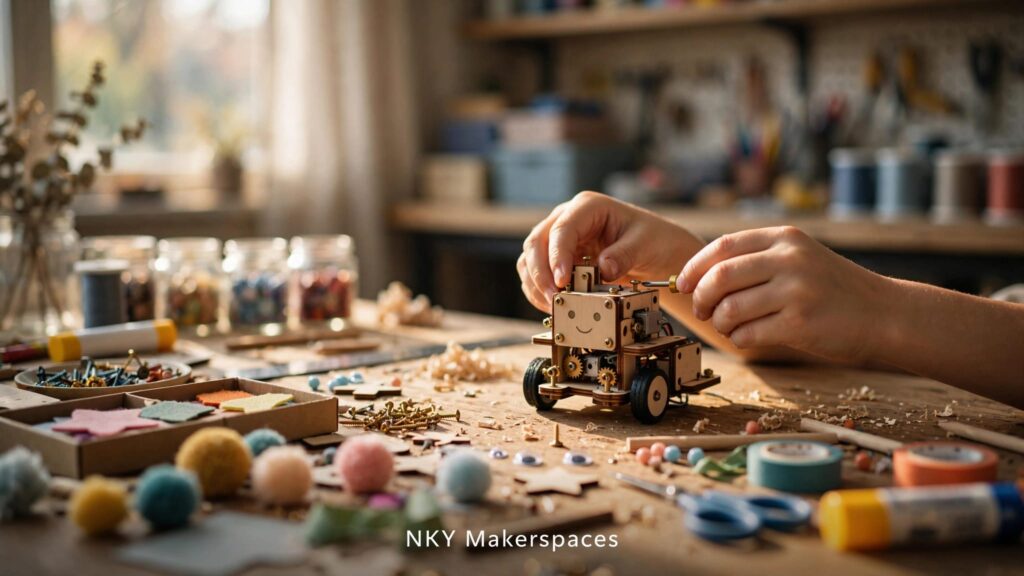
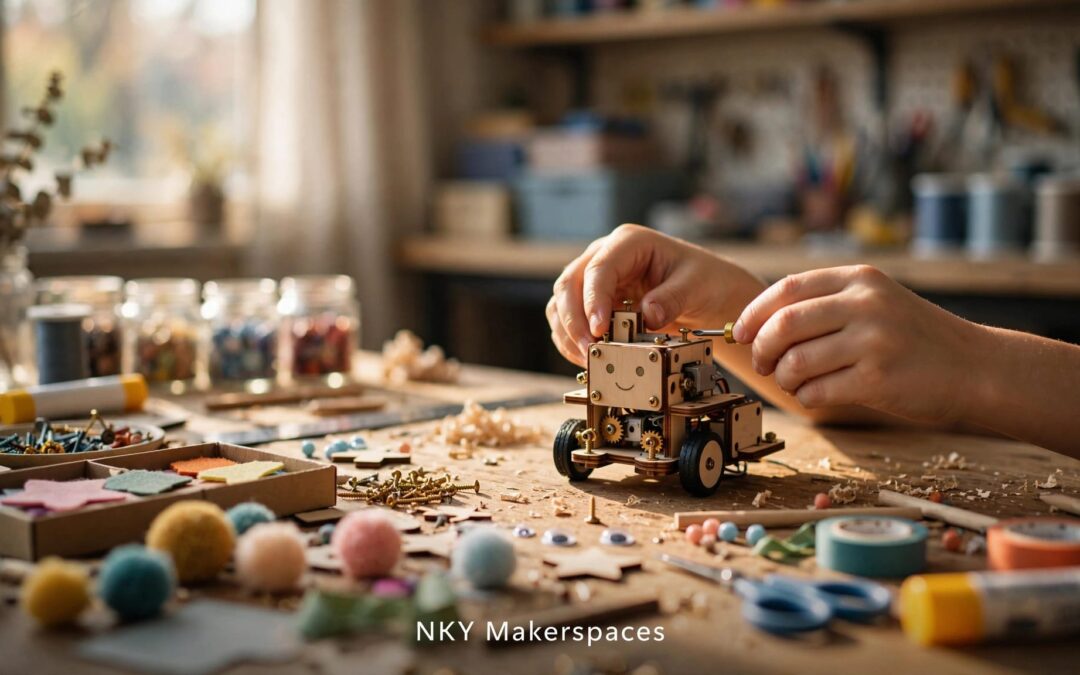
Northern Kentucky makerspaces give children room to create, test, and learn through hands-on learning. Access comes first, because eligibility varies by program.
Here in Kentucky, choose a program before comparing equipment. For visitors, a public reservation may be more useful than tools reserved for enrolled students. Check who can enter a makerspace, then consider what your child wants to make.
Key Takeaways
- NKY's makerspace centers on scheduled K-12 learning for students, including field trips, workshops, and camps.
- NKU's Stego Studio is for its university community, not the general public.
- Cincinnati's Downtown Main Library welcomes public visits, with free equipment use and charges for some materials.
- A child's readiness, the reservation length, and the project's requirements should guide the outing.
Choosing Northern Kentucky Makerspaces by Access
A makerspace is a shared place where people use equipment, materials, and instruction to make things. The term covers several kinds of spaces, but it doesn't establish public admission.
These three makerspaces have different access models. Having tools on site doesn't establish public admission.
| Space | Location | Family Access and Cost |
|---|---|---|
| NKY Makerspace | Ignite Institute, Erlanger | Scheduled K-12 programs, field trips, workshops, and events |
| Stego Studio | NKU, Highland Heights | For NKU students, faculty, and staff |
| Downtown Main Library MakerSpace | 800 Vine Street, Cincinnati | Public reservations; no charge for use, with some materials fees |
Choose the access model before the machine. For a visiting family without university connections, the Downtown library offers the clearest public reservation route, with no membership required.
The terminology deserves the same care. A hackerspace generally emphasizes computers and electronics. A Fab Lab follows the Fab Foundation model. TechShop helped popularize full-scale workshops before announcing bankruptcy in 2017.
Those names describe approaches to making. They don't establish children's admission, supervision, or permission to operate machines.
NKY Makerspace Began With Students
The NKY Makerspace program is based at the Ignite Institute in Erlanger and centers on K-12 learning. Its program description lists field trips, workshops, internships, after-school events, Super Saturdays, and summer camps.
Students Asked for a Place to Build
The Northern Kentucky Makerspace opened in 2015 after sixth-, seventh-, and ninth-grade robotics students approached the Boone County Board of Education about creating a dedicated space.
KET reported that more than 8,000 students had participated and that the building could accommodate about 120 at once. Those figures describe the program's history, not current attendance or capacity.
The origin matters because students asked for a place to do the work. They wanted room to build, test, and learn through their own decisions.
Six Labs Supported Different Interests
KET described six labs: a woodshop, an audio lab, a video lab with a green screen, a design room with seven 3D printers, a robotics lab, and a Toyota-sponsored engineering room.
That historical arrangement shows the program's breadth. Making includes sound, video, construction, and engineering, each requiring its own kind of attention.
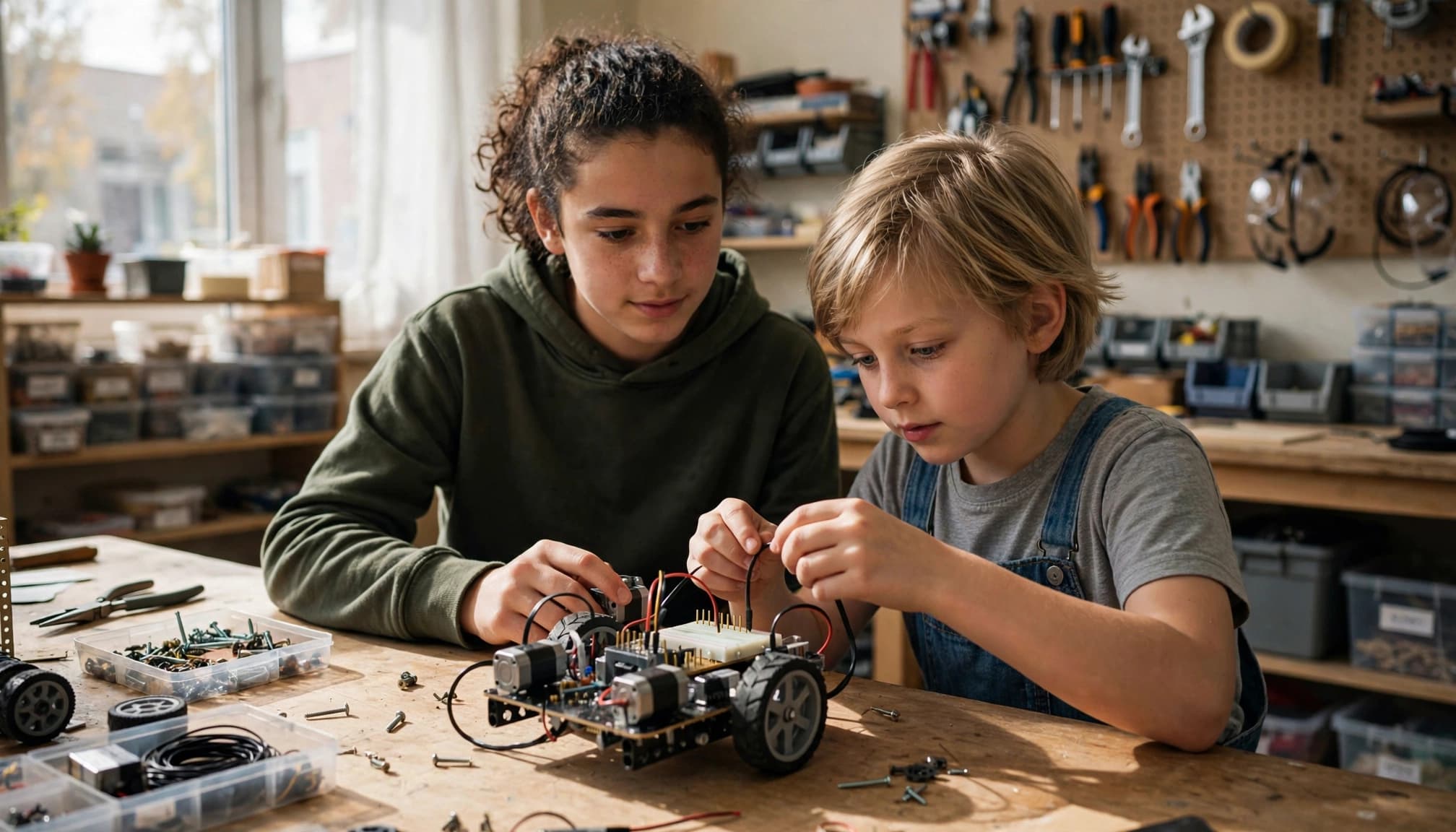
For families visiting our area, this is a scheduled educational opportunity where children can create, not a walk-in attraction with daily admission.
NKU Stego Studio Has Clear Boundaries
NKU's Stego Studio is free for university students, faculty, and staff. Users must complete an access-and-usage agreement and may need to show an NKU All Card.
For fall 2026, makerspace hours are Monday, Wednesday, and Friday, 10 a.m. to 4 p.m., and Tuesday and Thursday, 1 to 4 p.m. The studio is in LA 524 in Landrum Academic Building during Steely Library's temporary relocation. Check the linked NKU page for current hours, access requirements, and registration rules.
3D Printing Requires the Right File and Purpose
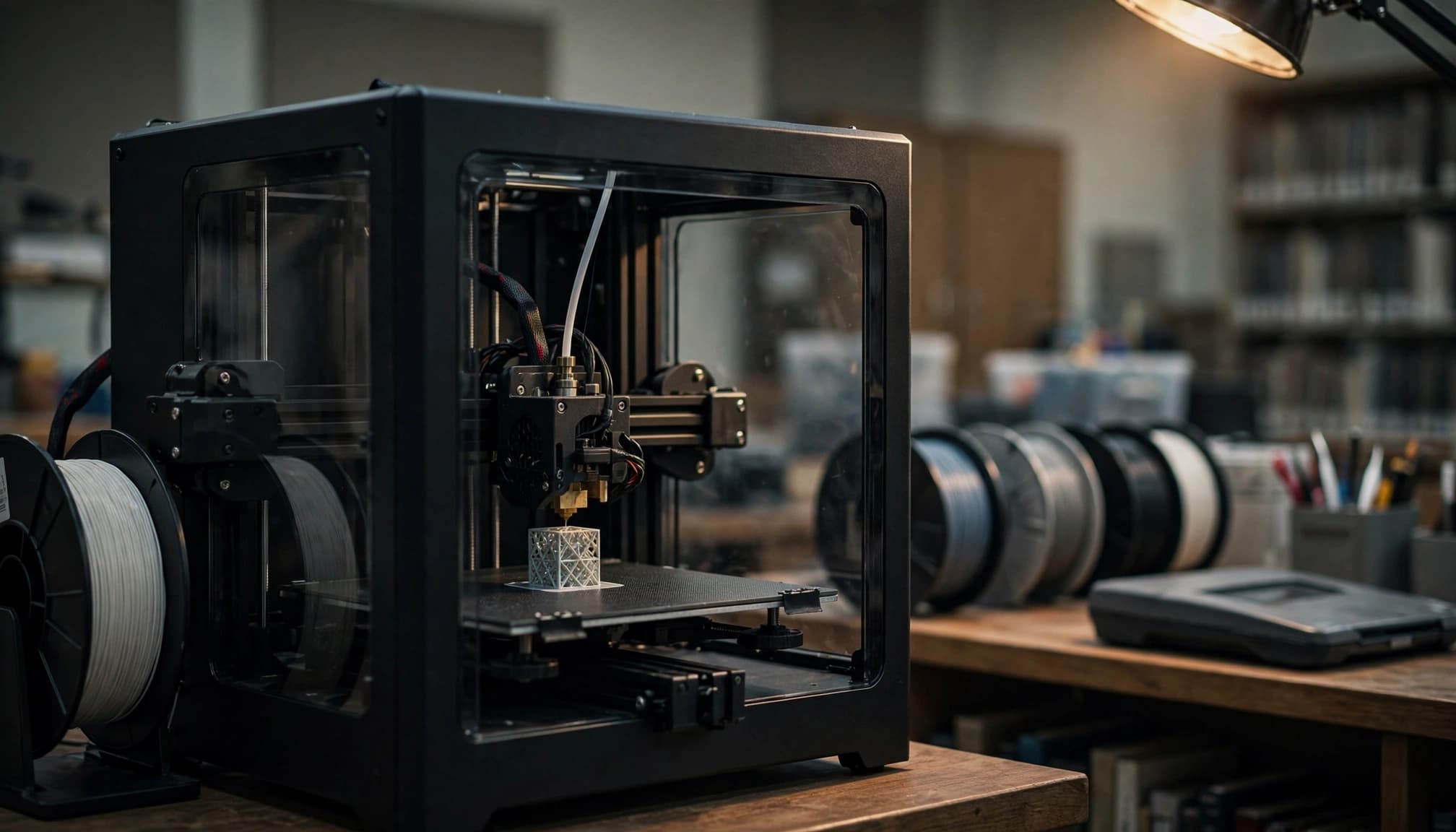
The studio accepts STL or OBJ files. Prints exceeding 12 hours need approval from a Makerspace Supervisor, and large, multi-part projects are limited to one build plate at a time.
Steely Library supplies filament and consumables. Research and instruction projects receive priority, and commercial purposes aren't permitted.
Eligible users can use the studio for learning, but can't treat its materials and machines as a production service for merchandise.
Scanning Requires a Suitable Object
The studio's equipment includes three 3D scanners. For 3D scanning, objects can't be black, white, high-gloss, mirror-like, or have holes.
Staff help users choose and operate a scanner. Objects must meet the studio's requirements to produce a useful digital model.
University access remains the deciding condition. The studio fits this guide for eligible older users, but its equipment listing doesn't give visiting children general public access.
Cincinnati’s Library Offers Public Reservations
Across the river, the Cincinnati & Hamilton County Public Library MakerSpace offers public access to a library makerspace. Anyone can make a reservation, and equipment use is free. Some machines require materials available for a small additional charge.
The Downtown Main Library is at 800 Vine Street, Cincinnati. Its hours are Monday through Wednesday, 10 a.m. to 8 p.m.; Thursday through Saturday, 10 a.m. to 6 p.m.; and Sunday, 1 to 5 p.m.
The service includes 3D printers, Adobe software, and other creative tools. Families book online, so they can plan the activity as part of the day.
Before visiting, check the official booking information for current hours, availability, age or supervision rules, and materials charges.
This public-access option suits visitors who want a making activity without purchasing a workshop membership. The lack of a machine-use fee keeps starting costs modest, though materials remain part of the budget.
Keep the geography clear. This stop is in Ohio, even when it's part of a Northern Kentucky vacation. Our guide to Northern Kentucky family activities offers Kentucky-side outings to build around the same trip.
Membership Workshops Require a Different Commitment
Paid workshops belong in the regional picture, but they differ from school programs and public library reservations. Ongoing access follows the workshop's rules.
The Manufactory Is a Large Cincinnati Workshop
The Manufactory describes itself as a 17,000-square-foot membership workshop in northern Cincinnati and calls itself the city's only fully equipped makerspace.
Its listed users include makers, artisans, engineers, inventors, prototype builders, crafters, stage and prop builders, restorers, entrepreneurs, and repair technicians.
That range explains the workshop model. People bring continuing projects that require equipment, workspace, and repeated visits. A family looking for one afternoon should distinguish that commitment from a single introductory activity.
An equipment list alone doesn't confirm youth access or permission to use every machine.
Kre8now Illustrates the Class-Based Route
In its feature on Kentucky makerspaces, KET described Lexington's Kre8now offering formal classes without requiring ongoing access. Subjects included CNC machines, 3D printing, sewing, coding, and woodworking.
Its executive director emphasized access to a collection of tools rather than ownership of one table saw. A partner compared participation to exercising the mind and creative abilities through a gym-style arrangement.
KET's account documents past offerings, not an October 2026 class calendar. Lexington is also a separate Kentucky trip, not a nearby Northern Kentucky stop.
A First Visit Should Have One Clear Purpose
We recommend beginning with one skill and one manageable project. A child can learn more from a modest task completed with attention than from an ambitious plan that exceeds the session.
Match the Work to the Child
Readiness includes listening, waiting, following instructions, and accepting that a machine has limits. A child's interest matters, but it doesn't replace training.
Safety instruction may cover approved materials, woodworking tools, protective equipment, emergency stops, hot surfaces, moving parts, and when staff assistance is required. Students and parents should follow the same boundaries they expect children to respect.
For a first outing, choose an activity that leaves time for explanation and cleanup. The finished object is only part of the learning.
Begin With a Model That Fits
Thingiverse and Printables offer downloadable models, while TinkerCAD provides a starting point to create your own design. University 3D modeling resources offer another way to understand files and design choices.
A downloadable file still needs review for size, print time, materials, and permissions. Downloading something doesn't mean a particular machine can produce it during your reservation.
Our Northern Kentucky craft stores guide supports simpler projects your family can continue away from specialized equipment.
Frequently Asked Questions
What Is a Makerspace in a Library?
A library makerspace is a shared area where patrons can use creative tools and technology. Depending on the location, it may include design software, sewing equipment, or other tools.
At Cincinnati's library, schools, companies, and clubs can arrange tours or group visits through MakerSpace staff.
Can a Library 3D Print Continue After Closing?
At the Downtown Main Library MakerSpace, 3D printing stops when a session expires or the library closes. Your project must fit within the reservation's limits.
NKU's 12-hour printing threshold isn't a library-wide rule. Downtown Main printing is bounded by the reserved session and closing time.
This distinction matters when choosing a file. A model that takes several hours requires a different plan than a short introductory print.
Give the Project Room to Succeed
Northern Kentucky makerspaces can offer a worthwhile experience when the child and project are a good fit. Choose a manageable first experience that leaves enough time to complete a project responsibly.
For a Kentucky family outing, one purposeful session can be enough. Children can make something, learn from the result, and carry that understanding home.