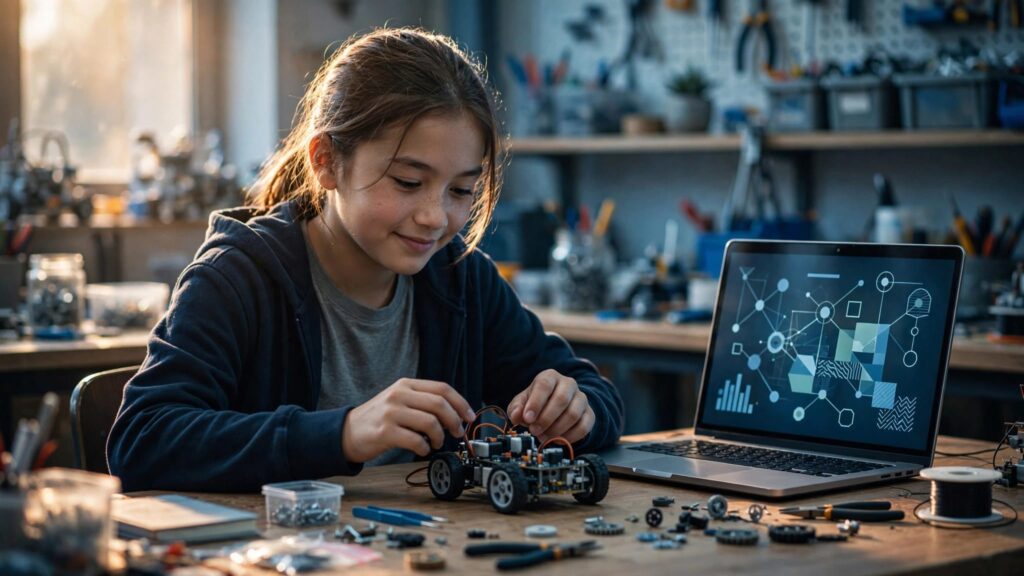
A child who enjoys technology deserves a chance to understand how it works. Northern Kentucky coding classes can give that interest direction, but the right choice begins with your child's readiness and the time your family can give.
Here in Kentucky, we recommend choosing a suitable learning experience before choosing an impressive course title. NKU's documented 2026 programs show several approaches to coding, though those sessions have ended; free online learning offers another starting point.
Begin with what your child is ready to build, understand, and practice.
Key Takeaways
Coding means giving a computer instructions that it can follow. A worthwhile class helps children understand those instructions and take responsibility for their work.
- NKU's 2026 offerings included robotics, elementary engineering, and cybersecurity, with different grade requirements.
- The local programs described below are past sessions, not available October reservations.
- Code.org provides free online learning, while a family visit needs activities that fit the length of your stay.
Northern Kentucky Coding Classes Begin With the Right Fit
Age matters, but age alone doesn't tell you whether a child is ready for a particular course. Reading comfort, patience, and interest in the project matter too. We recommend a beginning your child can understand, because understanding gives practice a purpose.
Elementary Students Need Visible Results
Younger children benefit from seeing what their instructions accomplish. Block-based programming lets them arrange commands visually, then watch a character move or a robot respond.
Scratch is a familiar example of this approach. Children combine programming blocks rather than begin by typing every instruction. They still work with order, repetition, and cause and effect.
A child who builds a working sequence has done more than complete a screen activity. That child has made a decision, tested the decision, and seen its result. We value that kind of learning because the work belongs to the learner.
Teens Need a Clear Purpose
Teenagers need a reason for the work they are doing. Web development, interactive games, robotics, and cybersecurity offer different reasons to learn programming.
An older beginner still needs an understandable beginning. A teen's age doesn't supply experience they haven't gained.
We recommend choosing a course by its actual work. A student interested in websites needs opportunities to build pages. A student interested in machines needs opportunities to connect instructions with movement, sensors, or other physical responses.
NKU’s Documented Coding and Robotics Programs
Northern Kentucky University in Highland Heights has offered youth learning through its Center for Integrative Natural Science and Mathematics, known as CINSAM. Its 2026 programs provide concrete examples of local instruction.
The dates and enrollment status matter. These offerings belong to earlier parts of 2026.
XRP Orbit Odyssey for Homeschool Students
XRP Orbit Odyssey was a hands-on coding and robotics program for homeschool students in grades 6 through 8. Students used an XRP robot while working on programming, computational thinking, and robotic solutions they could design and test.
The four sessions took place September 11, 18, 25, and October 2, 2026, from noon to 3 p.m. The cost was $25 per attendee, and space was limited.
That schedule provided 12 hours of instruction across four meetings. It also required continuing participation, which is a different commitment from a single vacation activity. Those sessions have now ended.
Earlier Summer Programs Covered Different Interests
NKU's summer offerings addressed several stages of learning.
| 2026 Program | Student Group | Coding Connection | Published Status |
|---|---|---|---|
| Elementary Engineers | Grades 4 through 5 | Coding within engineering activities | Full |
| SPIKE Prime LEGO Robotics | Grades 4 through 5 | Building and drag-and-drop programming | Full and closed |
| Beginners' Cybersecurity Jr. Academy | Rising grades 7 through 9 | Secure coding | Registration closed |
These programs show why a broad search for coding classes needs a narrower decision. Engineering, robotics, and cybersecurity involve different work. None of these summer listings is an available reservation for an October visit.
What a Coding Class Should Teach
A child needs more than a completed project. The child needs to understand how the project works, where the instructions came from, and what happens when those instructions change.
Instructions Must Have an Order
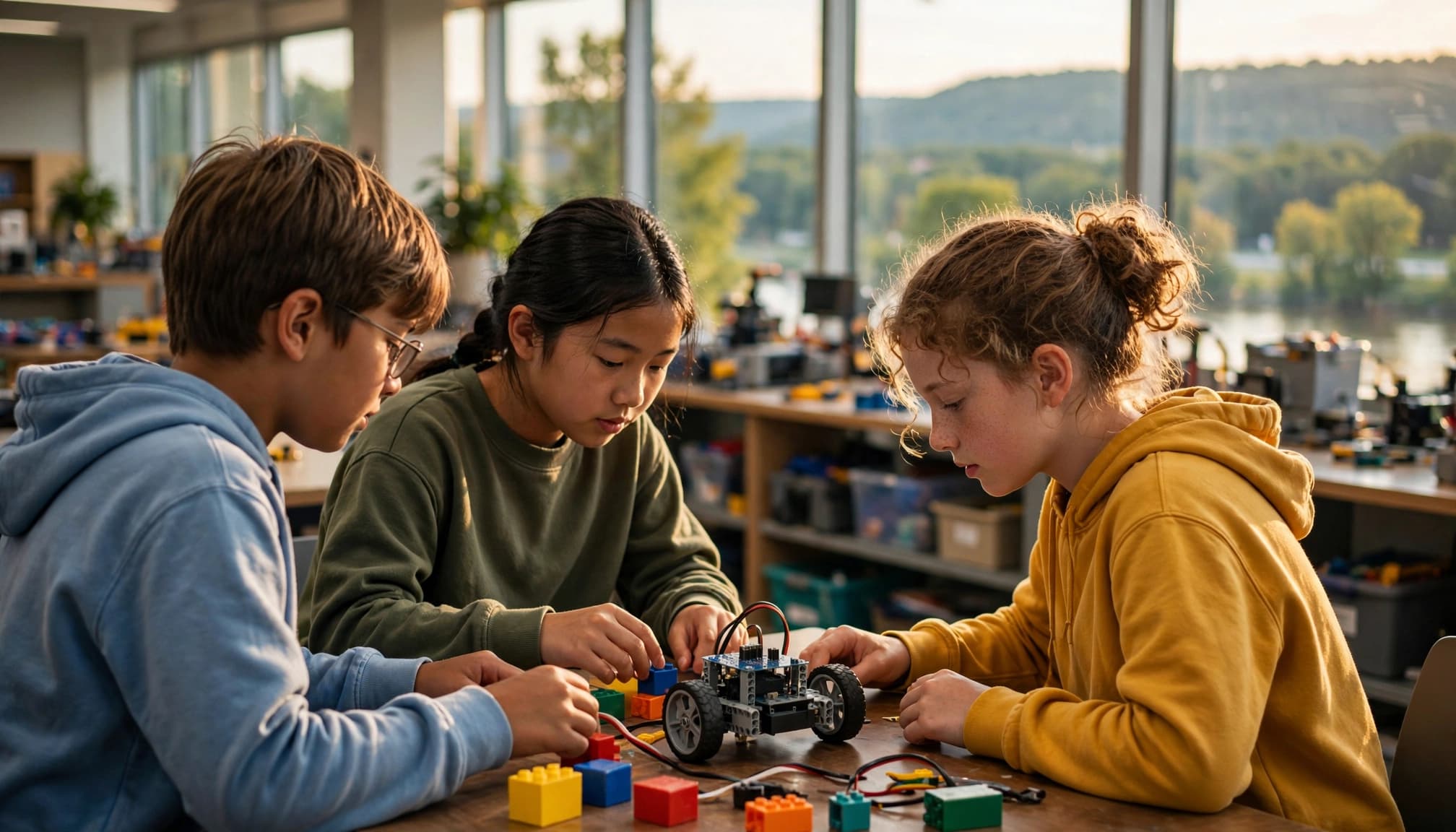
A sequence is a set of instructions performed in order. A loop repeats instructions. A condition tells a program to act when a particular requirement is met.
Those definitions matter because children can recognize the same ideas across different tools. Moving a character, repeating a robot's action, and responding to a button all require instructions with a purpose.
We recommend teaching that connects the vocabulary with something the child can see. A learner should be able to explain what a command does, rather than recognize where it belongs in a copied example.
Testing Is Part of the Work
Debugging means finding and correcting problems in a program. A mistake gives the learner something to examine: the instruction, the order, or the assumption behind it.
A finished project shows what runs. Explaining a change shows what the child understands.
Robotics makes this relationship visible because instructions produce physical results. Our guide to Northern Kentucky robotics programs explains related local pathways and the distinction between workshops and continuing teams.
We recommend instruction that leaves room for testing. Children need time to make a change and understand its effect.
Free Coding Learning Beyond the Classroom
An in-person class provides a scheduled setting. Online learning provides another route, especially when a local session has ended or your family needs a shorter introduction.
Code.org is an online resource, not a Northern Kentucky classroom.
Code.org Offers a Free Starting Point
Code.org's free computer science courses include learning resources across grade levels, with computer science, AI science, and data science among its subjects.
This gives families a starting point without tuition. It also gives a child a chance to encounter programming before a longer commitment.
We recommend choosing one suitable course and allowing the child to work through its ideas. Moving between several unrelated activities can leave a learner familiar with the buttons but uncertain about the principles. A consistent beginning gives each lesson something to build upon.
Older Students Can Explore Broader Subjects
Code.org's Computer Science Discoveries curriculum is designed for middle and high school students. Its subjects include problem-solving, web development, and interactive projects.
That range gives older beginners several ways to connect programming with an interest they already have.
Online learning still requires attention and practice. A free course doesn't remove the need to read instructions, test changes, or finish work. We recommend measuring progress by what your child can explain and do independently, rather than by the number of activities opened.
The Learning Environment Matters
A course can teach the right subject and still place unnecessary demands on a child. Noise, crowded tables, transitions, and long stretches without a break affect participation.
Families who need a sensory-friendly setting deserve the same clear consideration as families comparing subjects or costs. Predictable routines, accessible seating, nearby restrooms, and room for a short break are practical parts of a learning experience.
We recommend treating those needs as part of the choice, rather than expecting a child to endure an unsuitable setting because the activity sounds worthwhile.
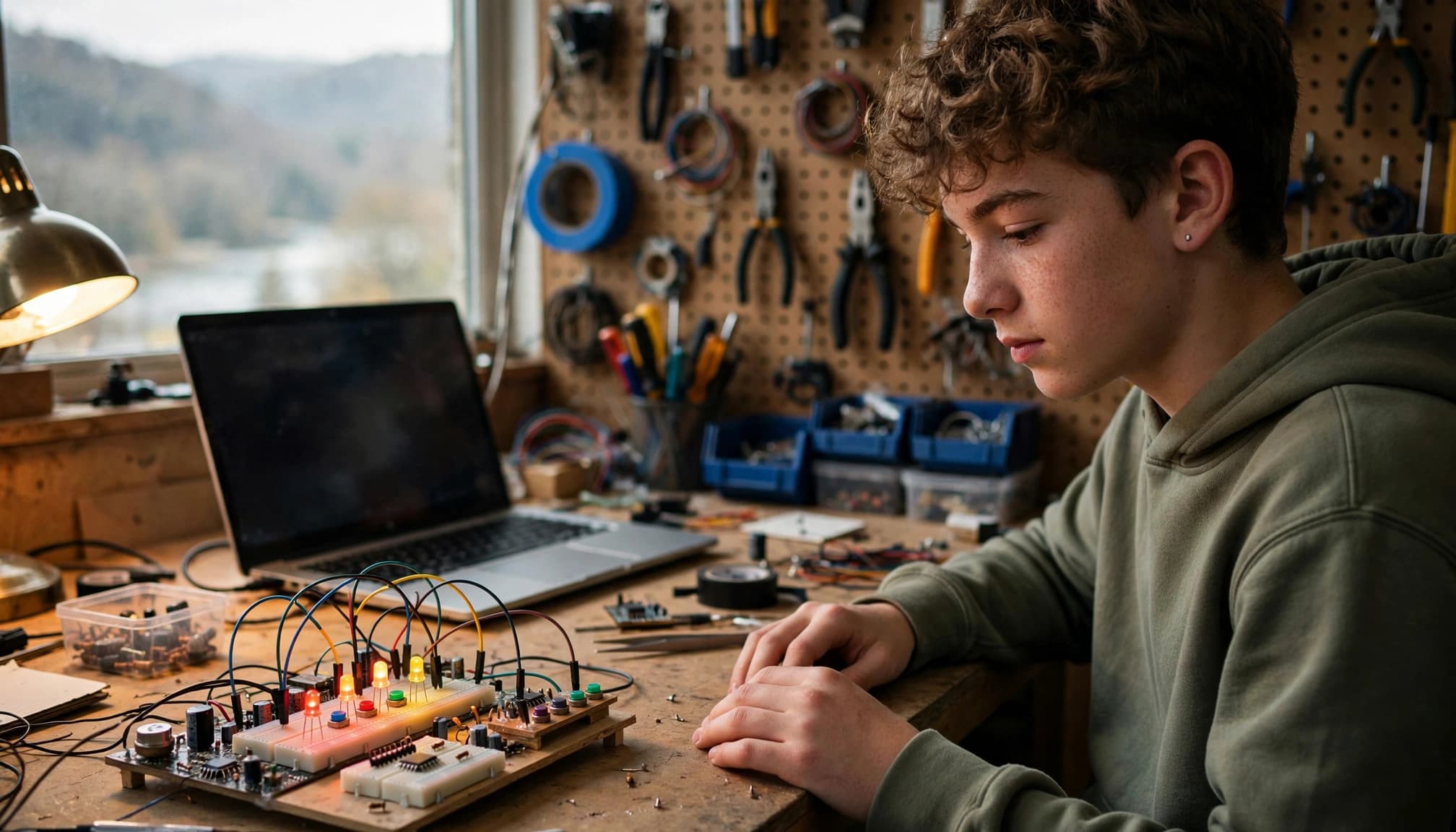
The demands of the project matter too. Robotics includes materials, movement, and shared equipment. Screen-based work can require sustained reading and attention. Neither format suits every learner in the same way.
A useful starting project has a clear task and an understandable result. The student should know what they are trying to accomplish before facing several new tools at once. Clarity belongs at the beginning of instruction.
Make Coding Fit a Northern Kentucky Family Visit
Northern Kentucky gives families room for learning and room for recreation. We recommend keeping both in the plan, without asking one afternoon to carry every interest your family has.
A coding activity should fit the visit you are taking. A continuing program belongs to a different schedule.
Residents Can Build a Continuing Routine
For local families, repeated attendance can give children time to practice between meetings and return with questions. The course becomes part of a weekly routine rather than a single special outing.
That routine must leave room for schoolwork, meals, and rest. A child needs enough attention left to participate willingly and understand the lesson.
We recommend a manageable commitment over a crowded calendar. Learning depends on returning to the work, and returning becomes difficult when the schedule asks more than the family can sustain.
Visitors Need a Bounded Activity
For a short stay, a single-session workshop or visitor activity fits more naturally than a series requiring several return trips. An ended camp or closed registration cannot become part of a current itinerary.
Keep the rest of the day simple. One learning activity, a meal, and a less demanding stop give children room to enjoy Kentucky without being hurried through it.
Our guide to Northern Kentucky family activities offers broader outing ideas. A weatherproof plan can help during rain, but an indoor day still needs movement, rest, and a place to sit comfortably.
Choose Learning That Fits the Child
Northern Kentucky coding classes are worth considering when the instruction, student requirements, and family schedule agree. A program title alone doesn't tell you whether that agreement exists.
We recommend understanding before commitment. Choose work your child can begin, practice, and explain, while keeping past programs separate from present travel plans.
A child who understands what they have made carries something useful home, whether the learning began in a classroom or online.
Frequently Asked Questions
Are the NKU Programs Listed Here Still Available?
The XRP Orbit Odyssey sessions ended October 2, 2026. The summer programs described here were earlier offerings with full or closed registration.
They illustrate NKU's youth instruction; they aren't current enrollment options. A family visiting now should leave those past sessions out of its itinerary.
Can a Child Begin Coding Without Experience?
Yes. Beginner learning can start with visual programming and simple sequences. The important requirement is instruction that matches the child's readiness.
Code.org offers free learning across grade levels. Older beginners also have an introduction through Computer Science Discoveries. We recommend beginning with understandable work and giving the child time to practice before adding more demanding tools or subjects.